ACLS Blogs

Preparing for Your First Real Code: Mental Preparation Beyond the Algorithms

The Reality Behind Your First Code

You've studied the algorithms. You've memorized the medications, dosages, and sequences. You know that epinephrine comes every 3-5 minutes during cardiac arrest, and you can recite the stroke assessment backwards and forwards. But as you stand outside that room hearing "Code Blue" overhead for the first time with your name on the response team, you realize something crucial: knowing the algorithms and executing them under pressure are entirely different challenges.


The psychological dimension of emergency response is rarely discussed in certification courses, yet it's often the determining factor between effective and ineffective resuscitation. According to research on first responders and healthcare workers, approximately 32% of emergency medical personnel experience significant anxiety, with frontline healthcare workers showing anxiety rates as high as 43%. These numbers aren't shared to discourage you—they're shared because acknowledging the psychological challenge is the first step toward mastering it.


This article goes beyond the clinical algorithms you've learned in your ACLS or PALS certification. We're addressing the mental preparation that transforms a clinician who knows what to do into one who can actually do it when seconds count and lives hang in the balance.
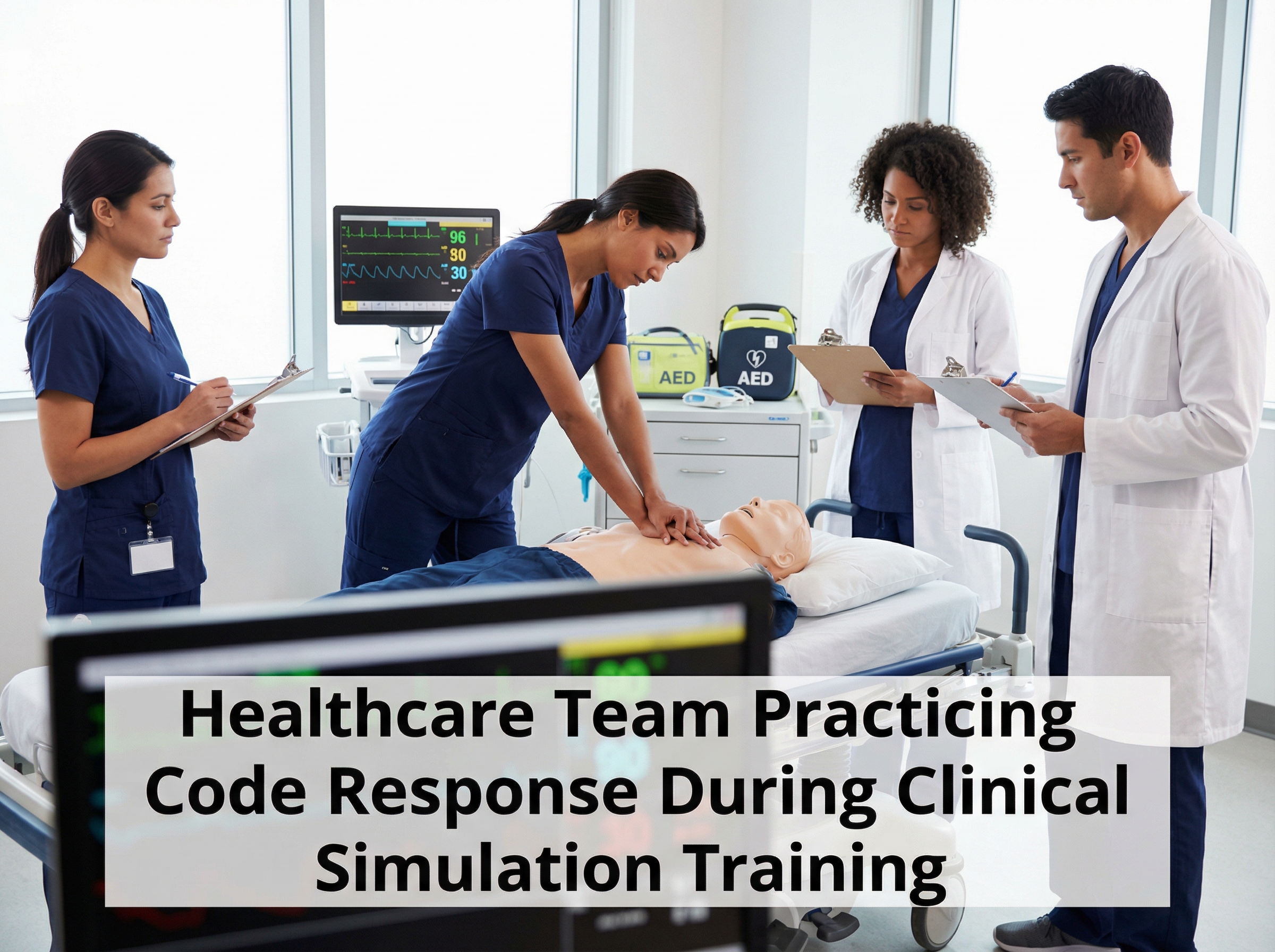
Healthcare team practicing code response during clinical simulation training


Understanding the Psychology of Your First Code

The anxiety you feel before your first code isn't a sign of inadequacy—it's a normal physiological response to high-stakes situations. Your body's stress response, governed by the sympathetic nervous system, doesn't distinguish between physical threats and professional performance pressure. When you anticipate a code situation, your body releases cortisol and adrenaline, which can actually impair the cognitive functions you need most: memory recall, decision-making, and fine motor skills.


Research published in the Western Journal of Emergency Medicine demonstrates that acute stress significantly impairs physician decision-making and clinical performance during resuscitations. Understanding this isn't meant to frighten you—it's meant to normalize the experience and highlight why mental preparation techniques are as important as clinical knowledge.


Healthcare professionals approaching their first code commonly experience several specific fears:


  • Fear of making a critical mistake that harms the patient
  • Fear of appearing incompetent in front of colleagues
  • Fear of freezing or forgetting essential steps
  • Fear of the emotional weight of patient mortality
  • Fear of being overwhelmed by the sensory chaos of a code


Each of these concerns is valid and nearly universal among healthcare providers. The practitioners who appear most confident during codes have simply developed strategies to manage these same fears—they haven't eliminated them.


The Mental Practice Framework: Rehearsing Beyond the Algorithms

Mental practice, also known as cognitive rehearsal or visualization, is one of the most powerful tools for preparing for high-stress medical situations. Unlike simple memorization of facts, mental practice involves creating detailed mental simulations of yourself performing in actual clinical scenarios. According to First10EM, mental practice can be defined as cognitive rehearsal of a specific skill without physical movement, and it's fundamentally different from just reading and trying to commit facts to memory.


The evidence supporting mental practice is compelling. A randomized controlled trial comparing mental practice to standard ATLS training found that residents who spent just 20 minutes in structured mental rehearsal—visualizing how they would behave and function as a team—scored significantly higher on the Mayo High Performance Teamwork Scale (21.5 vs 19, p<0.01) compared to those who received didactic teaching.


How to Practice Mental Rehearsal Effectively

Mental practice isn't daydreaming—it's structured, detailed cognitive work. Here's how to implement it effectively:


Set the specific scene: Don't just imagine "a code." Visualize your actual emergency department or hospital floor. Picture the specific resuscitation room you'll respond to, including the layout of equipment, the code cart location, the monitor position, and the defibrillator. The more specific your mental environment, the more your brain creates neural pathways that activate during the real event.


Include actual people: Imagine the specific colleagues you'll work with. If you know you'll be working with Dr. Johnson who leads codes efficiently, or Nurse Martinez who's excellent at medication preparation, visualize them in their roles. This creates familiarity even in a novel situation.


Engage all senses: Imagine the sounds of the monitor alarms, the smell of the resuscitation room, the feeling of compressions under your hands, the physical sensation of drawing up medications. Multi-sensory mental practice creates stronger memory encoding.


Walk through each step: Mentally rehearse each action you'll take. If you're responsible for airway management, visualize yourself gathering equipment, positioning the patient, performing bag-valve-mask ventilation, and preparing for intubation. For each step, imagine exactly how you'll make it happen.

Healthcare professional practicing mental rehearsal and visualization before emergency response


Rehearse complications: Don't just practice the perfect code. Visualize what happens when you can't establish IV access immediately, when the first defibrillation doesn't work, or when the patient's rhythm changes unexpectedly. Mental practice of complications builds adaptability.


This approach complements hands-on training perfectly. Simulation training enhances real-world resuscitation skills by providing physical practice, but mental rehearsal fills the gaps between simulation sessions and keeps your skills sharp.


The BTSF Performance Framework: Breathe, Talk, See, Focus

Performance psychology research has identified four core psychological skills that significantly improve emergency care providers' performance under stress. The "Breathe, Talk, See, Focus" (BTSF) framework offers a practical, easily implemented approach to managing the acute stress of emergency situations.


Breathe: Tactical Breathing for Acute Stress

Controlled breathing is the fastest way to regulate your physiological stress response. When your sympathetic nervous system activates during a code, your breathing becomes rapid and shallow, which paradoxically increases anxiety and impairs cognitive function. Tactical breathing interrupts this cycle.


The box breathing technique is particularly effective: Inhale for 4 counts, hold for 4 counts, exhale for 4 counts, hold for 4 counts. Even one or two cycles before entering a code situation can shift your nervous system toward parasympathetic activation, improving your clarity and fine motor control.


Practice this technique during routine clinical work—before difficult conversations, before procedures, during transitions between patients. This builds the habit so it's available to you automatically during high-stress codes.


Talk: Positive Self-Talk and Communication

The internal dialogue you maintain during stressful situations significantly impacts your performance. Negative self-talk ("I'm going to mess this up," "Everyone will see I don't know what I'm doing," "I can't handle this") activates threat responses and impairs executive function.


Effective positive self-talk isn't false optimism—it's realistic, process-focused statements that keep you grounded in what you can control. Examples include: "I know the algorithm," "I'll take this one step at a time," "I'm trained for this," "Focus on the next action," or "My team is here with me."


External communication is equally critical. During codes, building confidence as a new code team member starts with clear, assertive communication. Use closed-loop communication: when given an order, repeat it back; when completing a task, announce completion clearly.


See: Visualization and Situational Awareness

The "See" component of BTSF encompasses both pre-event visualization (as discussed in the Mental Practice section) and in-the-moment situational awareness. During an actual code, your ability to rapidly assess the environment, the patient, the equipment, and the team determines your effectiveness.


Practice systematic visual scanning: patient status (monitor, physical appearance, responsiveness), equipment readiness (crash cart, airway equipment, medications), team composition (who's present, who's leading, what roles are filled), and environmental factors (family present, space constraints, additional resources needed).


This systematic approach prevents tunnel vision—a common stress response where you focus so intensely on one element that you miss critical information elsewhere.


Focus: Trigger Words and Task Prioritization

The final element of BTSF involves implementing a focus "trigger word"—a personal anchor word that brings your attention immediately to the present task. This might be "breathe," "now," "focus," or "steady." When you notice your mind racing ahead to potential complications or dwelling on a mistake, your trigger word redirects you to the immediate action.


Task prioritization under pressure requires distinguishing between urgent and important actions. In codes, this means following the algorithm sequence even when multiple issues demand attention. If you're performing compressions, that's your complete focus for your compression cycle—not worrying about whether the IV access is established or whether you remembered to call respiratory therapy.


The BTSF framework isn't just theoretical—it's actionable. Before your first code, identify your specific breathe technique, your go-to self-talk phrases, your visualization scenario, and your personal trigger word. Write them down. Practice them during lower-stress situations so they're deeply ingrained when you need them most.


Preparing for Your Specific Role

Your mental preparation should be tailored to the specific role you'll fill during codes. While you should understand the entire resuscitation process, your cognitive rehearsal should emphasize your primary responsibilities.


If You're Performing Compressions

Compressions are physically and mentally demanding. Mental preparation should include visualizing proper body mechanics (shoulders over hands, elbows locked, using body weight), maintaining the rhythm (100-120 compressions per minute—about the tempo of "Stayin' Alive"), and achieving adequate depth (at least 2 inches in adults). Equally important is mentally preparing for the physical fatigue and the strange sensation of performing compressions on a real human chest, which feels dramatically different from a mannequin.


Rehearse the transition between compressors. Visualize announcing when you're fatiguing, the smooth handoff, and stepping back into a support role. High-quality compressions save lives, and mental preparation for this role includes accepting that this "simple" task is among the most critical.


If You're Managing the Airway

Airway management during codes requires both technical skill and the ability to work while the patient is being moved during compressions. Mental rehearsal should include gathering and checking equipment before it's needed (bag-valve-mask, oral airways, intubation equipment if you're qualified), positioning yourself at the head of the bed, and maintaining effective ventilation during the brief pauses in compressions.


Visualize what you'll do if bag-valve-mask ventilation is difficult—repositioning, trying an oral airway, asking for assistance. Mental preparation for airway management includes planning for complications before they occur.


If You're Handling Medications

The medication nurse role requires attention to detail during chaos. Mental practice should include visualizing yourself drawing up medications accurately despite time pressure, double-checking dosages, clearly communicating what you're giving and when, and documenting each administration.


Rehearse the specific medications you're most likely to administer: epinephrine 1mg IV push every 3-5 minutes during cardiac arrest, amiodarone 300mg IV push for VF/VT, atropine for symptomatic bradycardia. Visualize where these medications are located in your specific crash cart.


If You're Recording

The recorder role seems less intense but requires sustained focus and accuracy. Mental preparation includes visualizing yourself tracking the time (announcing elapsed time at intervals), documenting all interventions and medications with timestamps, recording rhythm checks and their results, and noting who performed each intervention.


This role often falls to newer team members, and it's an excellent position for your first code because it keeps you engaged and learning while not requiring immediate life-saving interventions. Mentally rehearse maintaining your documentation even when the situation becomes chaotic.


Emotional Preparation: Confronting Mortality and Outcomes

One of the most underdiscussed aspects of code preparation is the emotional reality of patient outcomes. Not every resuscitation is successful, and your first code may end in patient death. This reality requires mental preparation that extends beyond clinical skills.


Before your first code, reflect honestly on your relationship with mortality. Healthcare professionals enter the field to help and heal, and patient death—especially death despite your best efforts—challenges that identity. Acknowledging this in advance doesn't make it easy, but it makes it less overwhelming when it happens.


Mental preparation for difficult outcomes includes visualizing yourself maintaining professionalism during the code even if the outcome appears poor, participating in post-code debriefing honestly, and allowing yourself to process the emotional impact afterward. According to CDC research on healthcare worker mental health, health workers who experienced harassment or difficult working conditions showed significantly higher rates of anxiety (85%) and depression (60%).


It's also important to prepare mentally for successful outcomes. Your first save is a powerful, positive experience, but it can also create pressure for subsequent codes. Mentally rehearse accepting both outcomes—success and loss—as part of the inherent uncertainty in emergency medicine. Your performance quality isn't determined solely by outcomes; it's determined by your adherence to evidence-based practice and your professional teamwork.


For more guidance on processing difficult outcomes, grief support strategies for medical professionals provide valuable frameworks for navigating loss in healthcare.


Building Long-Term Psychological Resilience

Preparation for your first code is just the beginning. Building psychological resilience—the ability to adapt and recover from stressful experiences—is a career-long process that protects both your performance and your wellbeing.


Stress Inoculation Through Graduated Exposure

Psychological resilience develops through graduated exposure to stressful situations. Your first code will be more stressful than your tenth, which will be more stressful than your fiftieth. This is stress inoculation—building tolerance and effective coping strategies through repeated exposure.


Before your first real code, seek out lower-stakes opportunities to practice performance under observation: participate in simulation scenarios, volunteer to perform procedures while being supervised, present cases to attending physicians. Each of these experiences activates similar performance anxiety in a safer environment, building your stress tolerance gradually.


The Critical Importance of Debriefing

Post-code debriefing serves two essential functions: it improves clinical performance through analysis of what went well and what could improve, and it supports psychological processing of the experience. Many hospitals now mandate debriefing after resuscitation events, recognizing both benefits.


After your first code, participate fully in debriefing even if it feels uncomfortable. Share what you observed, ask questions about decisions you didn't understand, and acknowledge your emotional response if you feel safe doing so. Research shows that debriefing after ACLS events significantly enhances patient outcomes and supports provider wellbeing.


Ongoing Mental Health and Burnout Prevention

The cumulative stress of repeated codes, combined with the general demands of healthcare work, creates risk for burnout, compassion fatigue, and secondary traumatic stress. According to research, healthcare professionals show a global prevalence of low resilience at 26% across 16 countries, indicating that resilience isn't automatic—it requires intentional cultivation.


Mental preparation for your first code should be situated within a broader commitment to mental health. This includes developing sustainable stress management practices: regular exercise, adequate sleep, meaningful connections outside of work, professional boundaries, and willingness to seek mental health support when needed.


For comprehensive strategies, explore how healthcare professionals can effectively manage stress and prevent burnout, which provides evidence-based approaches to sustaining your career and wellbeing.


Your Practical Pre-Code Preparation Checklist

Transform these concepts into action with this practical checklist for the weeks leading up to your first code:


Clinical Readiness

  • Complete or review your ACLS/BLS/PALS certification with attention to understanding, not just memorization
  • Locate and familiarize yourself with the crash cart and emergency equipment in your specific unit
  • Review your facility's code response protocols and your expected role
  • Attend simulation sessions if available, treating them as serious practice
  • Shadow experienced providers during codes if possible (observing before participating)


Mental Readiness

  • Practice mental rehearsal at least 3-4 times before your first code, spending 15-20 minutes per session
  • Identify your personal BTSF elements: breathing technique, self-talk phrases, trigger word
  • Practice tactical breathing during routine clinical work to build the habit
  • Visualize both successful and challenging code scenarios to build adaptability
  • Reflect on your emotional relationship with patient mortality and identify support resources


Support System Readiness

  • Identify experienced colleagues who can serve as informal mentors or debriefing partners
  • Learn about your facility's employee assistance program or mental health resources
  • Build relationships with your team members before high-stress situations occur
  • Establish boundaries and self-care practices that will sustain you through difficult shifts


Preparation on the Day of Your First Code

When you arrive for a shift knowing you're on the code team, specific day-of preparation can enhance your readiness:


Start with grounding: Begin your shift with 5 minutes of tactical breathing and mental rehearsal. This isn't superstition—it's priming your nervous system and activating the neural pathways you've practiced.


Verify equipment early: Within the first hour of your shift, check the crash cart and emergency equipment in your area. This practical task also serves as mental preparation, making the equipment familiar before you need it urgently.


Connect with your team: Introduce yourself to the code team members on your shift. Brief social connection reduces performance anxiety and improves teamwork.


Maintain basics: Stay hydrated, eat regular meals, and take breaks when available. Physical readiness supports mental readiness—fatigue, hunger, and dehydration all impair cognitive function and stress tolerance.


Practice acceptance: Acknowledge that you might be called to a code, or you might not. Either outcome is fine. This reduces anticipatory anxiety that can exhaust you before anything happens.


In the Moment: Your First "Code Blue" Overhead

The moment you hear the code called, your preparation activates. Here's what to do in those crucial seconds before you arrive at the scene:


Breathe first: One cycle of box breathing as you begin moving toward the code. This takes four seconds and dramatically impacts your arrival state.


Activate self-talk: As you move, use your practiced self-talk: "I'm trained for this," "I know what to do," "One step at a time."


Systematic arrival: When you enter the room, pause for two seconds to visually scan—patient status, team composition, your role. This prevents the disoriented rushing that impairs performance.


Announce yourself clearly: State your name and ask for your role assignment: "This is Sarah, RN. Where do you need me?" Clear communication establishes your presence and gets you integrated into the team structure.


Focus on your assigned task: Use your trigger word to maintain focus on your specific responsibility. Trust that others are handling their roles while you handle yours.


After Your First Code: Processing and Learning

What you do after your first code significantly impacts your long-term development and resilience. Whether the outcome was survival or death, your post-code response matters.


Immediate Aftermath (First Hour)

In the hour immediately following your first code, you'll likely experience an adrenaline crash—fatigue, emotional intensity, or unexpected reactions. This is normal. If possible, take 10-15 minutes away from the clinical area to process before returning to routine care.


Use this time for brief self-reflection: What did I do well? What felt difficult? What surprised me? This isn't formal debriefing—it's initial processing that helps you make sense of the experience.


Formal Debriefing (Same Day or Next Day)

Participate in formal team debriefing if your facility offers it. If not, seek out an informal conversation with an experienced colleague or your supervisor. Share your experience, ask questions, and seek feedback on your performance. Most importantly, listen to others' perspectives—you'll learn that even experienced providers have moments of uncertainty during codes.


Ongoing Processing (Days to Weeks)

Give yourself permission to think about your first code over the following days and weeks. It's a significant professional milestone, and processing it isn't overthinking—it's integration.


If you find yourself having intrusive thoughts about the code, difficulty sleeping, or heightened anxiety about future codes, these may be signs that you need additional support. Reach out to employee assistance programs, a therapist familiar with healthcare workers, or trusted mentors. Seeking support isn't weakness—it's professional self-care.


For ongoing support, mental health strategies for ACLS providers offers current, evidence-based approaches to maintaining psychological wellbeing throughout your career.


Conclusion: Competence Comes from Preparation and Experience

Your first code will be challenging—that's not pessimism, it's honesty. But challenge and incompetence are not the same thing. You can be well-prepared and still find the experience difficult. You can perform effectively and still feel anxious. These aren't contradictions; they're the reality of high-stakes healthcare.


The mental preparation strategies outlined in this article—mental rehearsal, the BTSF framework, role-specific preparation, emotional readiness, and debriefing—aren't about eliminating stress or anxiety. They're about channeling that energy into effective performance and sustainable practice. They're about building the psychological resilience that allows you to show up, do the work, process the experience, and return to do it again.


Your certification gave you the algorithms and clinical knowledge. Organizations like Affordable ACLS, founded by practicing Board Certified Emergency Medicine physicians, ensure that your certification content is current, evidence-based, and practically focused. But the mental preparation—the psychological readiness to execute that knowledge under pressure—is work you do for yourself, with support from mentors and colleagues.


As you prepare for your first code, remember this: thousands of healthcare professionals have stood exactly where you're standing now. They felt the same anticipatory anxiety, the same impostor syndrome, the same fear of making mistakes. And they made it through—not because they were special, but because they were prepared, supported, and willing to learn from the experience.


You've invested in your clinical training. Now invest in your mental preparation with the same seriousness. Practice your mental rehearsal. Develop your BTSF skills. Build your support system. Reflect on your relationship with difficult outcomes. And when that first Code Blue sounds overhead with your name on the response team, you'll be as ready as anyone can be—not fearless, but prepared, capable, and supported.


Your first code is a beginning, not a destination. It's the first step in a career of responding to emergencies with competence, compassion, and psychological resilience. The algorithms will guide your actions, but the mental preparation you've done will determine how effectively you execute them. Trust your training, trust your team, and trust that the anxiety you feel is normal—and manageable. You've got this.


ACLS Blogs

Preparing for Your First Real Code: Mental Preparation Beyond the Algorithms

You've studied the algorithms. You've memorized the medications, dosages, and sequences. But as you stand outside that room hearing 'Code Blue' overhead for the first time, you realize something crucial: knowing the algorithms and executing them under pressure are entirely different challenges.

The Reality Behind Your First Code

You've studied the algorithms. You've memorized the medications, dosages, and sequences. You know that epinephrine comes every 3-5 minutes during cardiac arrest, and you can recite the stroke assessment backwards and forwards. But as you stand outside that room hearing "Code Blue" overhead for the first time with your name on the response team, you realize something crucial: knowing the algorithms and executing them under pressure are entirely different challenges.


The psychological dimension of emergency response is rarely discussed in certification courses, yet it's often the determining factor between effective and ineffective resuscitation. According to research on first responders and healthcare workers, approximately 32% of emergency medical personnel experience significant anxiety, with frontline healthcare workers showing anxiety rates as high as 43%. These numbers aren't shared to discourage you—they're shared because acknowledging the psychological challenge is the first step toward mastering it.


This article goes beyond the clinical algorithms you've learned in your ACLS or PALS certification. We're addressing the mental preparation that transforms a clinician who knows what to do into one who can actually do it when seconds count and lives hang in the balance.

Healthcare team practicing code response during clinical simulation training


Understanding the Psychology of Your First Code

The anxiety you feel before your first code isn't a sign of inadequacy—it's a normal physiological response to high-stakes situations. Your body's stress response, governed by the sympathetic nervous system, doesn't distinguish between physical threats and professional performance pressure. When you anticipate a code situation, your body releases cortisol and adrenaline, which can actually impair the cognitive functions you need most: memory recall, decision-making, and fine motor skills.


Research published in the Western Journal of Emergency Medicine demonstrates that acute stress significantly impairs physician decision-making and clinical performance during resuscitations. Understanding this isn't meant to frighten you—it's meant to normalize the experience and highlight why mental preparation techniques are as important as clinical knowledge.


Healthcare professionals approaching their first code commonly experience several specific fears:


  • Fear of making a critical mistake that harms the patient
  • Fear of appearing incompetent in front of colleagues
  • Fear of freezing or forgetting essential steps
  • Fear of the emotional weight of patient mortality
  • Fear of being overwhelmed by the sensory chaos of a code


Each of these concerns is valid and nearly universal among healthcare providers. The practitioners who appear most confident during codes have simply developed strategies to manage these same fears—they haven't eliminated them.


The Mental Practice Framework: Rehearsing Beyond the Algorithms

Mental practice, also known as cognitive rehearsal or visualization, is one of the most powerful tools for preparing for high-stress medical situations. Unlike simple memorization of facts, mental practice involves creating detailed mental simulations of yourself performing in actual clinical scenarios. According to First10EM, mental practice can be defined as cognitive rehearsal of a specific skill without physical movement, and it's fundamentally different from just reading and trying to commit facts to memory.


The evidence supporting mental practice is compelling. A randomized controlled trial comparing mental practice to standard ATLS training found that residents who spent just 20 minutes in structured mental rehearsal—visualizing how they would behave and function as a team—scored significantly higher on the Mayo High Performance Teamwork Scale (21.5 vs 19, p<0.01) compared to those who received didactic teaching.


How to Practice Mental Rehearsal Effectively

Mental practice isn't daydreaming—it's structured, detailed cognitive work. Here's how to implement it effectively:


Set the specific scene: Don't just imagine "a code." Visualize your actual emergency department or hospital floor. Picture the specific resuscitation room you'll respond to, including the layout of equipment, the code cart location, the monitor position, and the defibrillator. The more specific your mental environment, the more your brain creates neural pathways that activate during the real event.


Include actual people: Imagine the specific colleagues you'll work with. If you know you'll be working with Dr. Johnson who leads codes efficiently, or Nurse Martinez who's excellent at medication preparation, visualize them in their roles. This creates familiarity even in a novel situation.


Engage all senses: Imagine the sounds of the monitor alarms, the smell of the resuscitation room, the feeling of compressions under your hands, the physical sensation of drawing up medications. Multi-sensory mental practice creates stronger memory encoding.


Walk through each step: Mentally rehearse each action you'll take. If you're responsible for airway management, visualize yourself gathering equipment, positioning the patient, performing bag-valve-mask ventilation, and preparing for intubation. For each step, imagine exactly how you'll make it happen.

Healthcare professional practicing mental rehearsal and visualization before emergency response


Rehearse complications: Don't just practice the perfect code. Visualize what happens when you can't establish IV access immediately, when the first defibrillation doesn't work, or when the patient's rhythm changes unexpectedly. Mental practice of complications builds adaptability.


This approach complements hands-on training perfectly. Simulation training enhances real-world resuscitation skills by providing physical practice, but mental rehearsal fills the gaps between simulation sessions and keeps your skills sharp.


The BTSF Performance Framework: Breathe, Talk, See, Focus

Performance psychology research has identified four core psychological skills that significantly improve emergency care providers' performance under stress. The "Breathe, Talk, See, Focus" (BTSF) framework offers a practical, easily implemented approach to managing the acute stress of emergency situations.


Breathe: Tactical Breathing for Acute Stress

Controlled breathing is the fastest way to regulate your physiological stress response. When your sympathetic nervous system activates during a code, your breathing becomes rapid and shallow, which paradoxically increases anxiety and impairs cognitive function. Tactical breathing interrupts this cycle.


The box breathing technique is particularly effective: Inhale for 4 counts, hold for 4 counts, exhale for 4 counts, hold for 4 counts. Even one or two cycles before entering a code situation can shift your nervous system toward parasympathetic activation, improving your clarity and fine motor control.


Practice this technique during routine clinical work—before difficult conversations, before procedures, during transitions between patients. This builds the habit so it's available to you automatically during high-stress codes.


Talk: Positive Self-Talk and Communication

The internal dialogue you maintain during stressful situations significantly impacts your performance. Negative self-talk ("I'm going to mess this up," "Everyone will see I don't know what I'm doing," "I can't handle this") activates threat responses and impairs executive function.


Effective positive self-talk isn't false optimism—it's realistic, process-focused statements that keep you grounded in what you can control. Examples include: "I know the algorithm," "I'll take this one step at a time," "I'm trained for this," "Focus on the next action," or "My team is here with me."


External communication is equally critical. During codes, building confidence as a new code team member starts with clear, assertive communication. Use closed-loop communication: when given an order, repeat it back; when completing a task, announce completion clearly.


See: Visualization and Situational Awareness

The "See" component of BTSF encompasses both pre-event visualization (as discussed in the Mental Practice section) and in-the-moment situational awareness. During an actual code, your ability to rapidly assess the environment, the patient, the equipment, and the team determines your effectiveness.


Practice systematic visual scanning: patient status (monitor, physical appearance, responsiveness), equipment readiness (crash cart, airway equipment, medications), team composition (who's present, who's leading, what roles are filled), and environmental factors (family present, space constraints, additional resources needed).


This systematic approach prevents tunnel vision—a common stress response where you focus so intensely on one element that you miss critical information elsewhere.


Focus: Trigger Words and Task Prioritization

The final element of BTSF involves implementing a focus "trigger word"—a personal anchor word that brings your attention immediately to the present task. This might be "breathe," "now," "focus," or "steady." When you notice your mind racing ahead to potential complications or dwelling on a mistake, your trigger word redirects you to the immediate action.


Task prioritization under pressure requires distinguishing between urgent and important actions. In codes, this means following the algorithm sequence even when multiple issues demand attention. If you're performing compressions, that's your complete focus for your compression cycle—not worrying about whether the IV access is established or whether you remembered to call respiratory therapy.


The BTSF framework isn't just theoretical—it's actionable. Before your first code, identify your specific breathe technique, your go-to self-talk phrases, your visualization scenario, and your personal trigger word. Write them down. Practice them during lower-stress situations so they're deeply ingrained when you need them most.


Preparing for Your Specific Role

Your mental preparation should be tailored to the specific role you'll fill during codes. While you should understand the entire resuscitation process, your cognitive rehearsal should emphasize your primary responsibilities.


If You're Performing Compressions

Compressions are physically and mentally demanding. Mental preparation should include visualizing proper body mechanics (shoulders over hands, elbows locked, using body weight), maintaining the rhythm (100-120 compressions per minute—about the tempo of "Stayin' Alive"), and achieving adequate depth (at least 2 inches in adults). Equally important is mentally preparing for the physical fatigue and the strange sensation of performing compressions on a real human chest, which feels dramatically different from a mannequin.


Rehearse the transition between compressors. Visualize announcing when you're fatiguing, the smooth handoff, and stepping back into a support role. High-quality compressions save lives, and mental preparation for this role includes accepting that this "simple" task is among the most critical.


If You're Managing the Airway

Airway management during codes requires both technical skill and the ability to work while the patient is being moved during compressions. Mental rehearsal should include gathering and checking equipment before it's needed (bag-valve-mask, oral airways, intubation equipment if you're qualified), positioning yourself at the head of the bed, and maintaining effective ventilation during the brief pauses in compressions.


Visualize what you'll do if bag-valve-mask ventilation is difficult—repositioning, trying an oral airway, asking for assistance. Mental preparation for airway management includes planning for complications before they occur.


If You're Handling Medications

The medication nurse role requires attention to detail during chaos. Mental practice should include visualizing yourself drawing up medications accurately despite time pressure, double-checking dosages, clearly communicating what you're giving and when, and documenting each administration.


Rehearse the specific medications you're most likely to administer: epinephrine 1mg IV push every 3-5 minutes during cardiac arrest, amiodarone 300mg IV push for VF/VT, atropine for symptomatic bradycardia. Visualize where these medications are located in your specific crash cart.


If You're Recording

The recorder role seems less intense but requires sustained focus and accuracy. Mental preparation includes visualizing yourself tracking the time (announcing elapsed time at intervals), documenting all interventions and medications with timestamps, recording rhythm checks and their results, and noting who performed each intervention.


This role often falls to newer team members, and it's an excellent position for your first code because it keeps you engaged and learning while not requiring immediate life-saving interventions. Mentally rehearse maintaining your documentation even when the situation becomes chaotic.


Emotional Preparation: Confronting Mortality and Outcomes

One of the most underdiscussed aspects of code preparation is the emotional reality of patient outcomes. Not every resuscitation is successful, and your first code may end in patient death. This reality requires mental preparation that extends beyond clinical skills.


Before your first code, reflect honestly on your relationship with mortality. Healthcare professionals enter the field to help and heal, and patient death—especially death despite your best efforts—challenges that identity. Acknowledging this in advance doesn't make it easy, but it makes it less overwhelming when it happens.


Mental preparation for difficult outcomes includes visualizing yourself maintaining professionalism during the code even if the outcome appears poor, participating in post-code debriefing honestly, and allowing yourself to process the emotional impact afterward. According to CDC research on healthcare worker mental health, health workers who experienced harassment or difficult working conditions showed significantly higher rates of anxiety (85%) and depression (60%).


It's also important to prepare mentally for successful outcomes. Your first save is a powerful, positive experience, but it can also create pressure for subsequent codes. Mentally rehearse accepting both outcomes—success and loss—as part of the inherent uncertainty in emergency medicine. Your performance quality isn't determined solely by outcomes; it's determined by your adherence to evidence-based practice and your professional teamwork.


For more guidance on processing difficult outcomes, grief support strategies for medical professionals provide valuable frameworks for navigating loss in healthcare.


Building Long-Term Psychological Resilience

Preparation for your first code is just the beginning. Building psychological resilience—the ability to adapt and recover from stressful experiences—is a career-long process that protects both your performance and your wellbeing.


Stress Inoculation Through Graduated Exposure

Psychological resilience develops through graduated exposure to stressful situations. Your first code will be more stressful than your tenth, which will be more stressful than your fiftieth. This is stress inoculation—building tolerance and effective coping strategies through repeated exposure.


Before your first real code, seek out lower-stakes opportunities to practice performance under observation: participate in simulation scenarios, volunteer to perform procedures while being supervised, present cases to attending physicians. Each of these experiences activates similar performance anxiety in a safer environment, building your stress tolerance gradually.


The Critical Importance of Debriefing

Post-code debriefing serves two essential functions: it improves clinical performance through analysis of what went well and what could improve, and it supports psychological processing of the experience. Many hospitals now mandate debriefing after resuscitation events, recognizing both benefits.


After your first code, participate fully in debriefing even if it feels uncomfortable. Share what you observed, ask questions about decisions you didn't understand, and acknowledge your emotional response if you feel safe doing so. Research shows that debriefing after ACLS events significantly enhances patient outcomes and supports provider wellbeing.


Ongoing Mental Health and Burnout Prevention

The cumulative stress of repeated codes, combined with the general demands of healthcare work, creates risk for burnout, compassion fatigue, and secondary traumatic stress. According to research, healthcare professionals show a global prevalence of low resilience at 26% across 16 countries, indicating that resilience isn't automatic—it requires intentional cultivation.


Mental preparation for your first code should be situated within a broader commitment to mental health. This includes developing sustainable stress management practices: regular exercise, adequate sleep, meaningful connections outside of work, professional boundaries, and willingness to seek mental health support when needed.


For comprehensive strategies, explore how healthcare professionals can effectively manage stress and prevent burnout, which provides evidence-based approaches to sustaining your career and wellbeing.


Your Practical Pre-Code Preparation Checklist

Transform these concepts into action with this practical checklist for the weeks leading up to your first code:


Clinical Readiness

  • Complete or review your ACLS/BLS/PALS certification with attention to understanding, not just memorization
  • Locate and familiarize yourself with the crash cart and emergency equipment in your specific unit
  • Review your facility's code response protocols and your expected role
  • Attend simulation sessions if available, treating them as serious practice
  • Shadow experienced providers during codes if possible (observing before participating)


Mental Readiness

  • Practice mental rehearsal at least 3-4 times before your first code, spending 15-20 minutes per session
  • Identify your personal BTSF elements: breathing technique, self-talk phrases, trigger word
  • Practice tactical breathing during routine clinical work to build the habit
  • Visualize both successful and challenging code scenarios to build adaptability
  • Reflect on your emotional relationship with patient mortality and identify support resources


Support System Readiness

  • Identify experienced colleagues who can serve as informal mentors or debriefing partners
  • Learn about your facility's employee assistance program or mental health resources
  • Build relationships with your team members before high-stress situations occur
  • Establish boundaries and self-care practices that will sustain you through difficult shifts


Preparation on the Day of Your First Code

When you arrive for a shift knowing you're on the code team, specific day-of preparation can enhance your readiness:


Start with grounding: Begin your shift with 5 minutes of tactical breathing and mental rehearsal. This isn't superstition—it's priming your nervous system and activating the neural pathways you've practiced.


Verify equipment early: Within the first hour of your shift, check the crash cart and emergency equipment in your area. This practical task also serves as mental preparation, making the equipment familiar before you need it urgently.


Connect with your team: Introduce yourself to the code team members on your shift. Brief social connection reduces performance anxiety and improves teamwork.


Maintain basics: Stay hydrated, eat regular meals, and take breaks when available. Physical readiness supports mental readiness—fatigue, hunger, and dehydration all impair cognitive function and stress tolerance.


Practice acceptance: Acknowledge that you might be called to a code, or you might not. Either outcome is fine. This reduces anticipatory anxiety that can exhaust you before anything happens.


In the Moment: Your First "Code Blue" Overhead

The moment you hear the code called, your preparation activates. Here's what to do in those crucial seconds before you arrive at the scene:


Breathe first: One cycle of box breathing as you begin moving toward the code. This takes four seconds and dramatically impacts your arrival state.


Activate self-talk: As you move, use your practiced self-talk: "I'm trained for this," "I know what to do," "One step at a time."


Systematic arrival: When you enter the room, pause for two seconds to visually scan—patient status, team composition, your role. This prevents the disoriented rushing that impairs performance.


Announce yourself clearly: State your name and ask for your role assignment: "This is Sarah, RN. Where do you need me?" Clear communication establishes your presence and gets you integrated into the team structure.


Focus on your assigned task: Use your trigger word to maintain focus on your specific responsibility. Trust that others are handling their roles while you handle yours.


After Your First Code: Processing and Learning

What you do after your first code significantly impacts your long-term development and resilience. Whether the outcome was survival or death, your post-code response matters.


Immediate Aftermath (First Hour)

In the hour immediately following your first code, you'll likely experience an adrenaline crash—fatigue, emotional intensity, or unexpected reactions. This is normal. If possible, take 10-15 minutes away from the clinical area to process before returning to routine care.


Use this time for brief self-reflection: What did I do well? What felt difficult? What surprised me? This isn't formal debriefing—it's initial processing that helps you make sense of the experience.


Formal Debriefing (Same Day or Next Day)

Participate in formal team debriefing if your facility offers it. If not, seek out an informal conversation with an experienced colleague or your supervisor. Share your experience, ask questions, and seek feedback on your performance. Most importantly, listen to others' perspectives—you'll learn that even experienced providers have moments of uncertainty during codes.


Ongoing Processing (Days to Weeks)

Give yourself permission to think about your first code over the following days and weeks. It's a significant professional milestone, and processing it isn't overthinking—it's integration.


If you find yourself having intrusive thoughts about the code, difficulty sleeping, or heightened anxiety about future codes, these may be signs that you need additional support. Reach out to employee assistance programs, a therapist familiar with healthcare workers, or trusted mentors. Seeking support isn't weakness—it's professional self-care.


For ongoing support, mental health strategies for ACLS providers offers current, evidence-based approaches to maintaining psychological wellbeing throughout your career.


Conclusion: Competence Comes from Preparation and Experience

Your first code will be challenging—that's not pessimism, it's honesty. But challenge and incompetence are not the same thing. You can be well-prepared and still find the experience difficult. You can perform effectively and still feel anxious. These aren't contradictions; they're the reality of high-stakes healthcare.


The mental preparation strategies outlined in this article—mental rehearsal, the BTSF framework, role-specific preparation, emotional readiness, and debriefing—aren't about eliminating stress or anxiety. They're about channeling that energy into effective performance and sustainable practice. They're about building the psychological resilience that allows you to show up, do the work, process the experience, and return to do it again.


Your certification gave you the algorithms and clinical knowledge. Organizations like Affordable ACLS, founded by practicing Board Certified Emergency Medicine physicians, ensure that your certification content is current, evidence-based, and practically focused. But the mental preparation—the psychological readiness to execute that knowledge under pressure—is work you do for yourself, with support from mentors and colleagues.


As you prepare for your first code, remember this: thousands of healthcare professionals have stood exactly where you're standing now. They felt the same anticipatory anxiety, the same impostor syndrome, the same fear of making mistakes. And they made it through—not because they were special, but because they were prepared, supported, and willing to learn from the experience.


You've invested in your clinical training. Now invest in your mental preparation with the same seriousness. Practice your mental rehearsal. Develop your BTSF skills. Build your support system. Reflect on your relationship with difficult outcomes. And when that first Code Blue sounds overhead with your name on the response team, you'll be as ready as anyone can be—not fearless, but prepared, capable, and supported.


Your first code is a beginning, not a destination. It's the first step in a career of responding to emergencies with competence, compassion, and psychological resilience. The algorithms will guide your actions, but the mental preparation you've done will determine how effectively you execute them. Trust your training, trust your team, and trust that the anxiety you feel is normal—and manageable. You've got this.


blogs

More articles for you

all articles

Start Today!

Get certified at your own pace, on your schedule, from the comfort of your home.