ACLS Blogs

How Much Does ACLS Renewal Actually Cost in 2026?

How Much Does ACLS Renewal Actually Cost in 2026?

If you search "ACLS renewal cost," you will find a wall of different numbers from different providers, and none of them tell the full story. The course fee listed on a provider's website is only one line item in what renewing your Advanced Cardiovascular Life Support certification actually costs a working clinician. Once you add up lost wages, travel time, possible retake fees, and the scramble that happens when a card lapses, the real cost of renewal looks very different from the number on the checkout page.


This guide breaks down what you are actually paying for when you renew ACLS, why the price varies so much between providers, which hidden costs catch clinicians off guard, and how employer coverage can offset some or all of the expense. Whether you are a nurse, physician, paramedic, dentist, or respiratory therapist staring down an expiration date, understanding the full cost picture helps you plan ahead instead of scrambling at the last minute.


What a Renewal Course Fee Actually Covers

ACLS recertification is generally priced lower than initial certification across the industry, since the renewal course assumes you already have foundational knowledge and focuses on refreshing algorithms, medications, and megacode scenarios rather than teaching them from the ground up. A renewal course fee typically covers access to the course material, the certification exam, and your certificate or card once you pass.


Pricing varies widely depending on the provider and format. In-person courses run through a hospital, training center, or a local American Heart Association Training Center typically bundle the course fee with facility costs, printed materials, and instructor time, which pushes the total higher. Online, self-paced platforms cut most of that overhead, which is part of why Affordable ACLS is built around straightforward, affordable pricing rather than the layered fees common at in-person centers. You can see current course pricing on the ACLS Recertification page, where the exact fee for your renewal is listed before you enroll.


If you hold more than one certification, bundling renewals can also reduce your total cost compared to renewing ACLS, BLS, and PALS separately on different schedules. It is worth checking whether your certifications happen to expire close together, since a combined renewal can save you a second round of scheduling and paperwork even before you look at price.


What Is Not Always Included in the Advertised Fee

Not every provider bundles the same things into a single price. Some in-person centers charge separately for a printed wallet card, a replacement card if yours is lost, or membership in a training network you did not ask to join. Others require you to purchase a provider manual separately from the course itself. Before you enroll anywhere, it is worth checking exactly what the quoted fee includes so you are not surprised by a second charge partway through the process.


This is also where format matters. A course that issues your certificate digitally the moment you pass, rather than mailing a physical card weeks later, removes both a wait and a potential shipping fee from the equation. It is a small detail, but it is one more place where the true cost of renewal can differ from the number you first see advertised.


Why You Are Paying Again So Soon: The Two-Year Renewal Cycle

Part of what makes ACLS renewal feel expensive is simply how often it comes around. According to the American Heart Association's course card guidance, ACLS provider cards are valid for two years from the completion date, so the cost of renewal is not a one-time expense but a recurring one built into every clinician's career. Budgeting for it as a predictable, recurring line item, rather than a surprise every other year, is one of the simplest ways to reduce the stress and expense around it.

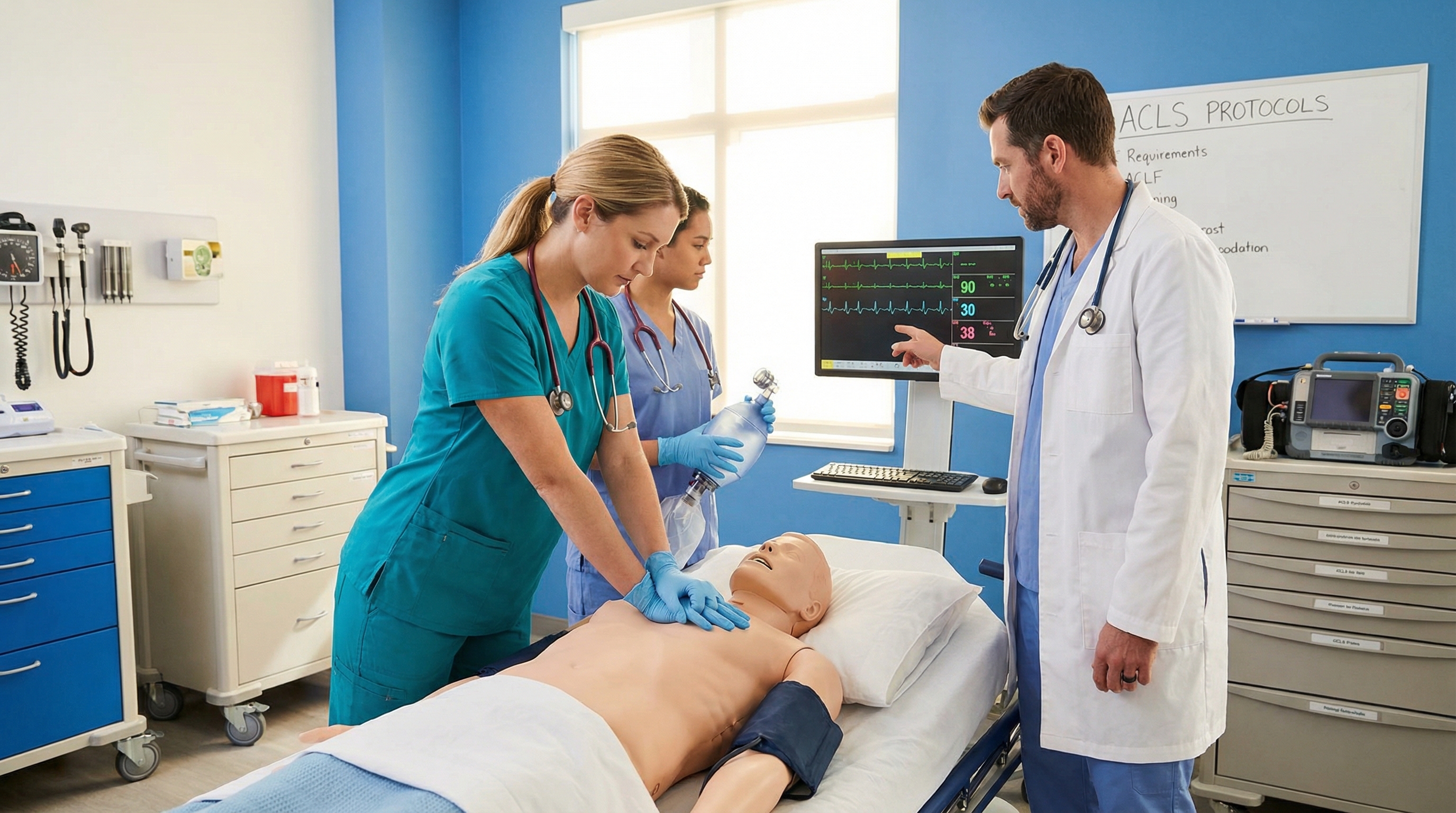
Nurse reviewing ACLS certification renewal timeline on a laptop


Knowing your card's exact expiration date also protects you from the most expensive outcome of all: letting certification lapse and facing tighter requirements than a standard renewal. For a closer look at how to read your card and track your timeline, see our guide on renewal timelines and requirements for busy clinicians. Course content is also periodically updated to reflect current AHA guidelines, so renewal is also how you stay current on any changes to resuscitation science, not just a paperwork exercise.


The Hidden Costs Nobody Puts on the Price Tag

The advertised course fee is rarely the full financial picture. For most clinicians, the indirect costs of renewal, the ones that never show up on a receipt, add up to more than the course itself.


Lost Wages and Time Away From the Floor

A frequently cited analysis of continuing nursing education, published in the Journal of Continuing Education in Nursing, found that the opportunity cost of time lost from work outweighed both the direct tuition cost and the indirect costs of travel, materials, and related expenses combined. In other words, the hours you spend away from a paid shift to sit through a class, drive to a testing site, or wait for an in-person megacode slot can cost more than the course itself, especially when that time comes out of unpaid leave rather than paid education time.


This is where a self-paced online renewal has a real financial advantage. Completing the course during downtime, between shifts, or from home shrinks the time cost dramatically compared to blocking out a full day for an in-person class. For a deeper look at how delayed renewal compounds this problem, read The Hidden Costs of Delaying ACLS Renewal.


Travel, Parking, and Lodging for In-Person Courses

If the nearest in-person ACLS renewal course is not at your own facility, travel becomes a real cost. Mileage, parking at a hospital or training center, and in rural or underserved areas, potentially a hotel stay for a course that only runs on specific dates, all add on top of the course fee itself. Clinicians in smaller towns or those working night shifts often find that the closest available in-person class is not convenient at all, which forces a choice between using paid time off for travel or losing another day of income.
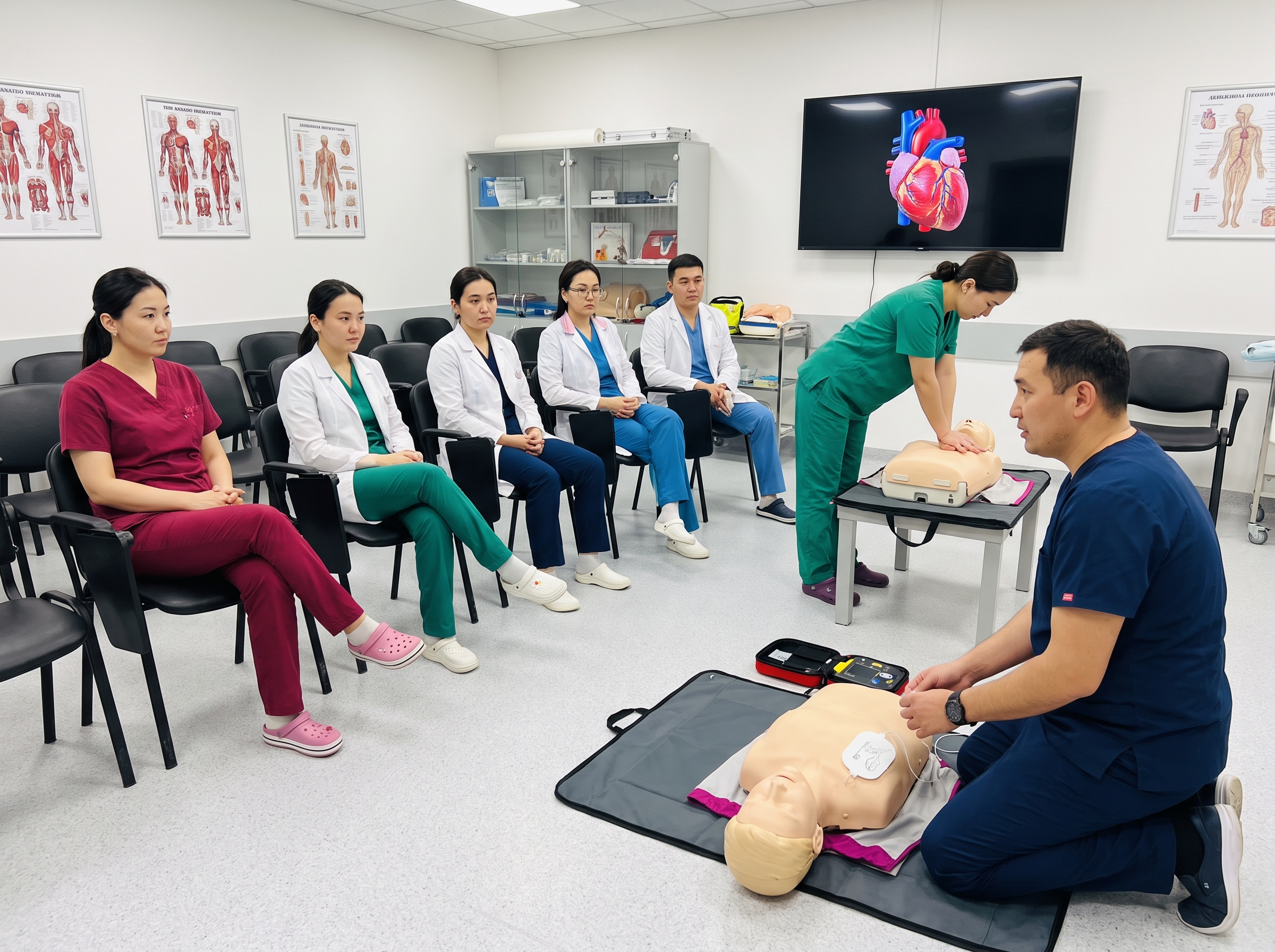
Healthcare professionals attending an in-person ACLS training class


Online courses remove this cost entirely, since there is no facility to drive to and no fixed class date to work around. We compare the full tradeoffs, not just price, in Comparing Online vs. In-Person ACLS Certification.


Retake Fees If You Do Not Pass the First Time

Many in-person providers charge an additional fee if you need to retest, whether that means a written exam retake or a second attempt at the megacode station. That fee is rarely disclosed upfront and can turn a single renewal into two separate charges. It is worth asking any provider, in-person or online, whether retakes are included before you enroll, since an unlimited-retake policy protects you from paying twice for the same certification cycle. Affordable ACLS includes unlimited retakes at no extra charge on every course, along with a money-back guarantee if your employer does not accept the certification, precisely to remove that risk.


What Happens if You Let Certification Lapse

Missing your renewal window does not just create a compliance headache, it often creates a more expensive one. Depending on how long a certification has lapsed and your employer's or state's specific policy, letting ACLS expire can mean completing a full initial certification course instead of the shorter renewal version, along with a scramble to get recertified before a scheduled shift, credentialing review, or facility audit. For a full breakdown of grace periods and what to do if your card has already expired, see What Happens If Your ACLS Certification Expires.


Can Your Employer Cover the Cost?

Many healthcare employers treat certification renewal as a cost of doing business rather than a personal expense, especially for roles where ACLS is a condition of employment. According to SHRM's 2025 Employee Benefits Survey, a substantial share of employers, roughly 45 percent, offer some form of tuition or education assistance, and healthcare systems in particular tend to fund training tied directly to a clinical role. If your department has never been asked to cover certification renewal, it is worth raising with your manager or HR before you pay out of pocket.


There is also a tax angle worth knowing. Under IRS rules for employer-provided educational assistance programs, employers can provide up to $5,250 per year in tax-free education benefits, which can include job-related certification costs like ACLS renewal. That structure benefits both sides: the employer receives a deductible expense, and you receive the benefit without it counting as taxable income. For a step-by-step approach to asking your employer to cover the cost, see our guide on getting your ACLS, BLS, or PALS certification paid for by your employer.


If you manage a unit or department rather than just your own certification, group renewal is usually more efficient than reimbursing each staff member individually. Facilities that need to keep an entire team current can review options on the Group Purchase Catalog, which is built for exactly this kind of bulk, facility-wide renewal.


Online vs. In-Person: Comparing the True Cost, Not Just the Course Fee

When clinicians compare ACLS renewal options, they usually compare course fees side by side and stop there. A more accurate comparison adds in the time cost, travel cost, and retake risk discussed above, since those factors often matter more than the sticker price. A department manager evaluating options for an entire unit faces the same math at a larger scale, weighing facility rental, an instructor's time, and every staff member's time away from patient care against the cost of an online alternative.


We walk through this exact comparison, fee by fee, in In-House ACLS Training vs. Online Certification: A True Cost Comparison for Department Managers, which is worth reading if you are responsible for keeping a team compliant rather than just your own card current.


There is also a compliance cost that rarely shows up in either column. A unit that lets certifications lapse across several staff members at once risks scheduling gaps during survey season or accreditation review, which can be far more expensive than the renewal itself in terms of overtime, temporary staffing, or delayed procedures. Building renewal into a predictable annual budget, rather than treating it as an emergency line item, protects against that risk regardless of which format you choose.


How to Keep Renewal Costs Predictable Year After Year

A few habits go a long way toward making ACLS renewal a routine, budgeted expense instead of a recurring surprise.


  • Put your expiration date on a calendar reminder 60 to 90 days out, so you have time to compare options instead of paying a rush fee for last-minute scheduling.
  • Ask your manager or HR department whether certification renewal is covered or reimbursable before you pay out of pocket.
  • Choose a provider with unlimited retakes included in the course fee, so a failed attempt does not turn into a second charge.
  • Favor self-paced, online formats when your schedule is unpredictable, since they remove travel and lost-wage costs almost entirely.
  • If you also hold BLS or PALS certification, look at bundled renewal pricing rather than renewing each certification separately.


Affordable ACLS was built around this exact problem: a self-paced, online recertification course with unlimited retakes at no extra charge, an immediate digital certificate once you pass, and a money-back guarantee if your employer does not accept it. Reviewing the current fee side by side with an in-person option, once you factor in travel and time off, is usually enough to see where the real savings are.


Frequently Asked Questions About ACLS Renewal Cost

Does bundling ACLS with BLS or PALS save money on renewal?

Often, yes, if your certifications expire around the same time. Renewing multiple certifications through a single bundled course typically costs less in total than paying for each renewal separately, and it also means one exam process and one certificate to track instead of several separate deadlines throughout the year.


Is ACLS renewal cheaper than getting certified for the first time?

Usually, yes. Renewal courses are shorter because they assume you already have a certification history and focus on refreshing algorithms and skills rather than teaching them from scratch, which is typically reflected in a lower course fee compared to initial certification.


Does my employer have to pay for ACLS renewal?

Not automatically. Some employers cover certification costs as a condition of employment, especially when ACLS is required for your specific role, while others expect staff to cover it individually. It is worth asking your manager or HR department directly, since many facilities have an education budget built for exactly this kind of expense.


What is the biggest hidden cost of ACLS renewal?

For most clinicians, it is lost wages from time away from a paid shift, not the course fee itself. Choosing a self-paced, online renewal format is one of the most direct ways to reduce that cost, since it removes the need to block out a full day for an in-person class.


Can I still renew if my certification has already expired?

Usually yes, though the requirements depend on how long the certification has lapsed and your employer's specific policy. In some cases you may need to complete a full initial certification course rather than the shorter renewal version, so it is best to renew before your card expires whenever possible.


The Bottom Line on ACLS Renewal Cost

The number on a provider's homepage is not the full cost of ACLS renewal. Once you factor in the two-year renewal cycle, lost wages for time away from work, travel for in-person classes, and the risk of retake fees, an affordable, self-paced online course usually wins on total cost, not just the advertised price. Add in the possibility of employer reimbursement or tax-free educational assistance, and renewal can end up costing you far less time and money than the sticker price on an in-person class suggests.


Whatever provider you choose, treat renewal as a recurring, plannable expense rather than a surprise. Mark your expiration date, ask about employer coverage early, and pick a format that fits your schedule instead of fighting it.


ACLS Blogs

How Much Does ACLS Renewal Actually Cost in 2026?

How Much Does ACLS Renewal Actually Cost in 2026?

If you search "ACLS renewal cost," you will find a wall of different numbers from different providers, and none of them tell the full story. The course fee listed on a provider's website is only one line item in what renewing your Advanced Cardiovascular Life Support certification actually costs a working clinician. Once you add up lost wages, travel time, possible retake fees, and the scramble that happens when a card lapses, the real cost of renewal looks very different from the number on the checkout page.


This guide breaks down what you are actually paying for when you renew ACLS, why the price varies so much between providers, which hidden costs catch clinicians off guard, and how employer coverage can offset some or all of the expense. Whether you are a nurse, physician, paramedic, dentist, or respiratory therapist staring down an expiration date, understanding the full cost picture helps you plan ahead instead of scrambling at the last minute.


What a Renewal Course Fee Actually Covers

ACLS recertification is generally priced lower than initial certification across the industry, since the renewal course assumes you already have foundational knowledge and focuses on refreshing algorithms, medications, and megacode scenarios rather than teaching them from the ground up. A renewal course fee typically covers access to the course material, the certification exam, and your certificate or card once you pass.


Pricing varies widely depending on the provider and format. In-person courses run through a hospital, training center, or a local American Heart Association Training Center typically bundle the course fee with facility costs, printed materials, and instructor time, which pushes the total higher. Online, self-paced platforms cut most of that overhead, which is part of why Affordable ACLS is built around straightforward, affordable pricing rather than the layered fees common at in-person centers. You can see current course pricing on the ACLS Recertification page, where the exact fee for your renewal is listed before you enroll.


If you hold more than one certification, bundling renewals can also reduce your total cost compared to renewing ACLS, BLS, and PALS separately on different schedules. It is worth checking whether your certifications happen to expire close together, since a combined renewal can save you a second round of scheduling and paperwork even before you look at price.


What Is Not Always Included in the Advertised Fee

Not every provider bundles the same things into a single price. Some in-person centers charge separately for a printed wallet card, a replacement card if yours is lost, or membership in a training network you did not ask to join. Others require you to purchase a provider manual separately from the course itself. Before you enroll anywhere, it is worth checking exactly what the quoted fee includes so you are not surprised by a second charge partway through the process.


This is also where format matters. A course that issues your certificate digitally the moment you pass, rather than mailing a physical card weeks later, removes both a wait and a potential shipping fee from the equation. It is a small detail, but it is one more place where the true cost of renewal can differ from the number you first see advertised.


Why You Are Paying Again So Soon: The Two-Year Renewal Cycle

Part of what makes ACLS renewal feel expensive is simply how often it comes around. According to the American Heart Association's course card guidance, ACLS provider cards are valid for two years from the completion date, so the cost of renewal is not a one-time expense but a recurring one built into every clinician's career. Budgeting for it as a predictable, recurring line item, rather than a surprise every other year, is one of the simplest ways to reduce the stress and expense around it.

Nurse reviewing ACLS certification renewal timeline on a laptop


Knowing your card's exact expiration date also protects you from the most expensive outcome of all: letting certification lapse and facing tighter requirements than a standard renewal. For a closer look at how to read your card and track your timeline, see our guide on renewal timelines and requirements for busy clinicians. Course content is also periodically updated to reflect current AHA guidelines, so renewal is also how you stay current on any changes to resuscitation science, not just a paperwork exercise.


The Hidden Costs Nobody Puts on the Price Tag

The advertised course fee is rarely the full financial picture. For most clinicians, the indirect costs of renewal, the ones that never show up on a receipt, add up to more than the course itself.


Lost Wages and Time Away From the Floor

A frequently cited analysis of continuing nursing education, published in the Journal of Continuing Education in Nursing, found that the opportunity cost of time lost from work outweighed both the direct tuition cost and the indirect costs of travel, materials, and related expenses combined. In other words, the hours you spend away from a paid shift to sit through a class, drive to a testing site, or wait for an in-person megacode slot can cost more than the course itself, especially when that time comes out of unpaid leave rather than paid education time.


This is where a self-paced online renewal has a real financial advantage. Completing the course during downtime, between shifts, or from home shrinks the time cost dramatically compared to blocking out a full day for an in-person class. For a deeper look at how delayed renewal compounds this problem, read The Hidden Costs of Delaying ACLS Renewal.


Travel, Parking, and Lodging for In-Person Courses

If the nearest in-person ACLS renewal course is not at your own facility, travel becomes a real cost. Mileage, parking at a hospital or training center, and in rural or underserved areas, potentially a hotel stay for a course that only runs on specific dates, all add on top of the course fee itself. Clinicians in smaller towns or those working night shifts often find that the closest available in-person class is not convenient at all, which forces a choice between using paid time off for travel or losing another day of income.

Healthcare professionals attending an in-person ACLS training class


Online courses remove this cost entirely, since there is no facility to drive to and no fixed class date to work around. We compare the full tradeoffs, not just price, in Comparing Online vs. In-Person ACLS Certification.


Retake Fees If You Do Not Pass the First Time

Many in-person providers charge an additional fee if you need to retest, whether that means a written exam retake or a second attempt at the megacode station. That fee is rarely disclosed upfront and can turn a single renewal into two separate charges. It is worth asking any provider, in-person or online, whether retakes are included before you enroll, since an unlimited-retake policy protects you from paying twice for the same certification cycle. Affordable ACLS includes unlimited retakes at no extra charge on every course, along with a money-back guarantee if your employer does not accept the certification, precisely to remove that risk.


What Happens if You Let Certification Lapse

Missing your renewal window does not just create a compliance headache, it often creates a more expensive one. Depending on how long a certification has lapsed and your employer's or state's specific policy, letting ACLS expire can mean completing a full initial certification course instead of the shorter renewal version, along with a scramble to get recertified before a scheduled shift, credentialing review, or facility audit. For a full breakdown of grace periods and what to do if your card has already expired, see What Happens If Your ACLS Certification Expires.


Can Your Employer Cover the Cost?

Many healthcare employers treat certification renewal as a cost of doing business rather than a personal expense, especially for roles where ACLS is a condition of employment. According to SHRM's 2025 Employee Benefits Survey, a substantial share of employers, roughly 45 percent, offer some form of tuition or education assistance, and healthcare systems in particular tend to fund training tied directly to a clinical role. If your department has never been asked to cover certification renewal, it is worth raising with your manager or HR before you pay out of pocket.


There is also a tax angle worth knowing. Under IRS rules for employer-provided educational assistance programs, employers can provide up to $5,250 per year in tax-free education benefits, which can include job-related certification costs like ACLS renewal. That structure benefits both sides: the employer receives a deductible expense, and you receive the benefit without it counting as taxable income. For a step-by-step approach to asking your employer to cover the cost, see our guide on getting your ACLS, BLS, or PALS certification paid for by your employer.


If you manage a unit or department rather than just your own certification, group renewal is usually more efficient than reimbursing each staff member individually. Facilities that need to keep an entire team current can review options on the Group Purchase Catalog, which is built for exactly this kind of bulk, facility-wide renewal.


Online vs. In-Person: Comparing the True Cost, Not Just the Course Fee

When clinicians compare ACLS renewal options, they usually compare course fees side by side and stop there. A more accurate comparison adds in the time cost, travel cost, and retake risk discussed above, since those factors often matter more than the sticker price. A department manager evaluating options for an entire unit faces the same math at a larger scale, weighing facility rental, an instructor's time, and every staff member's time away from patient care against the cost of an online alternative.


We walk through this exact comparison, fee by fee, in In-House ACLS Training vs. Online Certification: A True Cost Comparison for Department Managers, which is worth reading if you are responsible for keeping a team compliant rather than just your own card current.


There is also a compliance cost that rarely shows up in either column. A unit that lets certifications lapse across several staff members at once risks scheduling gaps during survey season or accreditation review, which can be far more expensive than the renewal itself in terms of overtime, temporary staffing, or delayed procedures. Building renewal into a predictable annual budget, rather than treating it as an emergency line item, protects against that risk regardless of which format you choose.


How to Keep Renewal Costs Predictable Year After Year

A few habits go a long way toward making ACLS renewal a routine, budgeted expense instead of a recurring surprise.


  • Put your expiration date on a calendar reminder 60 to 90 days out, so you have time to compare options instead of paying a rush fee for last-minute scheduling.
  • Ask your manager or HR department whether certification renewal is covered or reimbursable before you pay out of pocket.
  • Choose a provider with unlimited retakes included in the course fee, so a failed attempt does not turn into a second charge.
  • Favor self-paced, online formats when your schedule is unpredictable, since they remove travel and lost-wage costs almost entirely.
  • If you also hold BLS or PALS certification, look at bundled renewal pricing rather than renewing each certification separately.


Affordable ACLS was built around this exact problem: a self-paced, online recertification course with unlimited retakes at no extra charge, an immediate digital certificate once you pass, and a money-back guarantee if your employer does not accept it. Reviewing the current fee side by side with an in-person option, once you factor in travel and time off, is usually enough to see where the real savings are.


Frequently Asked Questions About ACLS Renewal Cost

Does bundling ACLS with BLS or PALS save money on renewal?

Often, yes, if your certifications expire around the same time. Renewing multiple certifications through a single bundled course typically costs less in total than paying for each renewal separately, and it also means one exam process and one certificate to track instead of several separate deadlines throughout the year.


Is ACLS renewal cheaper than getting certified for the first time?

Usually, yes. Renewal courses are shorter because they assume you already have a certification history and focus on refreshing algorithms and skills rather than teaching them from scratch, which is typically reflected in a lower course fee compared to initial certification.


Does my employer have to pay for ACLS renewal?

Not automatically. Some employers cover certification costs as a condition of employment, especially when ACLS is required for your specific role, while others expect staff to cover it individually. It is worth asking your manager or HR department directly, since many facilities have an education budget built for exactly this kind of expense.


What is the biggest hidden cost of ACLS renewal?

For most clinicians, it is lost wages from time away from a paid shift, not the course fee itself. Choosing a self-paced, online renewal format is one of the most direct ways to reduce that cost, since it removes the need to block out a full day for an in-person class.


Can I still renew if my certification has already expired?

Usually yes, though the requirements depend on how long the certification has lapsed and your employer's specific policy. In some cases you may need to complete a full initial certification course rather than the shorter renewal version, so it is best to renew before your card expires whenever possible.


The Bottom Line on ACLS Renewal Cost

The number on a provider's homepage is not the full cost of ACLS renewal. Once you factor in the two-year renewal cycle, lost wages for time away from work, travel for in-person classes, and the risk of retake fees, an affordable, self-paced online course usually wins on total cost, not just the advertised price. Add in the possibility of employer reimbursement or tax-free educational assistance, and renewal can end up costing you far less time and money than the sticker price on an in-person class suggests.


Whatever provider you choose, treat renewal as a recurring, plannable expense rather than a surprise. Mark your expiration date, ask about employer coverage early, and pick a format that fits your schedule instead of fighting it.


blogs

More articles for you

all articles

Start Today!

Get certified at your own pace, on your schedule, from the comfort of your home.