Pharmacy school teaches you pharmacokinetics, therapeutics, and law. It rarely tells you which life-support card your first employer will expect you to carry. So the question comes up the week you get an offer: do pharmacists need ACLS, or is BLS enough, or is any of it required at all?
The honest answer is that it depends on where you practice. No single national rule says every pharmacist must hold ACLS. What exists instead is a patchwork of employer policies, state immunization rules, and residency program expectations. This guide sorts that patchwork by practice setting so you know what to ask for, what to expect, and what to confirm in writing before you pay for a course.
If you already work in a hospital and want the story of how pharmacists have taken on a bigger role during codes, we covered that in our article on clinical pharmacists and ACLS on code response teams. This article is different. It is a requirements guide: who asks for what, and why.
Here is the quick version before we go setting by setting. Treat it as a starting point, not a rule, because employers set their own policies.
Notice what is missing from that list: a blanket legal mandate. When someone says "pharmacists must have ACLS," they are almost always describing one employer's policy, not a universal law. The way to get a real answer is to ask your own employer and, where relevant, your state board of pharmacy.
Before comparing settings, it helps to be clear on what you would be signing up for. The two courses are not interchangeable.
BLS (Basic Life Support) is the healthcare-provider level of CPR training. It covers high-quality chest compressions, rescue breaths, AED use, relief of choking, and working as part of a two-rescuer team. It assumes no prescribing authority and no drug knowledge. If you want a deeper comparison, our guide to the difference between BLS and ACLS lays it out side by side.
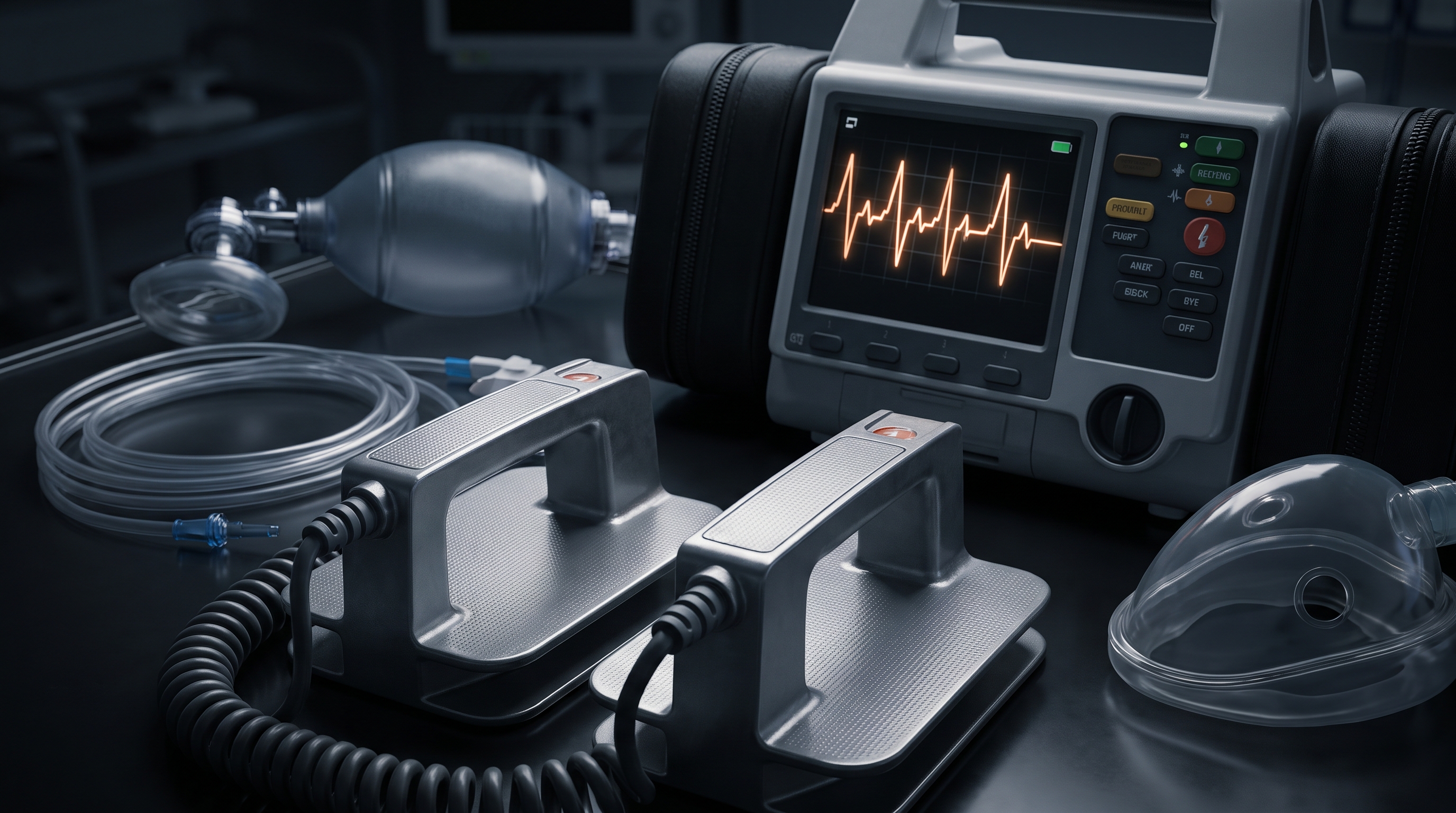
ACLS (Advanced Cardiovascular Life Support) builds on BLS. It covers cardiac arrest algorithms for shockable and non-shockable rhythms, rhythm recognition, bradycardia and tachycardia management, post-arrest care, resuscitation medications, airway considerations, and team communication. For a pharmacist, the medication content is the part that feels closest to home: epinephrine, amiodarone, adenosine, atropine, and the reasoning behind when each is used.
One practical point: ACLS assumes you already have BLS skills. If you hold neither, many pharmacists start with BLS because it is the credential most settings ask for, then add ACLS if their role calls for it. Our article on who needs BLS certification, job by job is a useful companion if you are sorting out the baseline.
Hospitals are where the ACLS question is most real, because pharmacists in acute care may be physically present when a patient arrests.
Many hospitals send a pharmacist to codes. The reasons are practical: someone has to confirm drug selection and dose, prepare medications quickly, and keep an accurate record of what was given and when. A scoping review of pharmacist involvement in cardiac arrest and trauma resuscitations, published through the National Library of Medicine's PMC archive, surveys how these roles are described in the literature, including medication preparation, drug information, therapeutic recommendations, and documentation support.
Whether a hospital requires ACLS for that role is a local decision. Some pharmacy departments require it for anyone assigned to the code pager. Others require BLS for everyone and treat ACLS as preferred, or as an expectation that kicks in once you join the response team. Still others have no formal policy beyond what the medical staff office requires. You will not know until you ask.
Pharmacists embedded in the emergency department or intensive care unit are the most likely to be expected to hold ACLS, since they routinely work alongside teams managing arrhythmias, shock, and arrest. In those roles, ACLS is often described in job postings as required or preferred. Read the posting carefully, and when it says "preferred," ask whether that means you will be assigned to codes without it. The distinction matters for how quickly you need to get certified.
It is tempting to think a pharmacist already knows the drugs, so the course adds little. But ACLS is not mainly a pharmacology exam. It teaches the sequence: when compressions pause, when a rhythm check happens, when a drug is due, and how a team communicates during all of that. Understanding the timing logic is what lets you anticipate what the team leader will ask for next. Our piece on ACLS medication timing and drug delivery windows shows why that sequencing knowledge matters at the bedside.
Current resuscitation guidelines from the American Heart Association describe the resuscitation team as an interdisciplinary effort. The AHA publishes its guidelines at cpr.heart.org, and it is worth reading the in-hospital system-of-care material to see how your own role fits.

In a retail or community pharmacy, the question flips. Almost nobody expects a community pharmacist to run an ACLS algorithm at the counter. What does come up, repeatedly, is basic CPR, and it comes up through immunizations.
Pharmacists commonly administer vaccines as part of community practice, and some states and training programs tie that authority to a current CPR or BLS credential. We can only point to examples we can source, and the rules differ by jurisdiction, so treat these as illustrations rather than a national summary:
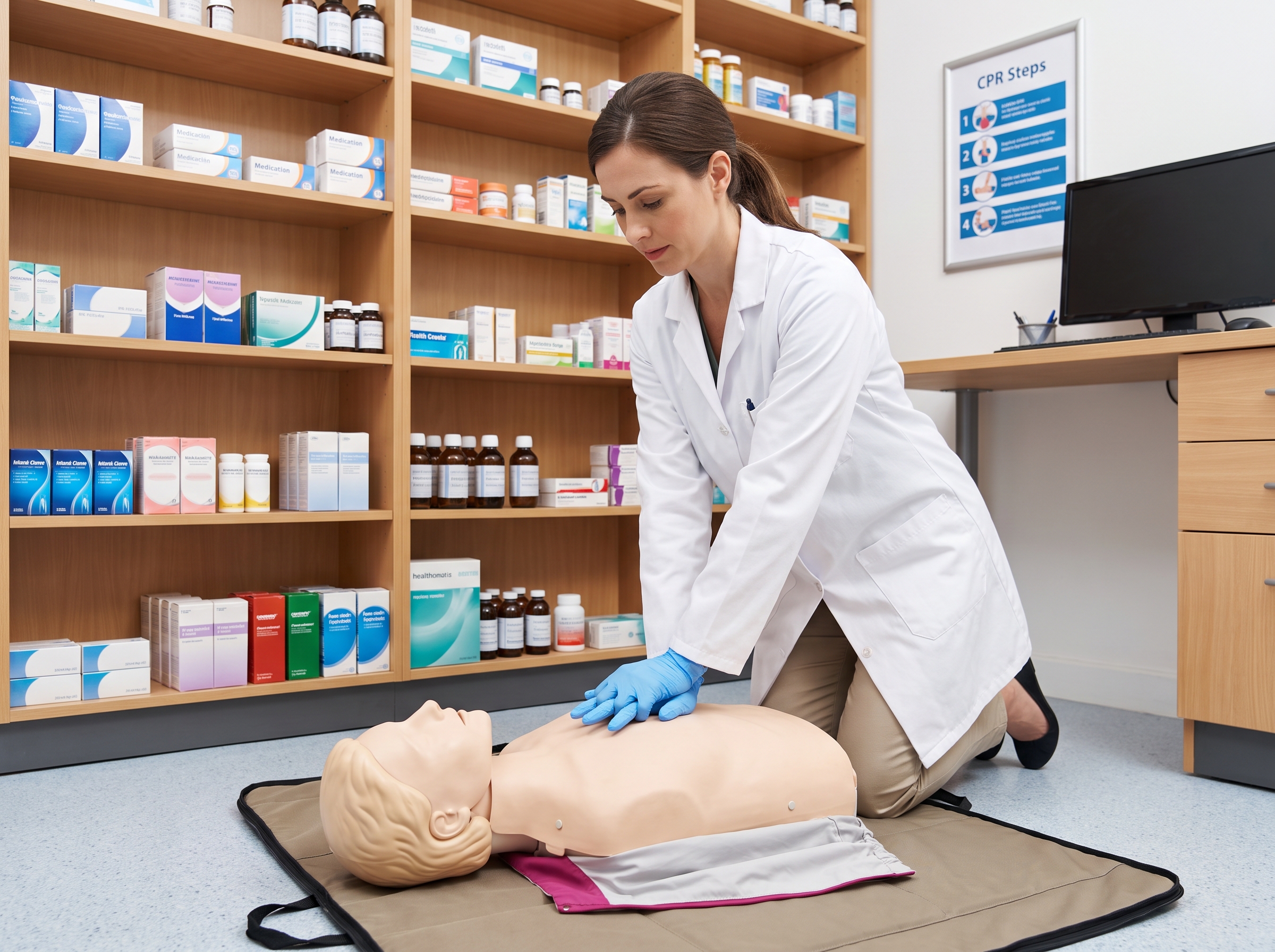
Notice what these have in common. They point to CPR or BLS, not ACLS. For a retail pharmacist whose emergency exposure is a patient who faints after a vaccination or collapses in an aisle, BLS is the relevant skill: compressions, AED use, and recognizing when to call for help. If your chain asks you to hold a card, it is far more likely to be BLS than ACLS.
One important caution. Not every state ties immunization authority to a CPR credential, and some require specific course types or providers. Do not assume the New York or DC rule applies where you practice. Your state board of pharmacy is the authority, and your employer's immunization policy may be stricter than the state's minimum.
"CPR certification" is a loose phrase, and requirements often specify healthcare-provider-level training. Our explainer on whether online certification is legitimate and how employers verify it covers the questions to ask, such as whether your employer or state board accepts a fully online course or expects an in-person skills component. Get that answer before you enroll. For a standard healthcare-provider card, our online BLS course is built around the same adult, child, and infant CPR and AED content that employers typically look for. It is backed by a money-back guarantee if your employer does not accept it.
Some community pharmacists add ACLS voluntarily. Common reasons include planning a move into hospital practice, wanting more confidence managing a collapse until EMS arrives, or working in a clinic-style pharmacy that offers more patient care services. None of those make ACLS a requirement, but they are legitimate reasons to take it. If a hospital job is on your horizon, getting ACLS early removes a hurdle from your first-week paperwork.
Residency is where many pharmacists first encounter a formal ACLS expectation. Hospital-based PGY1 programs in particular often involve code response, ED rotations, or critical care rotations, and they may list life-support certification among the items to complete.
The requirement usually lives in the individual program's residency manual or onboarding checklist rather than in a single national rule. As one example, the University of Michigan Health pharmacy residency manual addresses life-support certification for residents. Your program may differ, so read yours rather than assuming.
Timing is the real issue. Many programs expect certification to be in place early in the residency year, and it is easy to overlook while you are relocating and learning a new health system. If you already know where you matched, email the program coordinator now and ask three questions: which certifications are required, by what date, and which course providers are accepted. Our guide on balancing residency and ACLS certification covers how to fit the coursework into a resident's schedule.
Community pharmacy residencies, managed care residencies, and other non-acute programs may emphasize BLS (for immunization authority) rather than ACLS. Again, the manual is the source of truth. Do not copy a requirement from a friend's hospital program.
Pharmacists work in more settings than hospital and retail, and each has its own pattern.
These are patterns, not rules. The only reliable method is to ask. A job posting that lists "BLS required, ACLS preferred" is telling you something specific, and a recruiter can usually clarify in a single email.
Use this as a conversation starter with your employer, not as a replacement for their policy.
A short verification routine saves money and avoids a rejected card. Work through it in this order.
We deliberately do not list state-by-state rules here. They change, they are written by boards and legislatures, and a wrong summary could cost you a job offer. The sources linked above are examples, and your board and employer are the final word.
If your employer or program confirms that you need ACLS, the practical question becomes how to get it without losing a weekend. Affordable ACLS was built by practicing emergency medicine physicians for exactly this situation: the courses are online, self-paced, based on current AHA and ILCOR guidelines, and you can download your digital card as soon as you pass. Unlimited retakes and a money-back guarantee if your employer does not accept the certification are included.
For first-time ACLS, start with the ACLS certification course. Pharmacists often find the medication and algorithm modules familiar, which makes the self-paced format efficient. Many learners complete the material in a short block of study time, and you can save your progress and return later.
If your employer wants both credentials, remember that ACLS builds on BLS skills. Taking the two together is worth considering when a job requires both, and a pharmacy manager buying for several staff may prefer our group options.
One more tip: ask whether your employer reimburses certification costs. Pharmacy departments often have professional development budgets, and a quick question before you buy can pay off.
Almost certainly not as a baseline. Focus on confirming whether your employer or state requires BLS or CPR, especially if you will immunize. You can add ACLS later if your career moves toward acute care.
Ask the pharmacy manager first. If the role includes code response, ACLS is likely worth having early. If it is a verbal expectation rather than a written one, ask for clarification so you know the deadline.
This article is about pharmacists. Technician requirements vary independently, and some immunization-related technician roles have their own rules. Check with your employer and state board.
It can be, if you want to work in acute care later or want to be more effective during an emergency. It is a personal and career decision, not a compliance one, unless your employer says otherwise.
Do pharmacists need ACLS? Sometimes, and it depends on the setting. Hospital pharmacists who respond to codes or work in the ED and ICU are the most likely to be asked for it. Retail and community pharmacists are far more likely to be asked for BLS or CPR, particularly where immunization rules reference it. Residents should check their program manual early.
Whatever your setting, confirm the requirement with your employer and your state board of pharmacy before you buy a course, and keep your credentials current. Once you know what you need, getting it done does not have to be expensive or disruptive. And if your career path leads toward the code team, our article on how clinical pharmacists are expanding their role in code response is a good next read.
.jpg)