Atropine is the first drug listed in the adult bradycardia algorithm, so it is the first thing most of us reach for when a patient with a slow heart rate starts to look sick. It is also one of the most commonly misused drugs on the ACLS exam and in real codes. Not because the dose is hard to remember, but because providers give it to patients whose rhythm cannot respond to it, and lose precious minutes while the pacer sits unopened.
This quick reference does two jobs. First, it gives you the dosing card: dose, interval, ceiling, and what to do when it fails. Second, and more important for the megacode, it explains the rhythms where atropine is unlikely to work and the situations where it can make things worse. If you want the full algorithm context, our adult bradycardia with a pulse algorithm page lays out every branch, and this article is the drug-specific companion to it.
Here is the card version. Per the AHA adult bradycardia algorithm, atropine is given as follows for a patient with a pulse who has bradycardia with persistent signs of poor perfusion:
Older versions of the algorithm used 0.5 mg as the single dose, and many providers still carry that number in their heads. The AHA raised the single dose to 1 mg, partly because of concern that smaller doses can paradoxically slow the heart rate. A recent scoping review of initial IV atropine dosing in symptomatic bradycardia on PubMed Central goes through the evidence behind this question if you want to see how thin the underlying data really is. Because algorithms get updated, always confirm against the version your course and your institution currently follow.
On the exam, the common traps are the old 0.5 mg dose, forgetting the 3 mg ceiling, and giving a second or third dose to a patient who clearly is not responding. A good rule: one dose, reassess within a few minutes, and if the rhythm is a type that atropine cannot fix, do not wait for dose number two before you pace.
Give atropine as a rapid IV push followed by a flush, not a slow drip. Slow administration is one of the situations associated with paradoxical slowing, which we cover below. If you do not have IV access, intraosseous access is an acceptable alternative route in most resuscitation settings, and our step-by-step guide to intraosseous access walks through the technique. Keep in mind that the whole point of atropine is speed. If getting access is taking longer than getting pads on the patient, the pads win.
Atropine sits alongside epinephrine, amiodarone, adenosine, and the other core ACLS drugs. If you want every dose, route, and indication on one page, use our ACLS medications cheat sheet. This article goes deeper on the one drug in that list that is most often given at the wrong time.
Atropine is a muscarinic antagonist. It blocks the vagus nerve's effect on the heart. That means it can speed up the sinoatrial (SA) node and improve conduction through the atrioventricular (AV) node, but only when excess vagal tone is part of what is slowing the heart.
That one sentence is the entire framework for deciding whether atropine will help. Ask yourself two questions. First, is the problem located in tissue that the vagus nerve actually controls, namely the SA node and the AV node? Second, is the vagus nerve actually connected to that tissue in this patient? If the answer to either is no, atropine has nothing to work with.

Atropine tends to help when the block or slow rate is located high in the conduction system, at or above the AV node, and when vagal tone is a major contributor. Common examples include:
The 2018 ACC/AHA/HRS bradycardia guideline, available through AHA Journals, is the document to go to for the underlying logic of how bradycardia and conduction delay are classified and managed. The practical takeaway for ACLS providers is simple: the higher the block, the better the odds that atropine will help.
One honest caveat. Even in the best-case rhythms, response is not guaranteed, and plenty of patients with symptomatic bradycardia do not respond to atropine at all. Treat the first dose as a short test, not a treatment plan. If the patient is still hypotensive, altered, or in shock a few minutes later, you already have your answer.
These are the situations that matter most for the megacode and for real patients. In each of them, atropine is unlikely to help, and in some of them it can do harm.
When the block is below the AV node, in the His-Purkinje system, the vagus nerve is not what is blocking conduction. The problem is structural or ischemic damage to the conduction tissue itself. Blocking vagal input does nothing to fix that.
The clues you can spot at the bedside are a wide QRS, a block that appears abruptly rather than with progressive PR lengthening, and dropped beats with a constant PR interval, which is the classic Mobitz II picture. Third-degree block with a wide-complex escape rhythm is the same story. Atropine is generally considered ineffective in these rhythms, and there is a recognized concern that speeding up the atrial rate can increase the number of impulses hitting a failing His-Purkinje system, which can worsen the degree of block. If you are not confident about distinguishing these rhythms, our guide to first, second, and third degree heart blocks is built for exactly that problem.
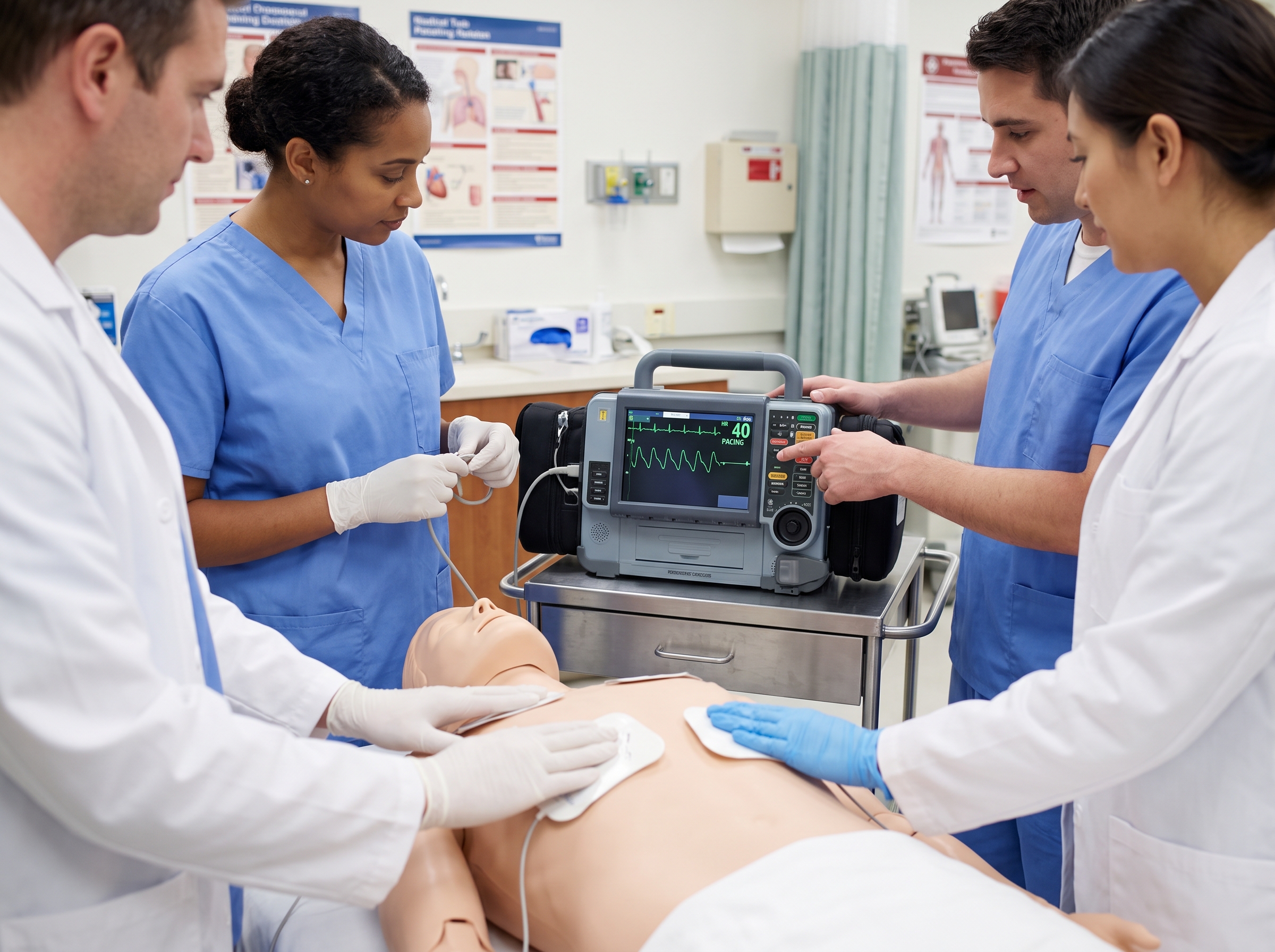
The action in this case is not to push through atropine doses one, two, and three. It is to prepare for pacing, and our companion piece on transcutaneous pacing covers when and how to do it. Pacing and a chronotropic infusion are the bridges to a transvenous pacer or definitive care.
A transplanted heart has been surgically separated from its vagal supply. There are no nerves for atropine to disinhibit. As a result, atropine is generally ineffective for bradycardia in a heart transplant recipient, as summarized in the RCEMLearning reference on managing cardiac transplant patients in the emergency department. An older editorial in Circulation on the surgically denervated, transplanted human heart describes the physiology behind this: the denervated graft relies on circulating catecholamines rather than autonomic nerve input to change its rate.
There is a further wrinkle. Reports in transplant recipients have described atropine being followed by sinus arrest or complete AV block rather than a faster rate, so it is not just a harmless miss. In a transplant patient with symptomatic bradycardia, think about catecholamine-based chronotropy and pacing early, and loop in the transplant team. Our article on ACLS for organ transplant teams covers the wider picture of resuscitating donor and recipient patients.
A counterintuitive limit of atropine is that too little can make things worse. Underdosing, or pushing slowly, has been associated with a transient further slowing of the heart rate. Case reports include a paradoxical worsening of bradycardia following atropine administration, and the anesthesia literature describes AV conduction block induced by low-dose atropine. The proposed explanations include a central vagal effect that shows up before the peripheral blocking effect is fully established.
The takeaway is practical. Do not split a dose to "be careful." Give the full 1 mg as a push. If you see a short-lived slowing right after a small or slow dose, recognize it for what it likely is rather than assuming the patient has crashed on you.
There are several other settings where atropine is a poor fit or needs a second thought:
Here is the thought process that works in a megacode station and on a real unit, in order:
For the second-line steps, the managing bradycardia algorithm explained article covers dopamine and epinephrine infusions and when to call for expert help in more detail.
Atropine questions on the written exam usually test one of three ideas. The first is dose and interval: 1 mg, every 3 to 5 minutes, maximum 3 mg. The second is rhythm selection, where you are shown a strip and asked what to do. Expect a Mobitz II or third-degree block with a wide QRS and a "best next step" answer that is pacing, not atropine. The third is the failure pathway: atropine is not working, so what is next? The answer is pacing or a chronotropic infusion, not another round of the same drug.
In a megacode, the instructor usually wants to see you verbalize your reasoning. Say the rhythm, say why atropine is or is not appropriate, and say what you will do if it fails. A short script that works: "Symptomatic bradycardia with a narrow complex and signs of poor perfusion. I will give atropine 1 mg IV push, and have pacer pads ready in case it fails." That one sentence covers the dose, the rationale, and the backup plan.
If you want to test this reasoning before exam day, the free ACLS practice tests include rhythm and drug-selection questions that mirror the style of the real thing. And if you are working toward certification or renewal, Affordable ACLS offers a self-paced, online ACLS certification and recertification course built by practicing emergency physicians, with unlimited retakes and a money-back guarantee if your employer does not accept it.
Atropine is a good drug for a narrow set of rhythms. It works on the vagus nerve, so it works at the SA node and AV node, and it does very little for infranodal block or a denervated transplanted heart. Give 1 mg IV push, repeat every 3 to 5 minutes up to 3 mg, and have the pads on the patient before you are sure you need them.
Keep the logic simple: rhythm first, then drug. For the full picture, pair this card with the adult bradycardia algorithm, keep the medications cheat sheet within reach, and review your local protocols, since institutions may layer their own preferences on top of national guidance. This article is educational and does not replace your protocols, your training, or your clinical judgment at the bedside.
.jpg)