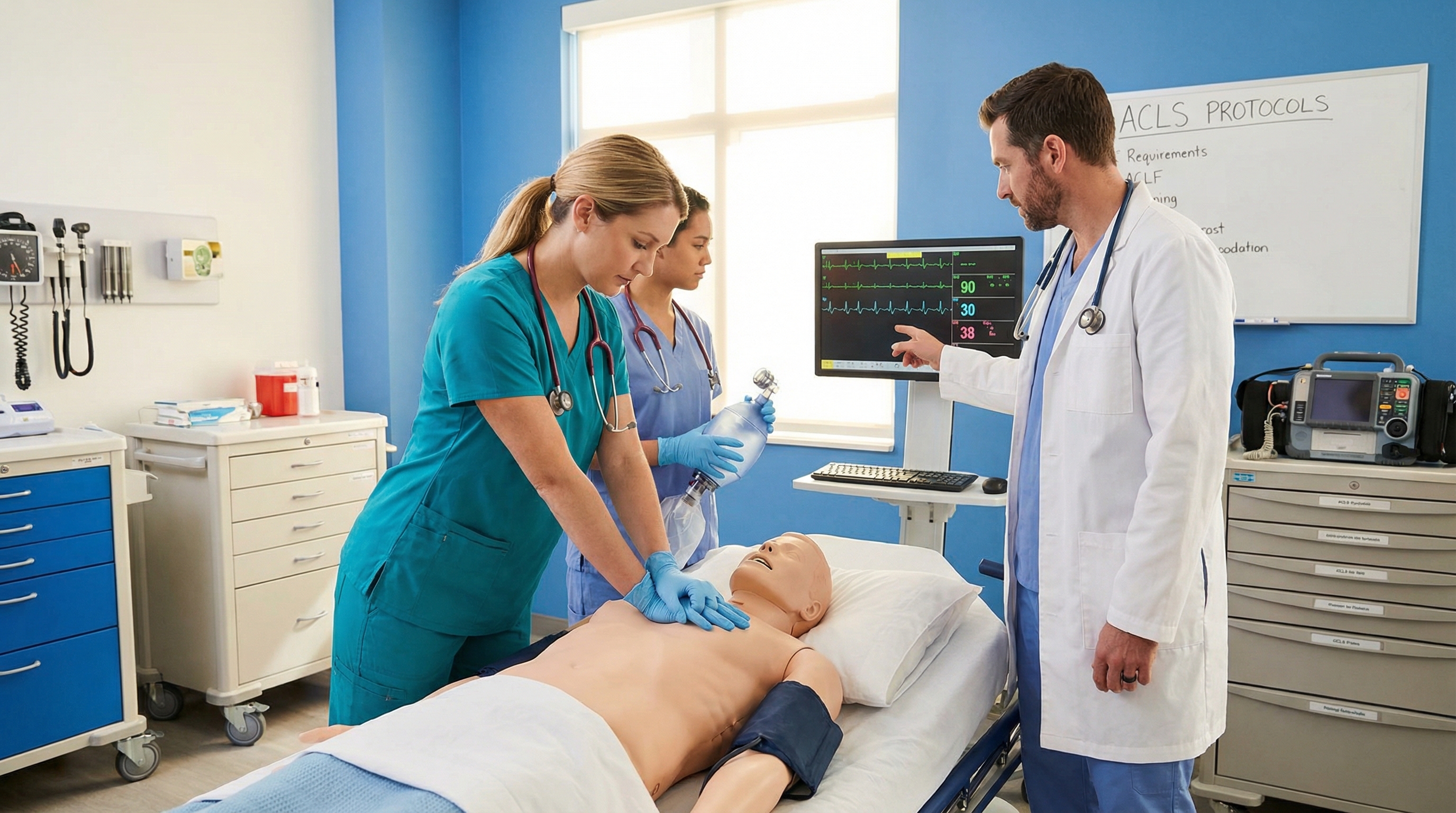
Urgent care centers have evolved from treating minor ailments to managing increasingly complex medical emergencies. As emergency departments face overcrowding and primary care access becomes more limited, urgent care facilities are seeing higher-acuity presentations, including myocardial infarction, respiratory distress, and cardiac arrest. According to emergency preparedness research in urgent care settings, the pandemic has exacerbated trends that have led to more critically ill patients seeking care in community-based facilities rather than traditional hospital settings.
For urgent care providers, this shift means that ACLS certification is no longer optional—it's essential. Whether you're a physician, nurse practitioner, physician assistant, or registered nurse working in an urgent care environment, your ability to recognize and manage cardiac emergencies can mean the difference between life and death. Advanced Cardiovascular Life Support training equips you with the systematic approach, clinical algorithms, and intervention skills needed to stabilize patients experiencing acute coronary syndromes, cardiac arrest, or life-threatening arrhythmias until emergency medical services arrive or transfer to a higher level of care can be arranged.
This comprehensive guide explores the unique challenges urgent care providers face when managing cardiac events outside traditional hospital settings, the essential ACLS skills required for these environments, and practical strategies for implementing effective cardiac emergency protocols in your facility.
The urgent care setting presents unique challenges that differ significantly from hospital-based emergency departments. You may have limited resources, smaller clinical teams, and less immediate access to specialized cardiac care. Yet patients experiencing chest pain, shortness of breath, or sudden collapse don't always make it to the emergency department first—they often walk through urgent care doors expecting immediate help.
ACLS certification provides urgent care providers with standardized, evidence-based protocols for managing cardiovascular emergencies. These protocols are based on current American Heart Association guidelines, which emphasize the critical importance of early recognition, rapid intervention, and coordinated team-based care. When every minute counts—and research shows that each 5-minute delay in return of spontaneous circulation is associated with a 38% increased risk of death—having a systematic approach is crucial.
Beyond the clinical skills, ACLS certification is increasingly becoming a requirement for urgent care employment. The Urgent Care Association has incorporated emergency preparedness standards into accreditation requirements, and many facilities now mandate ACLS certification for all providers as part of their commitment to patient safety and quality care.
Acute coronary syndrome represents one of the most common cardiac emergencies you'll encounter in urgent care. Patients may present with classic chest pain, but many—particularly women, elderly patients, and those with diabetes—present with atypical symptoms such as jaw pain, nausea, shortness of breath, or overwhelming fatigue. Understanding the symptoms of acute coronary syndrome is essential for early recognition and intervention.
Your ACLS training provides the framework for managing ACS, including the acute coronary syndrome algorithm that guides decision-making from initial assessment through treatment and transfer. Key interventions include oxygen administration when indicated, aspirin administration, nitroglycerin for chest pain relief, pain management with morphine if needed, and immediate 12-lead ECG acquisition within 10 minutes of patient arrival.
The 2025 ACC/AHA/ACEP guidelines for acute coronary syndromes emphasize the importance of early risk stratification and rapid triage to facilities capable of percutaneous coronary intervention when ST-segment elevation is present. In the urgent care setting, your role focuses on recognition, initial stabilization, and coordinated transfer to definitive care.
While less common than ACS, cardiac arrest in an urgent care facility requires immediate, coordinated action. Sudden cardiac arrest can occur in patients who walk in with complaints or collapse in your waiting room. Out-of-hospital cardiac arrest affects approximately 350,000 patients annually in the United States, and a small but significant percentage of these events occur in medical facilities outside traditional emergency departments.
The adult cardiac arrest algorithm provides the step-by-step framework for managing these critical events. Your response must be immediate and systematic: activate your emergency response system, begin high-quality CPR with compressions at a rate of 100-120 per minute and depth of 2-2.4 inches, apply an automated external defibrillator and follow prompts for rhythm analysis and defibrillation, establish vascular access for medication administration, and administer appropriate ACLS medications according to the arrest algorithm.
According to AHA systems of care guidelines, the speed of initiating CPR is more important than who performs it. In urgent care settings, this underscores the importance of having all staff members trained in basic life support and immediately available emergency equipment.
Patients presenting with symptomatic arrhythmias represent another category of cardiac emergencies requiring ACLS expertise. Bradycardia causing hypotension, altered mental status, chest pain, or acute heart failure requires prompt intervention. Your ACLS training covers the use of atropine as first-line therapy, transcutaneous pacing when atropine is ineffective, and epinephrine or dopamine infusions for refractory cases.
Tachycardia management depends on whether the patient is stable or unstable. Unstable patients with altered mental status, chest pain, hypotension, or signs of shock require immediate synchronized cardioversion. Stable patients allow time for rhythm identification and targeted treatment, which may include vagal maneuvers for narrow-complex tachycardias, adenosine administration for supraventricular tachycardia, or rate control medications for atrial fibrillation.
High-quality cardiopulmonary resuscitation forms the foundation of successful cardiac arrest management. ACLS training emphasizes specific metrics that define quality: compression depth of 2-2.4 inches for adults, compression rate of 100-120 per minute, allowing complete chest recoil between compressions, minimizing interruptions to less than 10 seconds, and avoiding excessive ventilation.
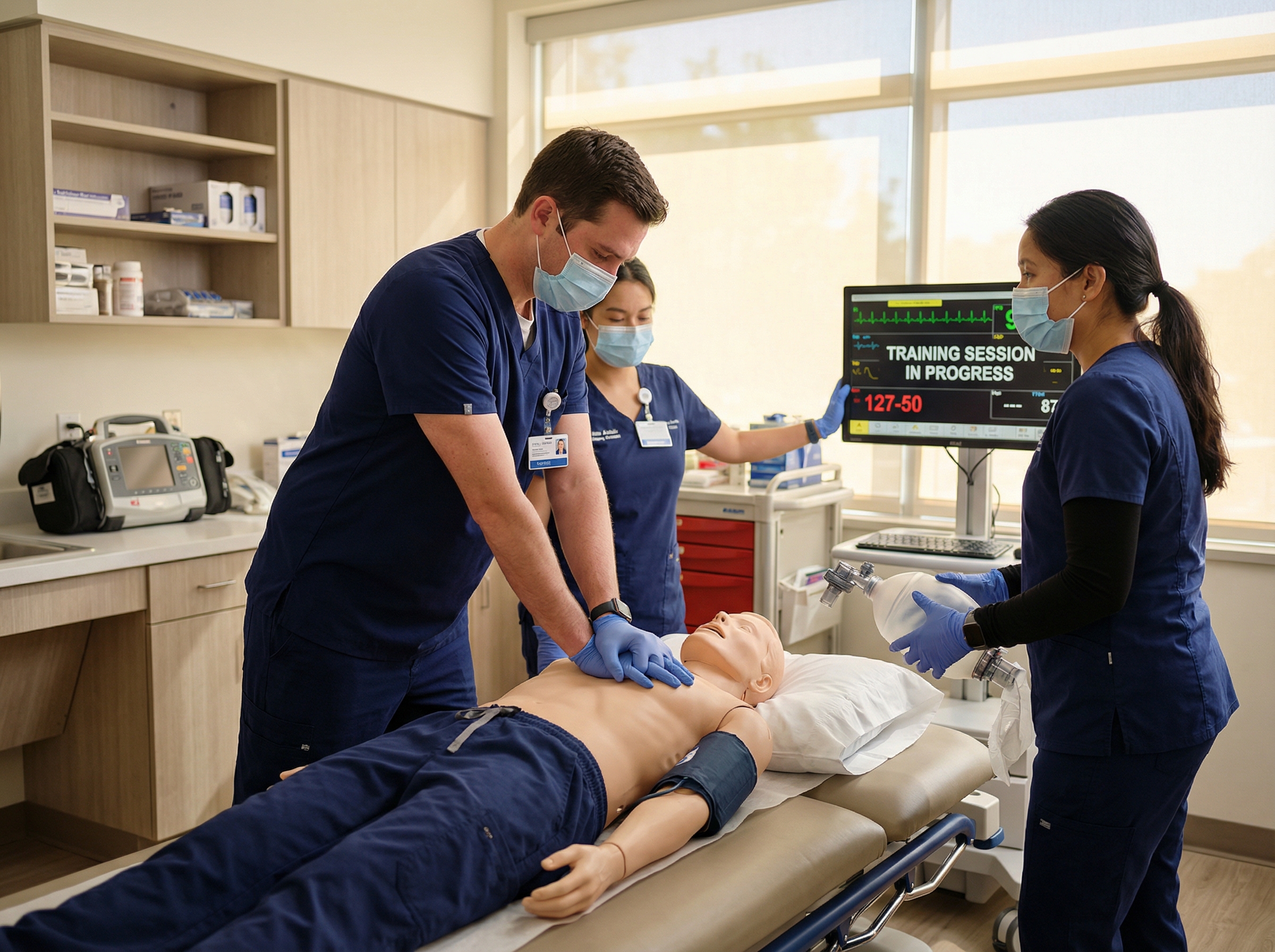
In the urgent care setting, your team size may be smaller than in a hospital code situation, making role clarity and efficient task distribution even more critical. Designate one person as the team leader to direct the resuscitation, assign the strongest team member to perform compressions with planned rotation every 2 minutes to prevent fatigue, have one person manage the airway and provide ventilations, and ensure someone is responsible for medication preparation and administration.
Rapid rhythm recognition determines your treatment pathway during cardiac arrest. ACLS training teaches you to quickly distinguish between shockable rhythms (ventricular fibrillation and pulseless ventricular tachycardia) and non-shockable rhythms (asystole and pulseless electrical activity). This distinction is critical because defibrillation is the only intervention proven to terminate ventricular fibrillation.
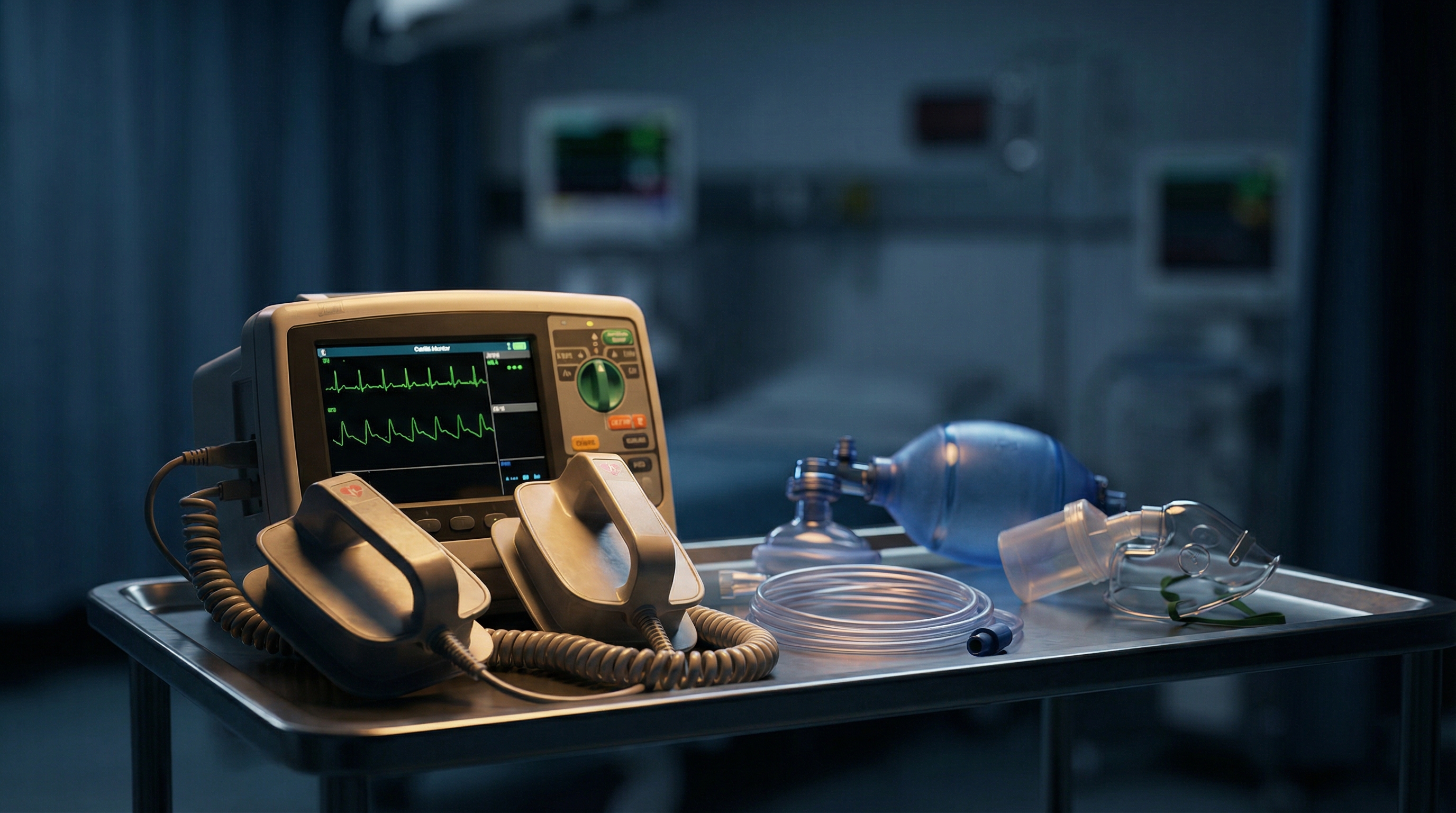
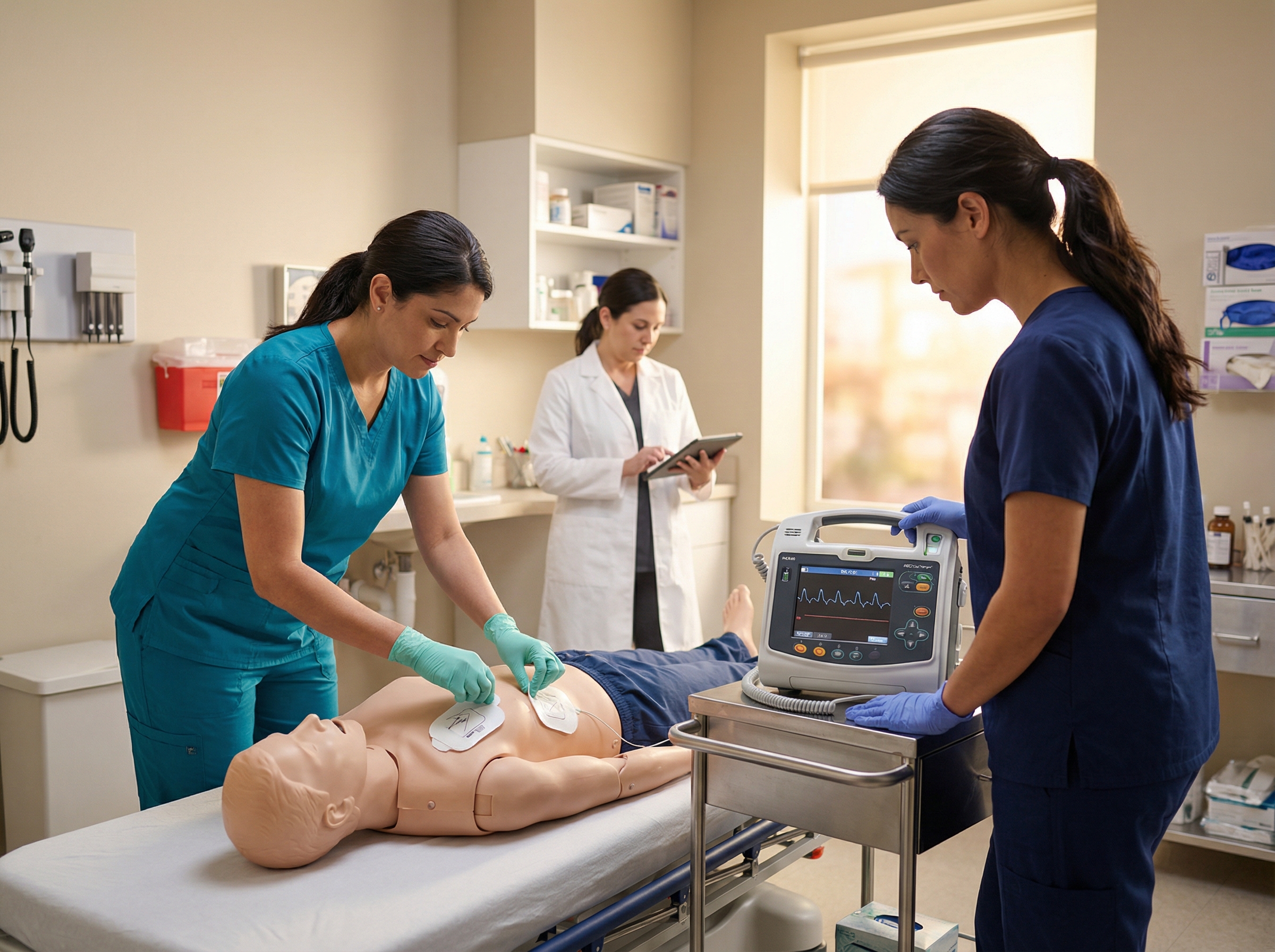
Every urgent care facility should have an immediately accessible automated external defibrillator with staff trained in its use. Modern AEDs are designed for ease of use, but ACLS certification ensures you understand the underlying principles, can troubleshoot problems, and can transition to manual defibrillation if needed. Early defibrillation within the first few minutes of ventricular fibrillation significantly improves survival rates.
ACLS protocols rely on a core set of emergency cardiac medications that urgent care providers must be comfortable administering. Epinephrine is the primary vasopressor used during cardiac arrest, given as 1 mg IV/IO every 3-5 minutes. Amiodarone serves as the first-line antiarrhythmic for ventricular fibrillation and pulseless ventricular tachycardia, administered as 300 mg IV/IO for the first dose and 150 mg for the second. Adenosine is used for stable supraventricular tachycardia, given as a rapid 6 mg IV push followed by 12 mg if needed. Atropine treats symptomatic bradycardia at doses of 0.5 mg IV every 3-5 minutes up to 3 mg total.
Maintaining an organized ACLS medications reference in your urgent care facility ensures rapid access to correct dosages and administration guidelines during high-stress situations. Consider creating a crash cart or emergency medication kit specifically designed for cardiac emergencies, with pre-printed medication cards showing doses, indications, and contraindications.
Effective airway management during cardiac emergencies requires a stepwise approach based on patient condition and provider skill level. Initial management includes positioning the patient supine, opening the airway with head-tilt chin-lift or jaw thrust maneuvers, and providing bag-mask ventilation with supplemental oxygen. For ongoing management during cardiac arrest, options include continued bag-mask ventilation by skilled providers, insertion of supraglottic airway devices, or endotracheal intubation when performed by experienced providers without interrupting chest compressions.
According to medical emergency preparedness guidelines, practices should purchase emergency equipment and medications that reflect the spectrum of anticipated emergencies in their patient populations, practitioners' skills, and distance to the nearest emergency department. For urgent care facilities, this means maintaining readily accessible cardiac emergency supplies.
Essential equipment includes an automated external defibrillator with adult and pediatric pads, oxygen delivery systems including nasal cannulas, masks, and bag-valve-mask devices, airway adjuncts including oral and nasal airways, cardiac monitoring capability, vascular access supplies including IV catheters, tubing, and fluids, and a complete set of ACLS medications with appropriate storage and regular expiration date monitoring.
Designate one team member as responsible for monthly equipment checks, ensuring all supplies are stocked, medications are not expired, and the AED battery and pads are functional. Document these checks to meet accreditation standards and identify equipment issues before emergencies occur.
Individual ACLS certification is important, but team-based emergency response requires coordinated practice. Mock code drills allow your entire urgent care team to practice emergency protocols in a low-stakes environment, identify gaps in your response plan, become familiar with equipment location and function, practice communication and role assignment, and build confidence for real emergencies.
The Urgent Care Association now requires documented annual mock code sessions as part of accreditation standards. These simulations should include realistic scenarios such as a patient with acute coronary syndrome requiring stabilization and transfer, sudden cardiac arrest in the waiting room, and symptomatic bradycardia or tachycardia requiring immediate intervention. After each drill, conduct a structured debriefing to discuss what went well, identify areas for improvement, and update protocols based on lessons learned.
Successful management of cardiac emergencies in urgent care requires seamless coordination with emergency medical services. Establish protocols for when to activate EMS, typically for any suspected STEMI, cardiac arrest, unstable arrhythmia, or patient requiring interventions beyond your scope. When calling for transport, provide a structured report including patient age, chief complaint, vital signs, interventions performed, working diagnosis, and current patient stability.
This information helps paramedics prepare appropriate equipment and allows receiving hospitals to mobilize necessary resources such as cardiac catheterization teams. Ensure your facility has established relationships with local EMS agencies and receiving hospitals to facilitate smooth transitions of care.
Every cardiac emergency presents a learning opportunity for your urgent care team. Implement a systematic approach to reviewing these events through case debriefings within 24-48 hours while details are fresh, documentation review to ensure completeness and accuracy, identification of protocol adherence or deviations, and discussion of what could be improved for future events.
Maintain a log of cardiac emergencies including presenting complaint, interventions performed, outcomes, and transfer destination. Reviewing this data quarterly helps identify trends, training needs, and opportunities to enhance your emergency preparedness.
Urgent care providers must acknowledge and work within inherent resource limitations compared to hospital emergency departments. You may have a smaller staff, potentially just one provider and a few nurses or medical assistants during certain shifts. Your facility likely lacks advanced imaging, cardiac catheterization capabilities, and immediate specialty consultation. These limitations don't represent failures—they reflect the appropriate scope of urgent care practice.
The key is focusing on what you can do effectively: early recognition of cardiac emergencies, initiation of evidence-based ACLS interventions, stabilization while awaiting emergency medical services, and safe, coordinated transfer to definitive care. Your ACLS training provides the skills to bridge this critical gap between symptom onset and hospital-based cardiac care.
Cardiac emergencies carry significant medicolegal risk, particularly in urgent care settings where resources differ from hospitals. Protect yourself and your facility by maintaining current ACLS certification for all clinical providers, following established protocols and documenting any necessary deviations with clinical rationale, thoroughly documenting assessment findings, interventions, patient responses, and communication with EMS and receiving facilities.
Most importantly, never delay necessary interventions because of concerns about your setting. If a patient requires defibrillation, medication administration, or airway management within your ACLS training scope, provide that care. Courts recognize that urgent care providers work in different environments than emergency departments, but they expect you to deliver appropriate emergency care within your training and available resources.
While urgent care centers primarily serve adult patients, pediatric emergencies do occur. Pediatric cardiac arrest differs significantly from adult arrest in terms of etiology (usually respiratory failure rather than primary cardiac events), equipment sizing (medications dosed by weight, appropriately sized equipment), and emotional impact on providers and families.
At minimum, ensure your facility has length-based resuscitation tapes or reference cards for pediatric medication dosing, appropriately sized pediatric equipment including bag-valve-mask devices, airway adjuncts, and AED pediatric pads, and clear protocols for when to transfer pediatric patients to pediatric-capable facilities versus adult emergency departments.
For urgent care providers working varying shifts, covering multiple locations, or balancing clinical work with personal responsibilities, finding time for ACLS certification can be challenging. Traditional in-person courses typically require 1-2 full days away from work, may involve significant travel to training centers, offer limited scheduling flexibility, and come with higher costs often exceeding $200-300.
Online ACLS certification offers a practical alternative designed specifically for working healthcare professionals. Platforms like Affordable ACLS, created by board-certified emergency medicine physicians, provide self-paced learning that you complete on your schedule, comprehensive content based on current AHA and ILCOR guidelines, immediate digital certification upon passing, and significant cost savings with certification starting at $109 and recertification at $99.
The online format allows you to study during breaks between patients, late evenings after shifts, or whenever your schedule permits. You can save your progress and return as needed, review challenging concepts multiple times, and take the exam when you feel prepared. Most healthcare providers complete the course in 1-2 hours. With unlimited retakes included, you can approach the certification without the pressure of one-time testing scenarios.
Affordable ACLS also offers a money-back guarantee if your employer doesn't accept the certification, though the content's alignment with AHA/ILCOR guidelines ensures broad acceptance across healthcare facilities. For urgent care centers certifying entire clinical teams, group pricing options provide additional savings while ensuring consistent training across all providers.
ACLS certification expires every two years, but the skills and knowledge require ongoing maintenance to remain sharp. In urgent care settings where cardiac emergencies may be infrequent, it's particularly important to actively maintain proficiency rather than relying on certifications alone.
Strategies for maintaining ACLS skills include regular algorithm review by keeping laminated ACLS algorithm cards in clinical areas for quick reference, monthly team drills focusing on different scenarios each month to cover the full range of cardiac emergencies, case-based learning by reviewing real or hypothetical cases during staff meetings, and cross-training with EMS by inviting local paramedics to participate in your drills and share their experiences.
When your ACLS recertification approaches, online platforms make renewal simple and efficient. You can complete recertification requirements on your own schedule, often reviewing only updated content rather than repeating everything, and receive your new certification card immediately upon passing. Setting calendar reminders six months before expiration ensures you never face last-minute certification lapses that could affect your employment status.
Cardiac emergencies in urgent care settings present unique challenges that require specialized preparation, coordinated teamwork, and current ACLS knowledge. As urgent care centers continue serving higher-acuity patients and bridging gaps in the healthcare system, your role as a prepared provider becomes increasingly critical.
ACLS certification equips you with the systematic approach, evidence-based interventions, and clinical confidence needed to manage these life-threatening situations effectively. Whether you're responding to a patient with chest pain, managing sudden cardiac arrest, or stabilizing symptomatic arrhythmias, your training directly impacts patient outcomes and survival.
The investment in ACLS certification—whether initial certification or biennial recertification—represents a commitment to clinical excellence and patient safety. With flexible online options designed for busy healthcare professionals, maintaining current certification has never been more accessible or affordable.
Don't wait for a cardiac emergency to highlight gaps in your knowledge or your facility's preparedness. Get certified, practice your skills through regular drills, maintain current equipment and medications, and build the coordinated team approach that saves lives. When that next cardiac emergency walks through your urgent care doors, you'll be ready to deliver the expert care your patient desperately needs.
.jpg)