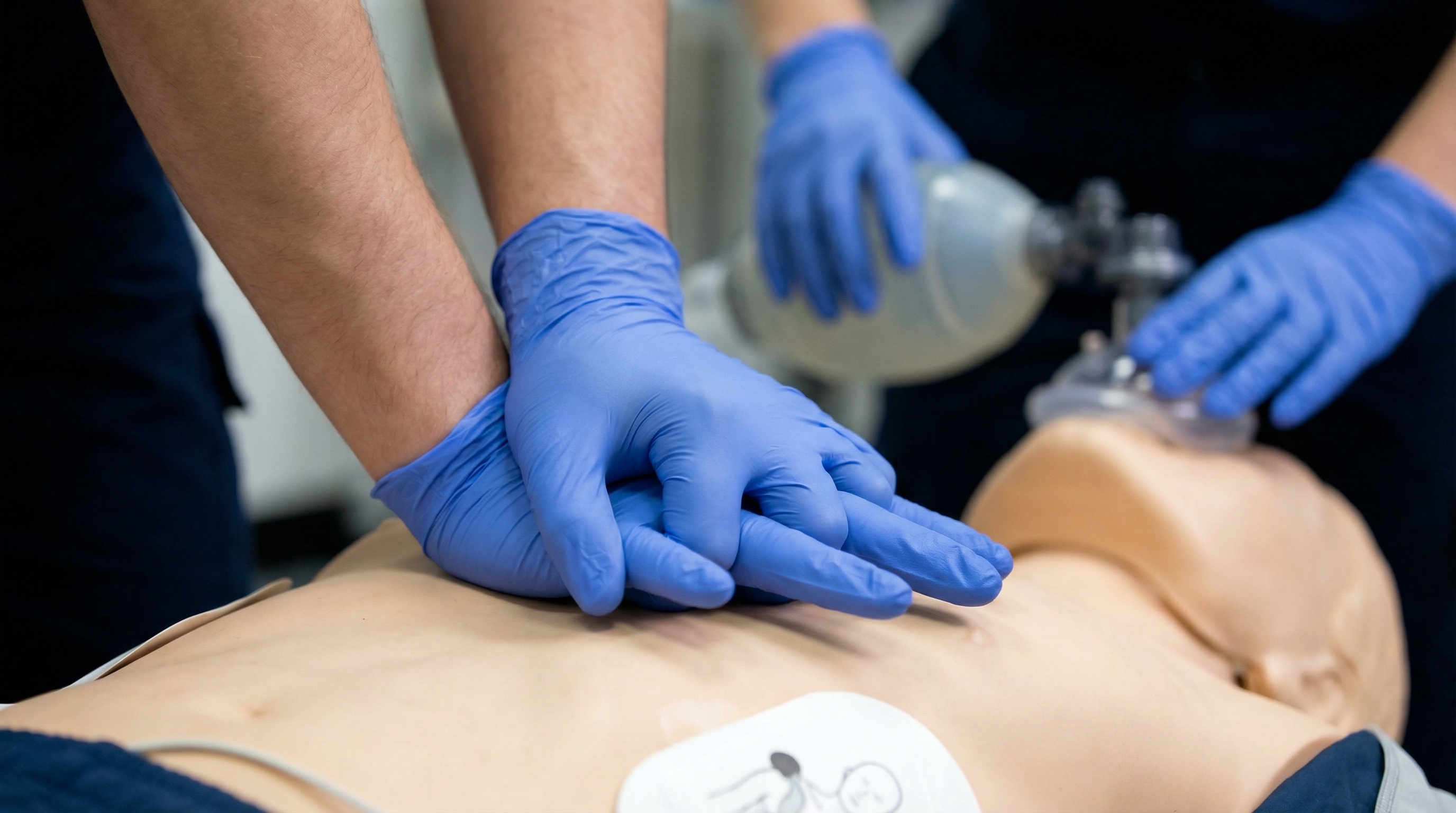
Cardiac arrest does not wait for the right moment. It strikes without warning, and what happens in the next two minutes determines whether a patient walks out of the hospital or does not. For healthcare professionals, that pressure is intimately familiar. What separates good outcomes from devastating ones is rarely the individual skill of a single provider. It is the coordinated execution of a trained, high-performance team working in perfect synchrony.
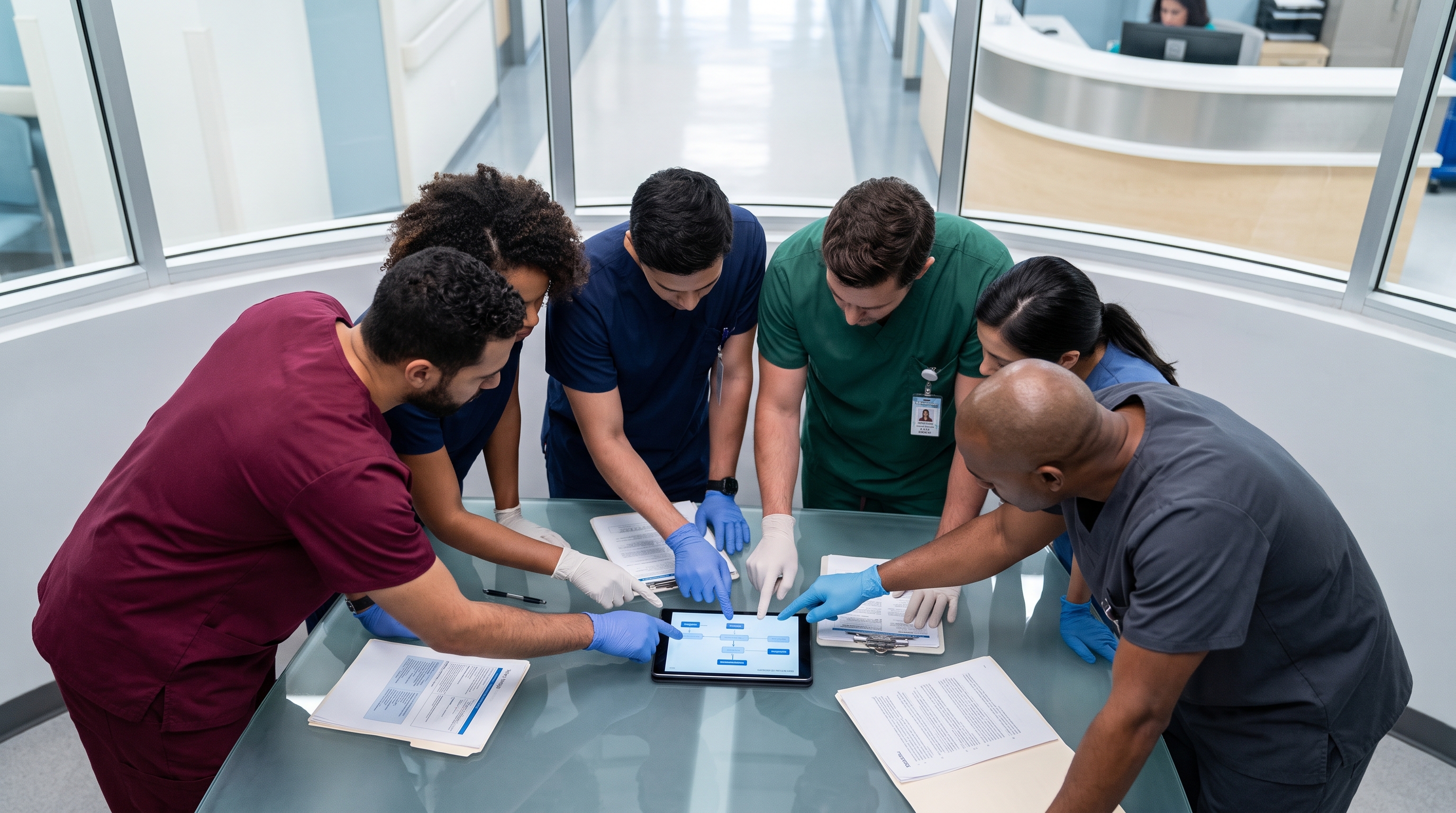
High-performance CPR (HP-CPR) is a structured, pit-crew-style resuscitation model built around that exact principle. Rather than relying on whoever arrives first to figure it out as they go, high-performance teams assign clear roles, rehearse transitions, and execute with precision that measurably improves outcomes. ACLS team dynamics and closed-loop communication are the backbone of this model, and understanding how they work together is essential for any clinician who responds to codes.

This article breaks down what high-performance CPR looks like in practice, why it works, the team roles that make it function, and the communication strategies that keep everything running smoothly under pressure. Whether you are a seasoned emergency physician or a nursing student preparing for your first code, these principles apply directly to your clinical practice.
High-performance CPR is not simply doing chest compressions correctly. It is a systems-level approach to cardiac arrest resuscitation that optimizes every element of the response simultaneously. The concept emerged from analysis of resuscitation failures, which often had less to do with individual provider knowledge and more to do with disorganized execution, poor communication, and compression fatigue going unaddressed.
The model borrows from the pit-crew metaphor used in motorsport: each team member has a specific, pre-assigned job, transitions happen on cue without disrupting workflow, and the entire team operates with a shared mental model of what is happening and what comes next. In resuscitation terms, this translates into minimal interruptions to chest compressions, rapid compressor rotation, real-time quality monitoring, and clear role assignments that prevent duplication of effort or gaps in care.
The evidence supporting this approach is strong. According to a landmark Circulation statement on CPR quality from the American Heart Association, high-quality CPR that meets compression depth, rate, and fraction targets is one of the most powerful determinants of survival from cardiac arrest. Structured teamwork is the mechanism by which those targets are consistently achieved under real-world conditions, where fatigue, noise, and cognitive load all threaten quality.
The statistics surrounding cardiac arrest survival are sobering and motivating in equal measure. Each year in the United States, approximately 350,000 people experience an out-of-hospital cardiac arrest, and more than 90 percent of those events are fatal. Inside hospital walls, outcomes are somewhat better but still far from acceptable without coordinated, high-quality intervention.
What changes those numbers is quality of CPR and the speed of the response. According to data compiled by the American Heart Association CPR Facts and Statistics, immediate bystander CPR can double or triple a cardiac arrest victim's chance of survival. When CPR is initiated within three to five minutes of collapse, survival rates can reach 40 to 50 percent. The drop-off beyond that window is steep.
For in-hospital cardiac arrest, the team-based model directly addresses the variables that erode those statistics: compression fatigue that degrades depth after 90 seconds, unnecessary pauses caused by role confusion, delayed defibrillation from equipment unfamiliarity, and medication errors under stress. Research published on the impact of high-quality CPR confirms that structured teamwork with role delegation significantly increases both return of spontaneous circulation (ROSC) rates and survival to hospital discharge.
The data on compression quality specifically underscores why the team model matters so much. Studies published in Circulation: Cardiovascular Quality and Outcomes demonstrate that compression depth directly correlates with survival to discharge. Survivors consistently receive deeper compressions. Compression rate also matters: the optimal target of 100 to 120 compressions per minute must be maintained throughout the resuscitation, which is physiologically impossible for a single provider to sustain at high quality past the two-minute mark. Rotation is not optional. It is science.
Understanding the structure of a high-performance team begins with the roles themselves. The framework used in ACLS training divides responsibilities across six defined positions, organized into the Resuscitation Triangle and the Leadership Tier. Each role has a specific focus area, and knowing your role before the code begins is what allows the team to move without hesitation when time is critical. Refer to the Adult Cardiac Arrest Circular Algorithm to understand how these roles map onto the clinical decision tree in real time.
The compressor performs chest compressions and is arguably the most physically demanding role on the team. Effective compressions require a depth of at least two inches for adults, a rate of 100 to 120 per minute, full chest recoil between compressions, and a compression fraction above 80 percent. These standards degrade with fatigue faster than most providers expect.
In a high-performance model, the compressor rotates every two minutes, timed to coincide with rhythm checks. This rotation must be seamless. The incoming compressor positions themselves before the switch, takes over immediately when the pause is called, and delivers the first compression within ten seconds of the transition. Refer to two-rescuer BLS technique guidelines for the mechanics of smooth compressor handoffs in the two-provider scenario.
The airway manager maintains a patent airway and delivers ventilations. In the pre-intubation phase, this means positioning, mask seal, and bag-mask ventilation technique. Post-intubation, it means confirming placement, monitoring waveform capnography, and maintaining ventilation at a rate of 10 breaths per minute without hyperventilating. The airway manager also calls out end-tidal CO2 values, which serve as a real-time proxy for CPR quality and as an early indicator of ROSC.
This team member manages the cardiac monitor and defibrillator. They are responsible for rapid rhythm interpretation, charging the defibrillator in advance of rhythm checks, clearing the patient safely before shock delivery, and confirming energy settings with the team leader. Quick, accurate defibrillation is time-sensitive: for every minute of delay in defibrillation for ventricular fibrillation, survival drops by approximately 10 percent. For a deeper understanding of the rhythms requiring shock, review shockable rhythms including ventricular fibrillation and pulseless VT.
Vascular access and medication administration are this provider's domain. In cardiac arrest, this means establishing IV or IO access rapidly, drawing up and administering epinephrine every three to five minutes, administering amiodarone for refractory shockable rhythms, and pushing medications with a 20 mL saline flush to facilitate central delivery. This role demands accuracy under pressure, because medication errors in cardiac arrest can compound an already dire situation.
The recorder documents every intervention with a timestamp, calls out time intervals, and maintains the team's situational awareness. Well-placed verbal cues such as "Epinephrine was given two minutes ago" or "It has been two minutes, time to rotate compressors" keep the team oriented in time and help the team leader make decisions based on accurate data. After the resuscitation, the recorder's notes become the foundation for a structured debrief and quality review.
The team leader directs the resuscitation without performing hands-on tasks unless necessary. This is a critical distinction. When the team leader is actively performing compressions or managing the airway, they lose the cognitive bandwidth needed for global situational awareness, differential diagnosis, and treatment escalation decisions. Effective team leaders stand back, literally, to see the whole picture.
Responsibilities include assigning roles at the start of the code, directing the diagnostic workup using the Hs and Ts framework, calling rhythm checks and compression pauses, making decisions about pharmacological and procedural interventions, and communicating with family and consulting services. The team leader is also the one who calls the code if ROSC is not achieved after appropriate intervention.
Even the most experienced clinicians make mistakes under the cognitive load of a cardiac arrest resuscitation. High-performance teams mitigate this risk through structured communication practices that do not depend on memory, relationship, or assumed understanding. These techniques are teachable, learnable, and measurably effective.
Closed-loop communication is the practice of confirming that instructions have been heard, understood, and completed. In a high-performance team, the sequence works like this: the team leader gives a directive, the assigned provider repeats it back to confirm understanding, and then confirms completion with a timestamp. This three-step loop eliminates the ambiguity that leads to missed doses, wrong medications, and timing errors. Research from ACLS Academy on team dynamics during emergencies confirms that closed-loop communication is one of the most effective error-prevention tools available to resuscitation teams.
In chaotic situations, people naturally gravitate toward what they know, which means three providers can end up doing compressions while nobody is managing the airway. High-performance teams prevent this by establishing roles explicitly at the beginning of every resuscitation. The team leader makes assignments by name, directly and clearly. This removes ambiguity and activates individual accountability. Each provider then knows exactly what they are responsible for and can focus their full attention on executing that role well.
Situational awareness in a high-performance team is collective. The team leader periodically summarizes the state of the resuscitation: rhythm identified, medications given, time elapsed, and what is happening next. This shared mental model keeps every team member oriented and allows anyone to raise a concern or flag a discrepancy. In ACLS training, this practice is called re-evaluation and summarizing, and it is one of the eight elements of effective team dynamics recommended by the AHA for resuscitation team performance.
High-performance teams create a culture where any team member can speak up when they observe a concern, and where that input is welcomed rather than dismissed. If the compressor's depth is visibly inadequate, the team leader or any observant team member says, "Compressions look shallow, can we push deeper?" The culture of mutual respect built in training enables this kind of feedback to land as supportive rather than critical. This is especially important for newer team members. The guidance on building confidence as a new code team member addresses exactly how newer providers can find their footing and contribute meaningfully during high-stakes resuscitations.
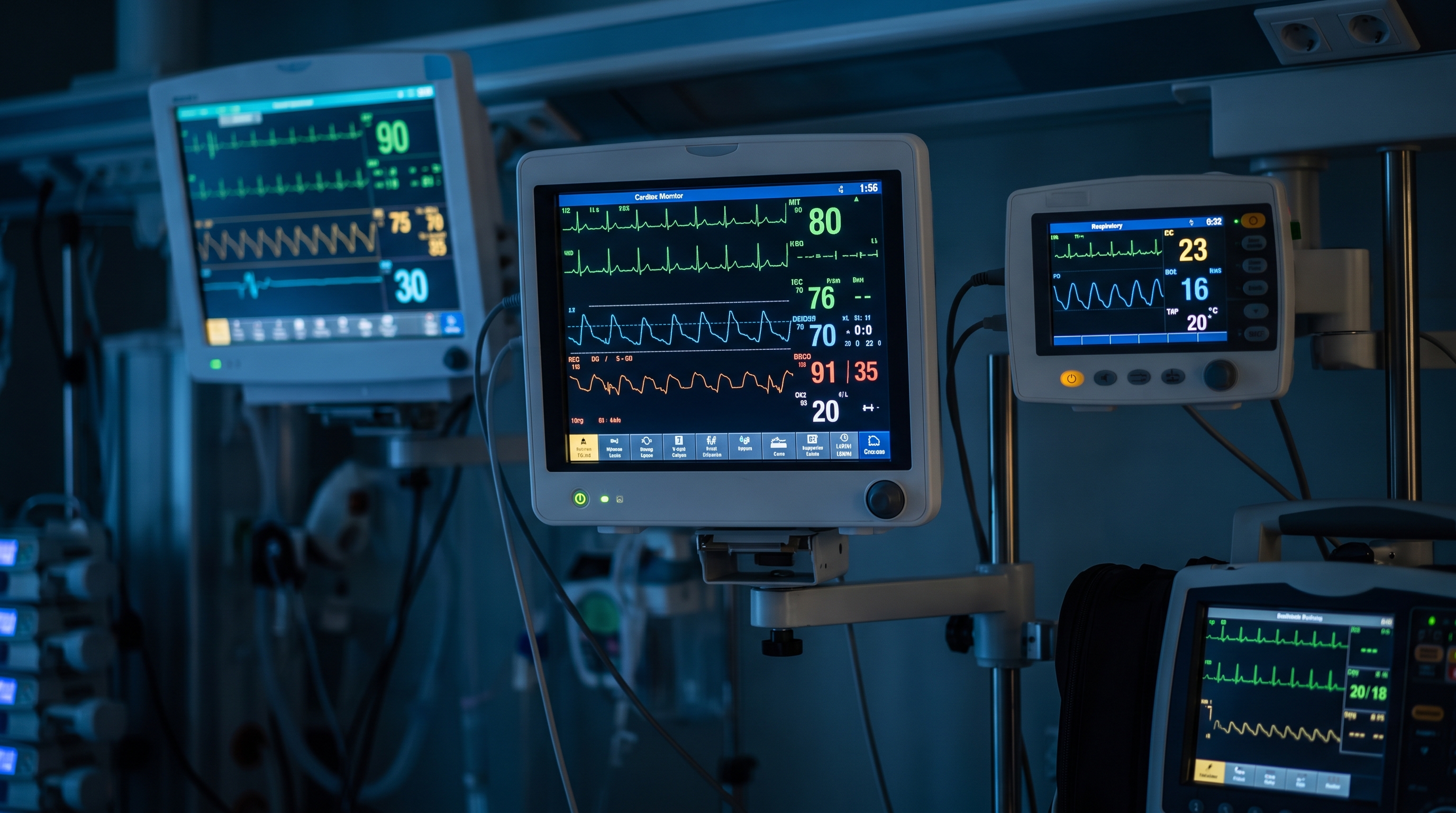
High-performance CPR is not a feeling. It is measurable. The shift toward objective, real-time CPR quality monitoring has been one of the most impactful developments in resuscitation science over the past decade, and it directly complements the team-based model. For a full breakdown of CPR quality parameters, review rhythm-based management as the key to effective CPR.
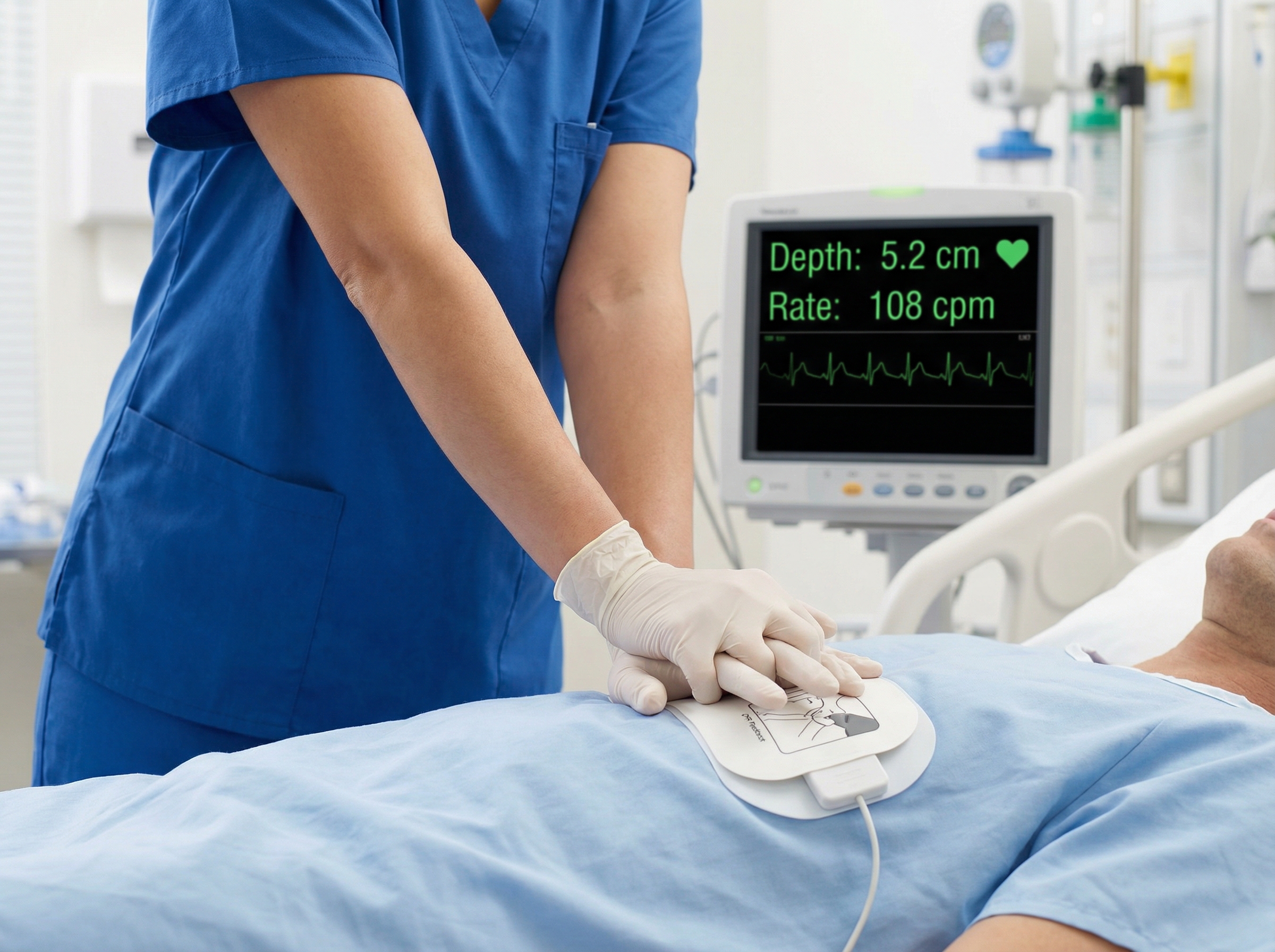
Target depth for adult patients is at least two inches (five centimeters), with a ceiling of two and a half inches to avoid excessive force. Most providers compress too shallowly, especially when fatigued. Real-time feedback devices can alert the team when depth falls below target. Research consistently shows that compression depth is one of the strongest predictors of ROSC and survival to hospital discharge, making it a non-negotiable quality benchmark.
The target rate of 100 to 120 compressions per minute sounds straightforward, but maintaining it consistently throughout a resuscitation requires practice and external feedback. Rates above 120 reduce depth because faster compressions tend to be shallower. Rates below 100 reduce coronary perfusion pressure. Metronome devices and CPR feedback tools help providers stay in range, especially past the one-minute mark when fatigue begins to affect performance.
Chest compression fraction (CCF) is the proportion of total resuscitation time during which chest compressions are actively being delivered. The target is above 80 percent. Every pause, however well-intentioned, costs perfusion. High-performance teams minimize pauses by pre-positioning the next compressor, limiting rhythm check duration to ten seconds, and integrating airway management without stopping compressions wherever possible.
Waveform capnography provides a continuous, non-invasive measure of CPR effectiveness. When compressions are high quality and cardiac output is being generated, exhaled CO2 values rise. An end-tidal CO2 above 10 to 20 mmHg suggests effective compressions and some degree of perfusion. A sudden spike in end-tidal CO2 is often the first sign of ROSC, before a pulse is palpable. Teams that actively monitor this parameter can adjust compression technique in real time and detect ROSC earlier, avoiding unnecessary post-ROSC compressions.
High-performance CPR does not emerge spontaneously during a real cardiac arrest. It is built during practice. The gap between knowing what high-performance CPR looks like and being able to execute it under stress is bridged only through deliberate, repeated simulation with feedback. The research on how simulation training enhances real-world resuscitation skills confirms that teams that train together consistently perform better together when it counts.
The AHA recommends quarterly mock codes with post-event debriefings as a minimum standard for resuscitation skill maintenance. Mock codes allow teams to identify role confusion, communication breakdowns, and equipment familiarity gaps in a zero-stakes environment. They also build the muscle memory for transitions, role assignments, and closed-loop communication patterns that must execute automatically when a real arrest occurs. Deliberate exposure to time pressure and team complexity in training conditions the team to function under cognitive load.
Every resuscitation event, successful or not, is a learning opportunity. Structured debriefing after cardiac arrest events is strongly associated with improved CPR quality and, in pediatric populations, improved neurological outcomes. The debrief should be brief, structured, and non-punitive, reviewing what went well, what could improve, and what specific changes the team will make before the next event. For a detailed framework, review the role of debriefing in enhancing outcomes after ACLS events.
Understanding high-performance CPR and team dynamics begins with foundational ACLS training that covers not just algorithms but also team roles, communication strategies, and quality metrics. Board-certified emergency physicians at Affordable ACLS built their online certification platform specifically for working healthcare professionals who need rigorous, clinically accurate training without the scheduling barriers of traditional in-person courses.
The ACLS Certification course at $109 and Recertification at $99 are 100% online, self-paced, and AHA/ILCOR guideline compliant. Unlimited retakes mean you can drill the content until it is second nature. Immediate certification upon completion means your credentials are current when your next shift begins. For RNs, paramedics, physicians, respiratory therapists, and every other healthcare professional managing busy clinical schedules, this flexibility is not just convenient. It is the difference between maintaining certification and letting it lapse when a patient needs a high-performance team most.
The principles of high-performance CPR apply across clinical contexts, but the execution varies. In the emergency department, teams may be larger, better equipped, and more practiced. In a general medical ward or outpatient setting, the first responders may be a nurse and a respiratory therapist waiting for additional support. In the pre-hospital environment, a two-provider crew must cover all six roles between them.
High-performance teams adapt. When the full six-person model is not available, the team leader explicitly assigns consolidated roles from the start: one provider handles compressions and monitoring, another manages the airway and leads. The principle of role clarity does not require a full team. It requires whoever is present to know exactly what they are responsible for and to execute without ambiguity. Anticipating this kind of adaptive execution is part of what ACLS training prepares providers to do.
Simultaneous with CPR execution, the team leader should be systematically working through reversible causes. The Hs and Ts framework covers the most common correctable etiologies of cardiac arrest, from hypovolemia and hypoxia to tension pneumothorax and toxins. Ensuring that treatable causes are identified and addressed during the resuscitation rather than after is one of the primary cognitive responsibilities of the team leader, and it is a core competency assessed in ACLS certification.
Technology has become an integral part of the high-performance CPR model. CPR feedback devices, waveform capnography, mechanical compression devices, and defibrillators with coaching functions all serve to close the gap between intended and actual CPR quality. These tools do not replace skilled providers. They augment them by providing objective data that even experienced providers cannot reliably assess through feel alone during a high-stress resuscitation.
Real-time CPR feedback devices, which sense compression depth and rate and provide immediate audio or visual cues, have been shown in clinical research to improve compression quality during actual resuscitations. According to a study published in the Journal of the American Heart Association on real-time feedback and CPR quality, feedback devices used by ambulance personnel significantly improved compression metrics during out-of-hospital cardiac arrests. Integration of these technologies into team workflows requires practice and familiarity, another reason why simulation training before the real event matters so much.
Consider this scenario: a 58-year-old patient on the telemetry floor goes into monitored ventricular fibrillation at 14:28. The rapid response team arrives within 90 seconds. Here is what high-performance execution looks like in practice.
The team leader surveys the room and assigns roles by name within the first fifteen seconds. Compressions begin within ten seconds of arrival. The monitor operator identifies VF and charges the defibrillator before the first rhythm check. Closed-loop communication confirms every medication order. The recorder is calling time intervals at two-minute marks. The airway manager secures a bag-mask and confirms seal, calling out CO2 readings. At the two-minute mark, compressions pause for less than ten seconds for a rhythm check. VF is confirmed. Shock is delivered. Compressions resume immediately. The team leader works through the Hs and Ts. At minute six, end-tidal CO2 jumps from 18 to 44 mmHg. The recorder calls it. The team leader calls for a pulse check. ROSC is confirmed at 14:34.
That scenario is not exceptional. It is what high-performance CPR is designed to produce consistently. Every element of it, the role clarity, the communication patterns, the compression quality, the technology integration, the systematic differential, was built in training before that code ever started. The team did not improvise. They executed a plan they had rehearsed.
High-performance CPR is not a luxury reserved for academic medical centers or elite trauma teams. It is a framework that every healthcare professional who responds to cardiac arrest should understand and practice, regardless of setting, specialty, or experience level. The research is unambiguous: team-based resuscitation with defined roles, structured communication, and high-quality compressions improves survival. The gap between knowing this and executing it is closed through training and honest reflection after every resuscitation event.
For healthcare professionals committed to delivering their best in the moments that matter most, investing in current, rigorous ACLS certification is the logical starting point. The clinical knowledge, team dynamics frameworks, and algorithm mastery that ACLS training provides translate directly into the code room. And for busy clinicians who cannot afford to let certification lapse, having a flexible, affordable, and clinically credible online option makes that investment accessible whenever the schedule allows.
Your patients deserve a high-performance team. Building that team starts with you, and it starts today.
.jpg)