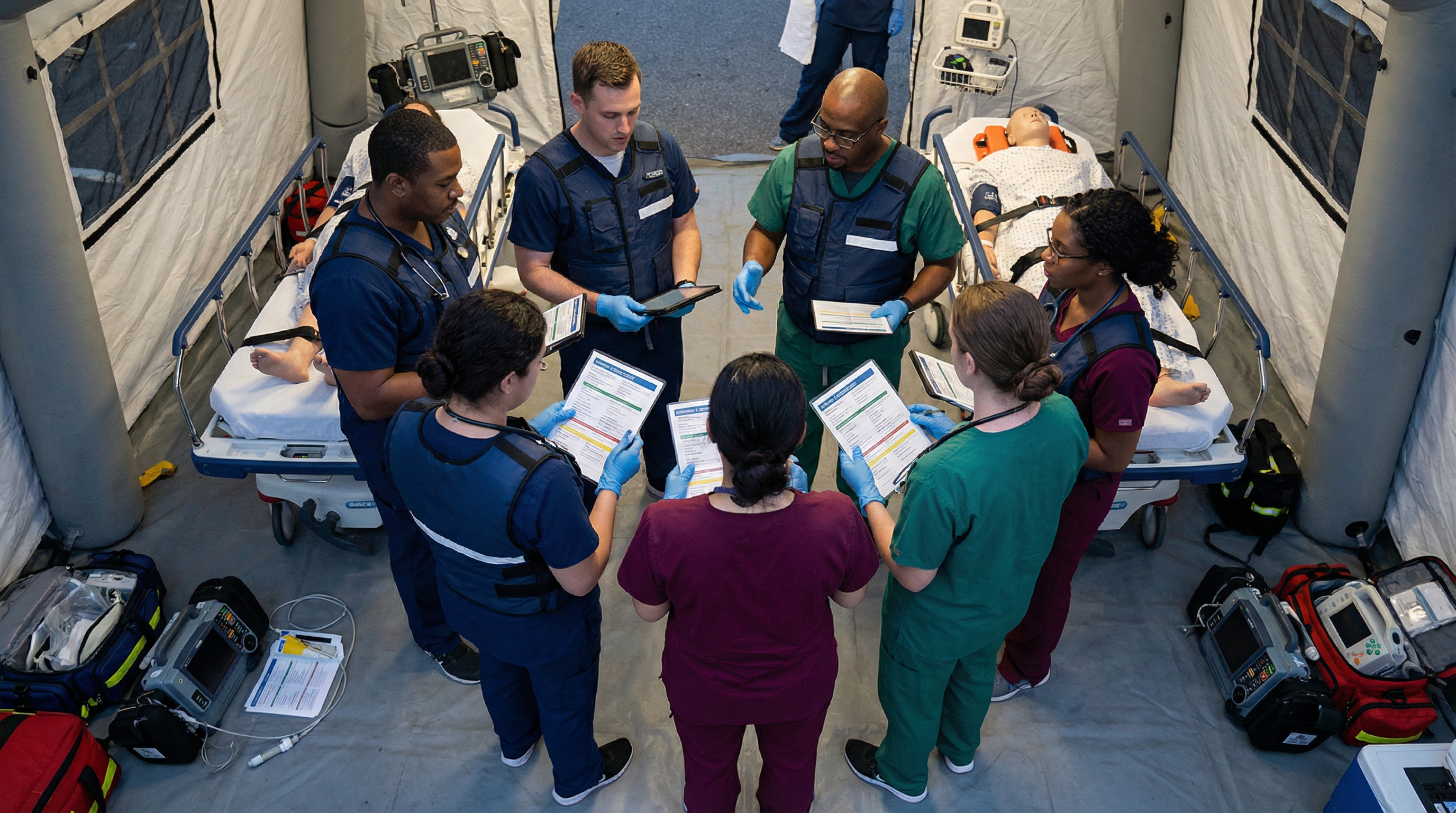
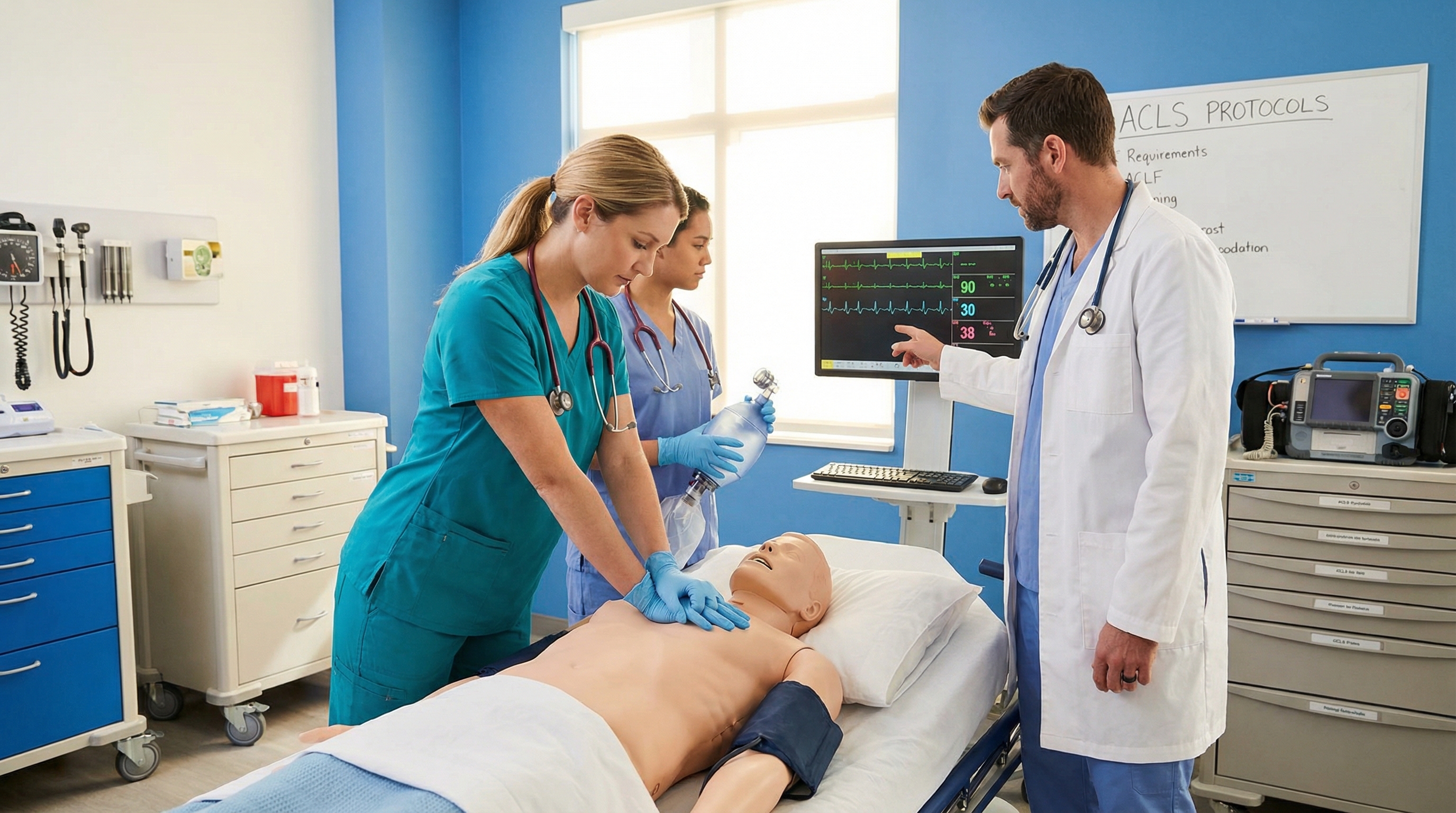
A building collapse at a crowded arena. A concert venue where a mass crowd surge leaves dozens pulseless on the ground. A chemical plant explosion that sends scores of workers into cardiac arrest simultaneously. These are not hypothetical thought experiments — they are scenarios that emergency responders have faced in real life, and they reveal a hard truth that every ACLS-trained clinician eventually confronts: the algorithms we train for are designed for a single patient.
In a mass casualty incident (MCI), the calculus changes entirely. When patients outnumber available providers and resources, the ethical and clinical imperative shifts from "do everything for this patient" to "do the greatest good for the greatest number." That pivot demands a working knowledge of triage systems, modified resuscitation protocols, and the team dynamics that make coordinated disaster response possible. This article is your clinical guide to adapting ACLS principles when the normal rules no longer apply.
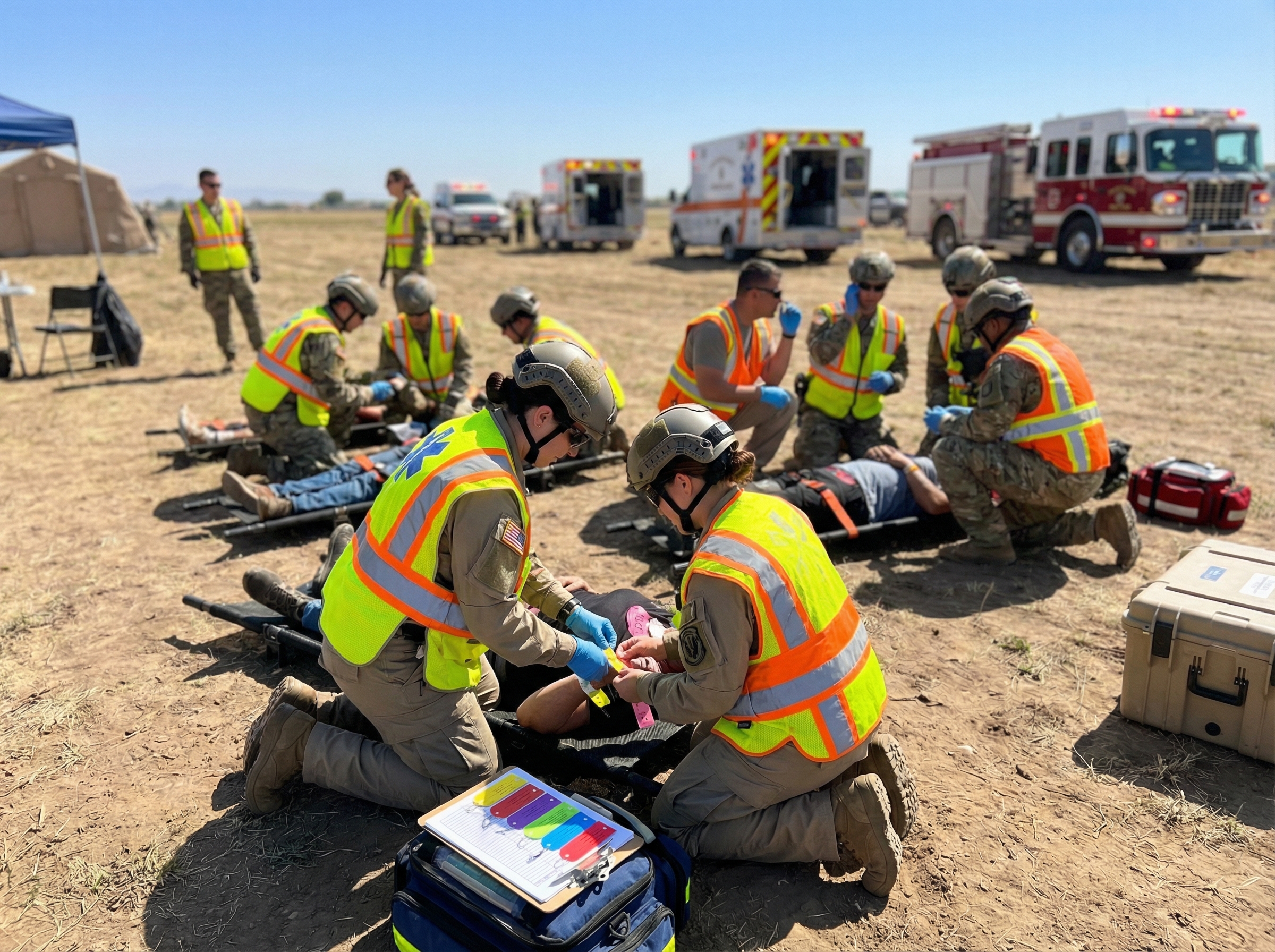
A mass casualty incident is broadly defined as any event in which the number, severity, and diversity of patients overwhelm the capacity of local medical resources. Cardiac-specific MCIs occur more often than most clinicians anticipate. They include:
Research published in Prehospital and Disaster Medicine has identified that mass gatherings represent a unique hybrid — not a true MCI by volume, but a setting where simultaneous arrests can rapidly overwhelm even well-resourced venues. Early planning has even been proposed as a new link in the chain of survival specifically for mass gathering events, reflecting how much preparation matters before the first patient collapses.
Before adapting ACLS protocols, providers need a firm grounding in the triage systems most commonly deployed at MCIs. Two frameworks dominate U.S. practice.
Simple Triage and Rapid Treatment (START) was developed in 1983 by staff at Hoag Hospital and Newport Beach Fire Department. It remains the most widely used triage system in the United States. START categorizes patients into four color-coded groups:
Under START, a patient in cardiac arrest who does not resume breathing after a single attempt at airway repositioning is categorized as Black — Expectant. This is the critical departure from standard ACLS thinking: in a true MCI with overwhelmed resources, resuscitation efforts are not initiated on pulseless patients.
SALT — Sort, Assess, Life-saving interventions, Treatment/Transport — was developed as a national consensus triage system and is endorsed by the American College of Emergency Physicians, the American College of Surgeons Committee on Trauma, the National Association of EMS Physicians, and more than a dozen other major organizations. According to the Chemical Hazards Emergency Medical Management (CHEMM) guidelines from HHS, SALT incorporates the best aspects of existing triage systems into a single, unified framework that can be applied nationally.
SALT allows for brief life-saving interventions during the initial assessment — things like controlling hemorrhage, opening an airway, or delivering two rescue breaths to a pediatric patient who is not breathing. It explicitly recognizes that under severely resource-limited conditions, cardiac arrest patients are classified as Expectant, reserving resuscitation attempts for situations where personnel and equipment are available. Critically, SALT also builds in reassessment, meaning a patient initially triaged Black can be upgraded if conditions improve — for example, if additional EMS units arrive and free up a resuscitation team.
For ACLS-trained providers arriving at or managing an MCI, the challenge is integrating algorithm-based resuscitation knowledge with triage decision-making. Here is how the core ACLS skill set translates — and where it must be deliberately modified.
Before initiating any resuscitation, the responding provider or incident commander must perform an immediate resource inventory:
This inventory determines whether the event is a true MCI with constrained resuscitation capacity or a surge event where standard ACLS remains feasible. The EMS Mass Casualty Triage guidance from StatPearls/NCBI emphasizes that triage decisions must always be contextual — what constitutes an MCI in a rural area with two paramedics may not constitute an MCI at a major metropolitan venue with 20 responders already on scene.
In a multi-patient cardiac event, not all arrests are equal in salvageability. ACLS providers should mentally stratify cardiac arrest patients using the following framework:
Understanding the ACLS adult cardiac arrest algorithm at a deep level becomes critical here — providers must be able to rapidly assess rhythm and make a shockable or non-shockable determination in seconds, not minutes, when multiple patients require simultaneous attention.
Standard ACLS team structure assumes a minimum of four to five providers: a team leader, a compressor, a ventilator, a medication administrator, and a recorder. In MCIs, this luxury rarely exists. ACLS providers must be prepared to execute resuscitation with reduced team sizes.
Key adaptations include:
Mastering high-performance CPR team-based strategies under normal conditions is precisely what prepares clinicians to adapt those techniques when the team is smaller and the patient count is larger.
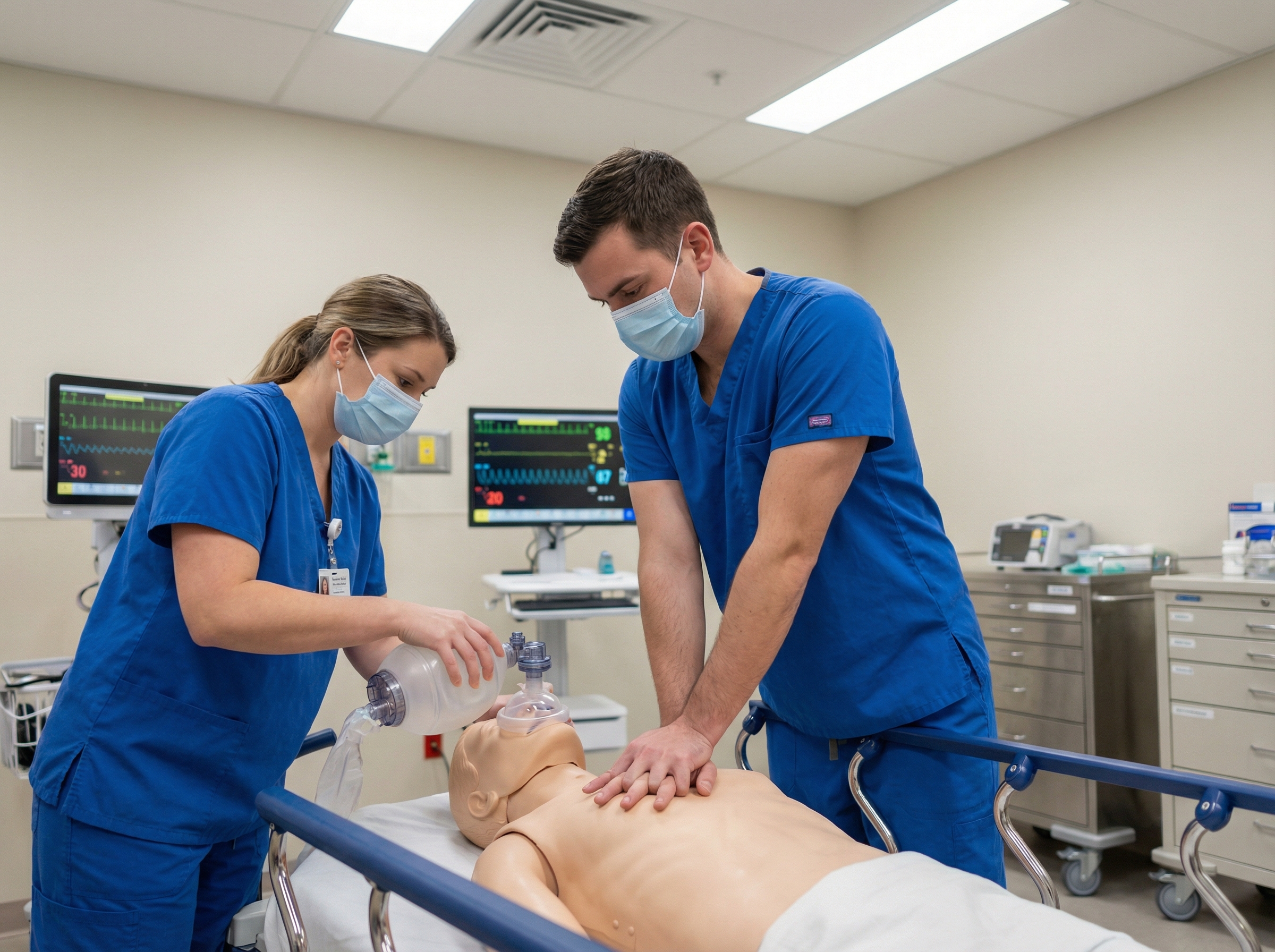
One of the most critical — and underappreciated — aspects of MCI response is command structure. Effective team communication becomes exponentially more important when multiple simultaneous resuscitations are underway. Without clear roles and closed-loop communication, providers will unknowingly duplicate efforts on one patient while others receive no care at all.
ACLS team dynamics principles transfer directly to MCI response, with modifications:
The structured communication frameworks covered in ACLS team dynamics and communication scripts that save lives during code blues form the linguistic backbone of effective MCI cardiac response. Providers who have internalized these patterns under routine code conditions will deploy them instinctively under disaster stress.
ACLS teaches the systematic evaluation of reversible causes of cardiac arrest — the Hs and Ts. In an MCI, the cause of arrest is often known or strongly suspected from the mechanism of the event. This changes the resuscitation approach significantly.
Consider these MCI-specific scenarios:
The ability to rapidly identify likely reversible causes — what experienced ACLS providers call pattern recognition for Hs and Ts — is precisely the cognitive skill that separates competent individual resuscitation from effective MCI cardiac response. This knowledge base is foundational to how ACLS adapts for remote and resource-limited settings, a framework with significant overlap to disaster scenarios.
When MCI patients reach the emergency department, a new set of adaptations is required. Hospital-based MCI cardiac management must balance ongoing resuscitations with the simultaneous intake of non-arrest patients who may rapidly deteriorate if not treated.
Key hospital-based MCI cardiac considerations include:
Rural and community hospitals face particular challenges in MCI cardiac response. The framework for maximizing ACLS outcomes in rural emergency departments with limited resources offers directly applicable strategies for facilities that may receive MCI patients without the infrastructure of a Level I trauma center.
Every MCI cardiac event — whether a true disaster or a managed mass gathering emergency — generates lessons. The quality of those lessons depends almost entirely on whether a structured debriefing process occurs afterward.
Effective MCI cardiac debriefings should address:
According to a case series published in Prehospital and Disaster Medicine, systematic review of resuscitation events at mass gatherings has yielded key insights into the importance of early defibrillator placement, first-responder training density, and communication protocols that are now embedded in event medical planning guidelines worldwide.
Structured debriefing practices are also central to building the kind of institutional muscle memory that makes the next MCI response more effective. Building an effective mock code program at your healthcare facility is one of the most powerful ways to simulate MCI conditions in a controlled environment, allowing teams to stress-test their communication and triage decision-making before a real event demands it.
The evidence from disaster medicine research is unambiguous: outcomes in mass casualty cardiac events correlate directly with the prior training and preparation of responders. A narrative review published in PMC examining the impact of ACLS training on cardiac arrest management found that structured ACLS education significantly improves provider performance during actual resuscitations, with protocol adherence directly linked to ROSC rates. The leap from individual resuscitation competence to MCI response effectiveness is built on this same foundation.
Practical preparedness steps for providers and teams include:
Perhaps the hardest aspect of MCI cardiac response for ACLS-trained providers is the psychological and ethical weight of the Expectant classification. Trained resuscitators are conditioned to fight for every patient. Watching a pulseless patient receive no care — because the math of the disaster demands resources elsewhere — is one of the most profound stressors in emergency medicine.
Understanding the ethical framework of disaster medicine helps ground these decisions. The principle of utilitarian resource allocation in mass casualty events is not abandonment — it is the recognition that maximizing the total number of lives saved is itself a moral obligation. A provider who spends 30 minutes on an asystolic patient with no reversible cause, while three shockable-rhythm patients receive no defibrillation and die, has not honored their clinical duty; they have misallocated it.
The National Disaster Life Support Foundation's SALT triage framework and the Crisis Medicine guide to START, SALT, and RAMP triage systems both explicitly address the Expectant category as an ethical and clinical necessity — not a failure of care. Providers who have internalized this framework can make Expectant designations with appropriate clinical confidence rather than paralyzing moral distress.
Post-event psychological support for providers who have made Expectant triage decisions is equally important and should be a standard component of every MCI debriefing protocol. Disaster response takes a measurable psychological toll, and institutional support systems must be in place before the event, not improvised after it.
Every adaptation discussed in this article — modified team structures, triage prioritization, MCI command frameworks — rests on a bedrock of solid ACLS competency. Providers who know their algorithms cold, who understand rhythm interpretation instinctively, and who have practiced high-performance CPR under simulated pressure are the ones who can pivot most effectively when a single-patient scenario suddenly becomes a ten-patient disaster.
This is why the investment in rigorous, up-to-date ACLS training pays dividends far beyond the standard emergency department code. The skills you build for the codes you work every week are the same skills that will guide your decisions when a mass casualty cardiac event changes everything.
At Affordable ACLS, our curriculum is developed by board-certified emergency medicine physicians with over 20 years of clinical experience — the same physicians who have managed high-stakes cardiac events in real emergency departments. Our online, self-paced ACLS certification course covers all core algorithms, team dynamics, and high-performance CPR principles for just $99, with unlimited retakes and immediate certification upon completion.
Whether you are certifying for the first time or recertifying to keep your skills sharp, our courses are designed to build the kind of deep, flexible knowledge that translates from the standard resuscitation bay to the chaos of a mass casualty event. Because in disaster medicine, the best preparation is the training you did before the disaster happened.
Mass casualty cardiac events test every dimension of a provider's training simultaneously — clinical knowledge, ethical decision-making, team communication, and psychological resilience. The ACLS algorithm remains relevant; what changes is the framework within which it is deployed. Triage systems like SALT and START provide the structure for ethical resource allocation. Modified resuscitation strategies preserve the life-saving core of ACLS under constrained conditions. Command and communication principles prevent the chaos of simultaneous arrests from becoming unmanageable.
Providers who understand both the standard ACLS framework and its disaster-context adaptations are not just better resuscitators — they are better disaster responders, better team leaders, and ultimately better advocates for the patients who depend on them most when circumstances are most extreme. Keeping your certification current, practicing under simulated pressure, and learning triage systems alongside your ACLS algorithms is the most complete preparation you can bring to any event, planned or otherwise.
.jpg)