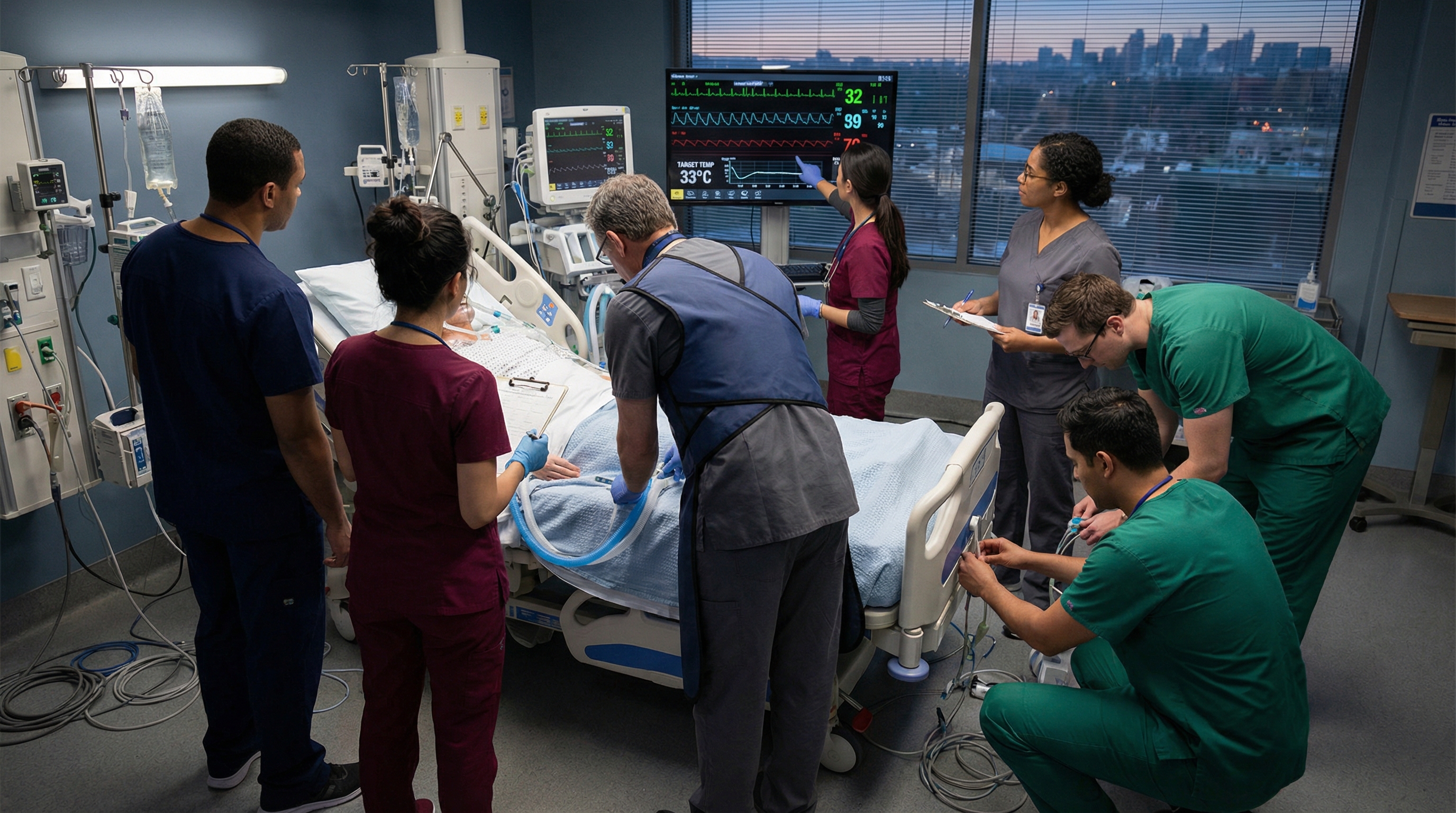
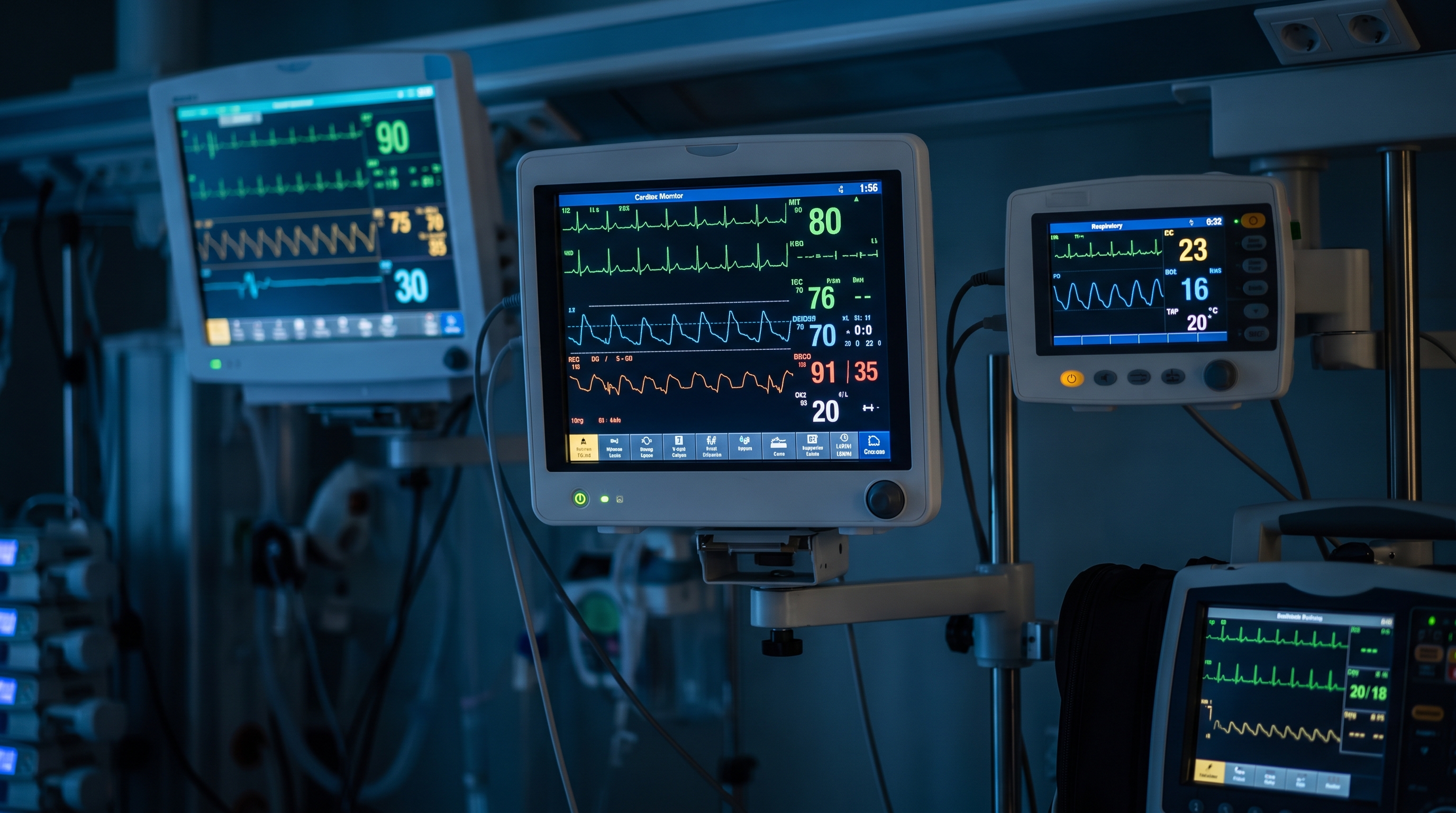
When the heart restarts after cardiac arrest, the battle for survival is far from over. The brain, deprived of oxygen during the arrest, enters a cascade of injury that continues for hours after return of spontaneous circulation (ROSC). Reperfusion injury, excitotoxicity, cerebral edema, and mitochondrial dysfunction all converge to threaten neurological recovery. Targeted temperature management (TTM), also called therapeutic hypothermia, has long been considered one of the most powerful tools clinicians have to interrupt this cycle and protect the brain during the critical post-ROSC period.
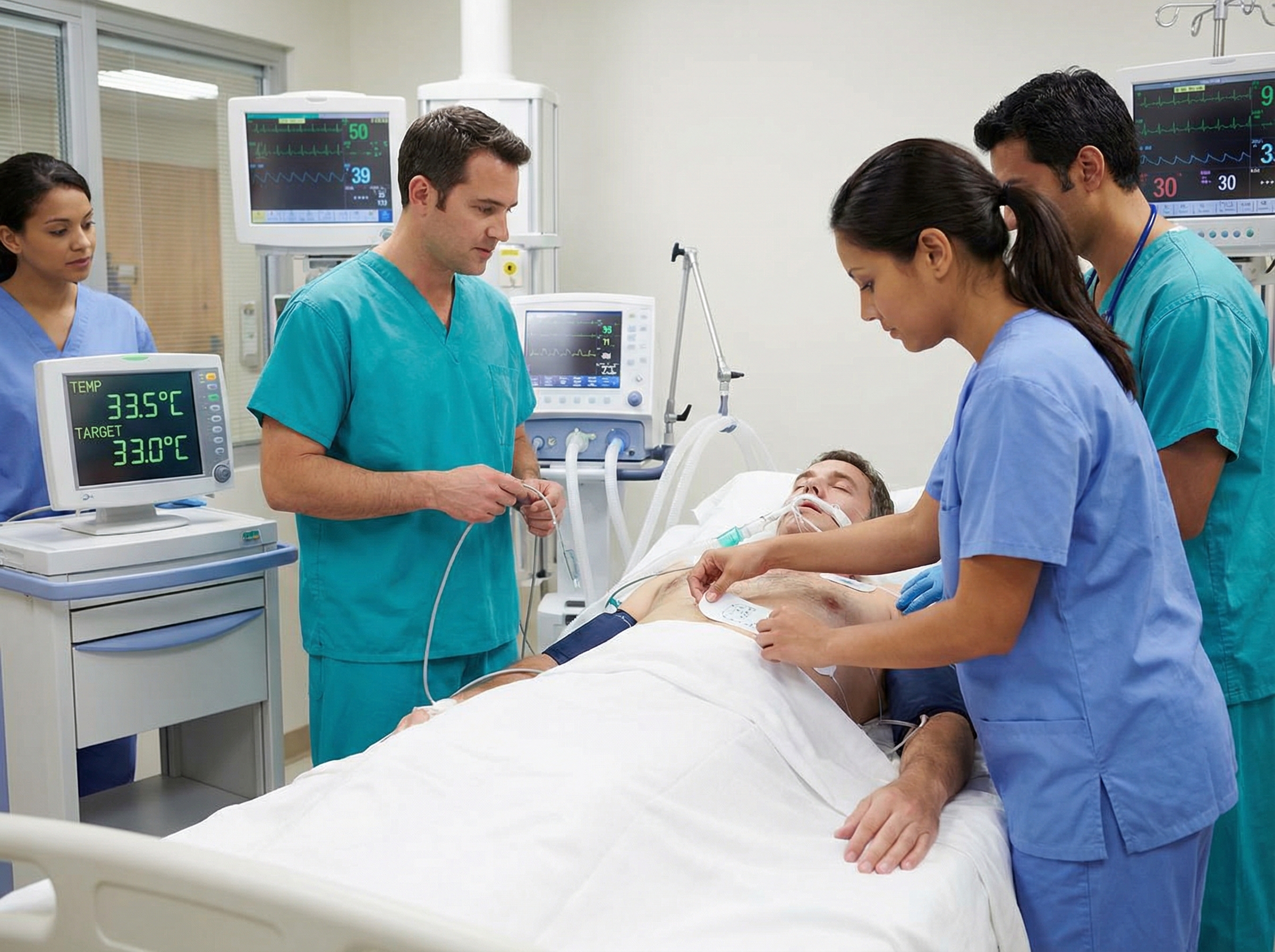
Yet the science has evolved considerably. What was once a near-universal recommendation for aggressive cooling to 33°C has given way to a more nuanced, individualized approach grounded in landmark trial data. For clinicians who manage post-cardiac arrest patients in the ICU, emergency department, or cardiac care unit, understanding current evidence-based TTM protocols is essential not just for best practice, but for passing ACLS certification and applying those skills at the bedside.
This guide breaks down the physiology, protocols, clinical evidence, and practical implementation of targeted temperature management after cardiac arrest, aligned with the most current American Heart Association guidelines and the latest research from pivotal trials including TTM, TTM2, and HYPERION.
To understand why TTM works — and why its benefits are more nuanced than once believed — you need to understand what happens to the brain after cardiac arrest. During the arrest itself, global cerebral ischemia causes depletion of ATP, intracellular calcium overload, and glutamate-mediated excitotoxicity. When circulation is restored, this damage does not stop. In fact, reperfusion triggers a second wave of injury through reactive oxygen species production, inflammatory cascades, and mitochondrial permeability transition.
Temperature directly modulates every one of these mechanisms. For every 1°C reduction in core body temperature, neural oxygen consumption and glucose metabolism decrease by approximately 5 to 7 percent. At lower temperatures, the production of free radicals slows, glutamate release is reduced, apoptotic pathways are suppressed, and the blood-brain barrier becomes less permeable. This is the theoretical foundation for TTM — that by cooling the brain during the most vulnerable window after ROSC, clinicians can meaningfully limit secondary neurological injury.
Equally important is the danger of hyperthermia. Even a temperature of 38°C in the post-arrest period has been associated with significantly worse neurological outcomes. Fever accelerates the same injury cascades that hypothermia suppresses, making fever prevention a non-negotiable goal regardless of whether active cooling is employed. This principle sits at the core of all current TTM strategies.
The story of TTM in cardiac arrest is one of evolving science and shifting clinical paradigms. Understanding the key trials helps clinicians contextualize current guidelines and apply them intelligently.
The modern era of TTM began with two landmark trials published simultaneously in the New England Journal of Medicine in 2002. Both the HACA trial and the Bernard trial demonstrated improved neurological outcomes in comatose survivors of out-of-hospital cardiac arrest (OHCA) with ventricular fibrillation (VF) who were cooled to 32–34°C for 12 to 24 hours. These studies generated immediate enthusiasm and led major resuscitation organizations to recommend therapeutic hypothermia broadly. For nearly a decade, cooling to 33°C became standard of care for unconscious post-arrest patients.
The first major reassessment came with the TTM trial published in the New England Journal of Medicine in 2013. This large randomized controlled trial enrolled 950 unconscious adults after OHCA of presumed cardiac cause, comparing targeted hypothermia at 33°C versus a less aggressive 36°C target. The results were striking: there was no statistically significant difference in mortality or neurological outcome between the two groups at 180 days.
This trial forced a critical reexamination of the assumption that colder is always better. While it did not disprove the benefit of temperature control altogether, it suggested that preventing fever — achievable at 36°C — might explain much of the benefit previously attributed to deeper hypothermia. The clinical community began to recognize that the therapeutic component of TTM might be less about the specific temperature target and more about maintaining a stable, fever-free state.
The most consequential recent trial is the TTM2 trial, published in the New England Journal of Medicine in 2021. This multicenter trial enrolled 1,850 adults with coma after OHCA of presumed cardiac or unknown cause, randomizing patients to targeted hypothermia at 33°C followed by controlled rewarming, or a strategy of targeted normothermia with early treatment of any fever exceeding 37.8°C.
The results again showed no significant difference: 50% survival at 6 months in the hypothermia group versus 48% in the normothermia group (p = 0.37). Rates of severe disability, as measured by the modified Rankin Scale, were also equivalent at 55% in both groups. Importantly, the hypothermia group experienced higher rates of adverse events including cardiac arrhythmias and electrolyte abnormalities.
The TTM2 trial represented a seismic shift. Major international organizations, including the American Heart Association and the International Liaison Committee on Resuscitation (ILCOR), updated their guidance to reflect this new reality: active hypothermia at 33°C is no longer required as a universal default for all post-cardiac arrest patients. Fever prevention remains mandatory.
While TTM2 deflated enthusiasm for routine deep cooling, the HYPERION trial offered a counterpoint. This French multicenter trial evaluated patients with non-shockable rhythms — asystole and pulseless electrical activity (PEA) — who received 24 hours of cooling to 33°C. At 90 days, the cooled group showed a statistically significant improvement in favorable neurological outcome (10.2% vs. 5.7%, p = 0.04). This suggests that certain patient subgroups, particularly those with non-shockable initial rhythms, may still derive benefit from more aggressive hypothermia. This remains an active area of clinical investigation and informs current individualized TTM approaches.
The 2025 American Heart Association Guidelines for Post-Cardiac Arrest Care represent the most current evidence-based framework. Understanding these recommendations is critical for ACLS practitioners. For a detailed overview of what changed, see the key changes in ACLS guidelines for 2025.
The core AHA recommendations for temperature management post-ROSC are as follows:
These recommendations must be understood within the broader framework of comprehensive post-ROSC care, which includes hemodynamic optimization, coronary angiography considerations, ventilation targets, glucose control, and early prognostication.
Knowing the guidelines is one thing; executing a TTM protocol in a busy ICU or emergency department is another. The following framework reflects current best practice for clinical implementation.
TTM should be considered for all comatose adults (Glasgow Coma Scale motor score of 5 or less at initial assessment) who achieve ROSC after cardiac arrest. The decision about specific temperature target should factor in initial rhythm, arrest duration, witnessed vs. unwitnessed status, and institutional protocol. Patients with ROSC who are alert and following commands do not require active cooling.
Absolute contraindications to TTM include: ongoing hemorrhage or severe coagulopathy, known pre-existing terminal illness, and ROSC greater than 6 hours prior without fever management in place. Relative contraindications include sepsis as the arrest etiology, though fever prevention remains essential in this group as well.
Initiation should occur as soon as possible after ROSC, ideally within the first hour. While prehospital cooling has not demonstrated benefit in large trials, in-hospital initiation should not be delayed while awaiting ICU transfer. The emergency physician plays a critical role here, as outlined in the immediate post-cardiac arrest care algorithm.
Several approaches exist for inducing and maintaining target temperature. Surface cooling devices using adhesive gel pads with circulating water — such as the Arctic Sun system — offer precise temperature control and are the current standard in most institutions. These systems can achieve target temperature within 1–2 hours and maintain temperature within 0.2°C of the target.
Intravascular cooling catheters placed in the femoral or subclavian vein offer an alternative, particularly for patients who require vascular access for other reasons. These devices also provide precise temperature control and may be preferred in patients with significant skin conditions precluding surface pad placement.
Simple surface cooling measures — ice packs to the neck, axillae, and groin, or cooling blankets — are appropriate when advanced devices are unavailable, though temperature control is less precise and nursing burden is higher. Cold intravenous saline infusion (4°C normal saline, 30 mL/kg) was historically used for rapid induction of cooling but is no longer recommended routinely due to concerns about pulmonary edema without demonstrated clinical benefit. For a deeper understanding of how hypothermia affects clinical presentation, review understanding hypothermia and altered mental status in emergency medicine.
Continuous core temperature monitoring is mandatory throughout the TTM protocol. Esophageal temperature probes are considered the gold standard for accuracy and correlation with brain temperature. Bladder temperature monitoring via Foley catheter thermistor is an acceptable alternative and widely available. Rectal temperature monitoring is less preferred due to lag time in reflecting true core temperature changes.
During active cooling and maintenance, the clinical team must monitor for TTM-associated complications. Key complications include: shivering (the most common and most challenging), bradycardia, hypotension, electrolyte shifts (particularly hypokalemia and hypomagnesemia), hyperglycemia, coagulopathy, and increased susceptibility to infection. Each of these requires proactive management protocols.
Shivering is the primary thermoregulatory response opposing induced hypothermia and can increase metabolic demand by up to 400%, effectively negating the neuroprotective benefits of cooling. Managing shivering is therefore one of the most critical aspects of TTM protocol implementation.
The Bedside Shivering Assessment Scale (BSAS) is the standard tool for quantifying shivering intensity from 0 (none) to 3 (severe, involving trunk and upper extremities). Assessment should occur at minimum every 30 minutes during TTM.

A stepwise approach to shivering management involves the following interventions, escalating as needed:
Temperature directly influences glucose metabolism. Hypothermia induces insulin resistance and impairs pancreatic insulin secretion, leading to predictable hyperglycemia during cooling. Conversely, rewarming can trigger hypoglycemia as insulin sensitivity normalizes rapidly. Both extremes are associated with worse neurological outcomes. Current AHA guidelines recommend targeting blood glucose between 140–180 mg/dL during TTM, with glucose checks every 1–2 hours.
For an in-depth exploration of this topic, glucose control in post-cardiac arrest care provides a comprehensive guide to glycemic targets and insulin protocols in the post-ROSC period.
Electrolyte management is equally important. Hypothermia causes cellular uptake of potassium, magnesium, and phosphate, leading to serum hypokalemia, hypomagnesemia, and hypophosphatemia during cooling. Aggressive replacement during the cooling phase is necessary. Critically, rewarming reverses these shifts — potassium and magnesium redistribute from cells back into the serum. Electrolyte replacement should therefore be reduced or stopped during rewarming to avoid hyperkalemia, which can precipitate dangerous arrhythmias. Electrolytes should be checked every 4–6 hours throughout the TTM protocol and every 2 hours during rewarming.
Rewarming is not a passive endpoint — it is an active, carefully managed phase of the TTM protocol. Uncontrolled or rapid rewarming can trigger rebound hyperthermia, hemodynamic instability, and cerebral vasodilation that may worsen brain edema. The recommended rewarming rate is 0.25°C per hour, not to exceed 0.5°C per hour, until a normothermic target of 36–37°C is reached.
Post-rewarming fever is a major threat. Multiple studies have demonstrated that even a single episode of fever above 38°C in the 24–72 hours after rewarming is independently associated with significantly worse neurological outcomes and increased mortality. Active fever surveillance and treatment — with acetaminophen, physical cooling measures, or continued temperature management devices set to normothermic targets — must continue for at least 72 hours after ROSC.
Neurological assessment becomes more meaningful once the patient has been rewarmed and sedation has been appropriately reduced. However, clinicians should avoid premature neuroprognostication. The 2025 AHA guidelines emphasize that no single test or clinical finding should be used in isolation to predict neurological outcome in the first 72 hours after ROSC and rewarming. A multimodal approach combining clinical examination, EEG, somatosensory evoked potentials, biomarkers, and neuroimaging is recommended before any withdrawal of life-sustaining therapy is considered.
Targeted temperature management is a core component of the post-cardiac arrest care pathway that every ACLS-certified provider must understand. The adult cardiac arrest circular algorithm leads directly into post-arrest care, and TTM decisions begin in the resuscitation room — not hours later in the ICU.
From an ACLS perspective, the emergency physician and resuscitation team should have a clear protocol for TTM initiation as part of their post-ROSC checklist. This includes confirming patient eligibility, ordering appropriate monitoring, initiating a cooling device or surface cooling measures, establishing hemodynamic targets (mean arterial pressure of 65–80 mmHg), ordering continuous EEG if sedation or neuromuscular blockade is planned, and communicating with the ICU team regarding target temperature and duration. Understanding the medications used during this phase is also essential — review the ACLS medications cheat sheet for a complete reference on drug dosages, routes, and indications used throughout resuscitation and post-arrest care.
The evolution of TTM guidelines also illustrates why ongoing ACLS education matters. The recommendations you learned five years ago may no longer reflect current best evidence. Staying current with recertification and continuing medical education is not a formality — it directly impacts patient outcomes at the bedside. For a comprehensive look at the full resuscitation framework, explore the updated narrative review of targeted temperature management published in peer-reviewed literature.
The current evidence base supports a move toward individualized temperature management rather than a one-size-fits-all protocol. Emerging research and clinical experience identify several subgroups that warrant consideration of different TTM approaches.
Most TTM trial data derives from out-of-hospital cardiac arrest populations. The evidence for TTM in IHCA is less robust. Observational data has been conflicting, and a recent analysis found no consistent benefit from aggressive hypothermia in the IHCA population. The 2025 AHA guidelines recommend that fever prevention remains essential in all IHCA patients, while the decision to actively cool below normothermia should be individualized based on patient characteristics and institutional protocol.
As noted above, the HYPERION trial signal suggests potential benefit for cooling to 33°C in patients with non-shockable initial rhythms. These patients are traditionally considered to have worse prognoses, and the absolute benefit in neurologically intact survival, while modest, may be clinically meaningful. Understanding the pathophysiology of non-shockable rhythms is foundational — providers should review understanding pulseless electrical activity: causes and treatment for a deep dive into PEA management and the arrest etiologies that drive this rhythm.
A 2025 publication in JACC Advances proposed a neurologically driven approach to personalizing TTM targets based on continuous EEG findings, clinical examination, and biomarker data. Patients with active epileptiform activity on EEG, elevated NSE (neuron-specific enolase), or high illness severity scores may represent a group that still benefits from deeper hypothermia at 32–33°C. This precision medicine approach to TTM is an exciting frontier that will shape guidelines in the years ahead, as described in recent updates to post-resuscitation care from the Journal of the American Heart Association following the integration of TTM2 results.
Despite strong evidence for fever prevention and the clear safety profile of normothermia, real-world TTM implementation faces barriers in many healthcare settings. Device availability, nursing expertise, protocol standardization, and physician comfort with shivering management all contribute to variation in practice.
Hospitals without dedicated TTM devices can implement fever prevention through conventional means: antipyretics, standard cooling blankets, and meticulous temperature monitoring. The critical point is that fever prevention is not optional — it is achievable in any setting and represents the minimum standard of post-arrest temperature care. According to the StatPearls evidence summary on TTM, even resource-limited environments can implement meaningful fever avoidance protocols.
Interdisciplinary education and simulation training are the most effective tools for improving TTM protocol adherence. Regular debriefing after cardiac arrest cases, including assessment of post-arrest care quality, drives systematic improvement. The importance of this team-based learning approach is well-documented, and structured debriefs are highlighted as a quality improvement tool in enhancing patient outcomes through debriefing after ACLS events.
The evidence on targeted temperature management has undergone a remarkable evolution over the past two decades. The key clinical takeaways for 2025 and beyond are clear:
Targeted temperature management is one component of a comprehensive post-cardiac arrest care framework that every ACLS provider must master. But clinical knowledge alone is not enough — proficiency requires structured training, protocol practice, and up-to-date certification that reflects current guidelines.
Affordable ACLS, founded by Board Certified Emergency Medicine physicians, offers 100% online, self-paced ACLS certification and recertification courses starting at just $99. Our curriculum is fully aligned with AHA and ILCOR guidelines — including the 2025 updates on temperature management, post-ROSC care, and the full cardiac arrest algorithm. With immediate digital certification upon completion, unlimited exam retakes, and a money-back guarantee, there is no reason to delay refreshing your skills.
Whether you are preparing for initial certification or staying current with evolving evidence, our platform delivers the clinical depth and convenience that healthcare professionals need. Visit www.affordableacls.com or call/text 866-655-2157 to get started today. Understanding the nuances of TTM — from the TTM2 trial implications to real-world shivering management — is exactly the kind of evidence-based knowledge that separates proficient providers from excellent ones, and our courses are designed to build both.
The management of temperature after cardiac arrest has never been more nuanced or more important. As the science continues to evolve toward individualized protocols and precision medicine approaches, staying current with the evidence is a professional obligation for every clinician who stands at the bedside of a post-arrest patient. The brain you protect may depend on it.
.jpg)