ACLS Blogs

Stroke Code Activation: How ACLS-Trained Providers Drive Faster Door-to-Needle Times

When Minutes Literally Mean Brain

Every second counts in acute ischemic stroke. Clinicians have long used the phrase "time is brain" to capture a stark neurological reality: approximately 1.9 million neurons are lost for every minute that a large-vessel ischemic stroke goes untreated. That number should be burned into the memory of every provider who walks the floors of an emergency department, rides in an ambulance, or staffs a rapid response team. It is the biological foundation behind every stroke protocol, every code activation threshold, and every door-to-needle benchmark your hospital has ever adopted.
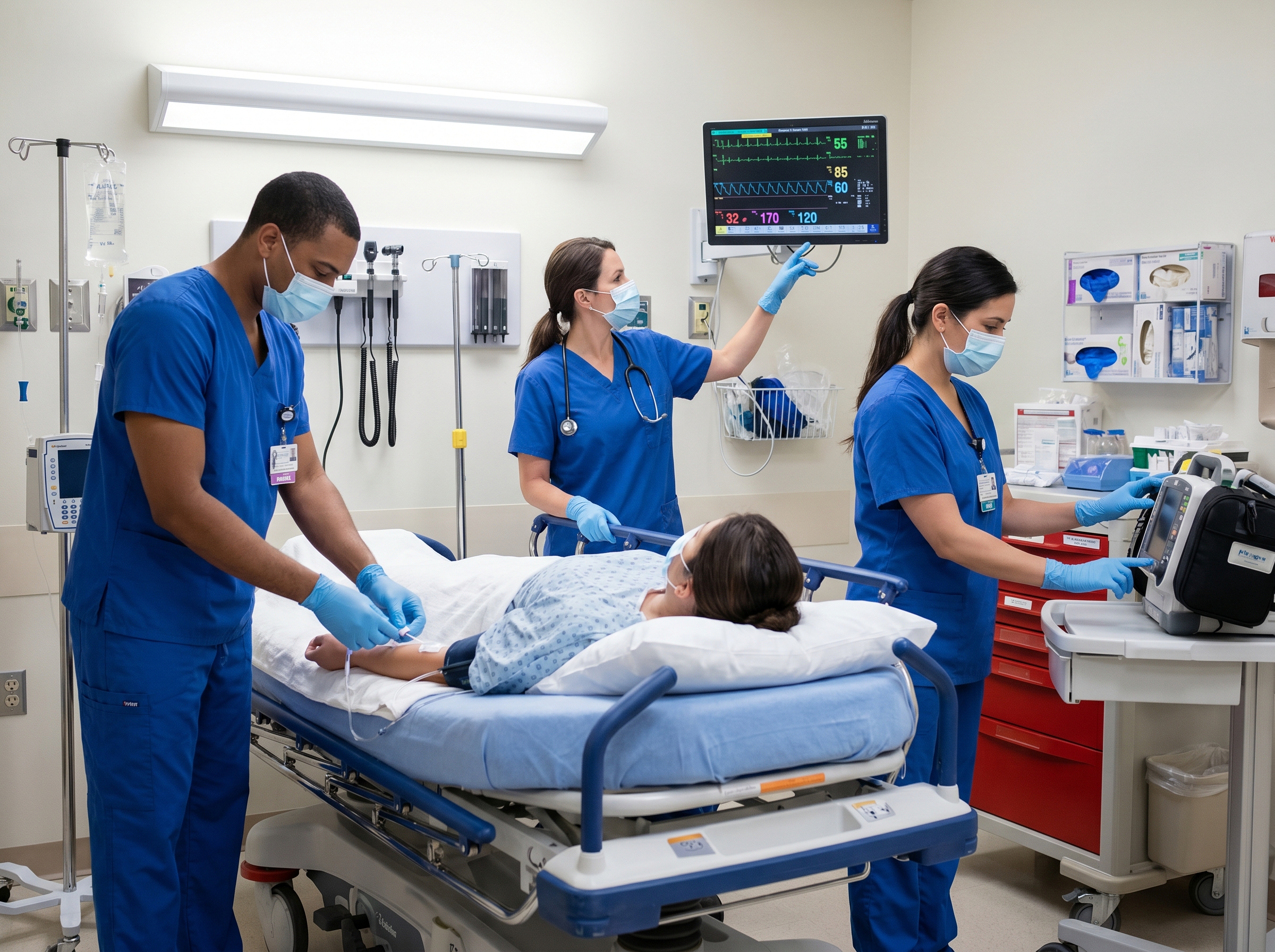
Emergency stroke team coordinating rapid response at patient bedside in emergency department


Yet despite decades of awareness campaigns and quality improvement initiatives, a meaningful gap persists between ideal and actual door-to-needle (DTN) performance. The 2026 AHA/ASA guidelines for the early management of acute ischemic stroke continue to push for DTN times of 60 minutes or less, with leading stroke centers targeting 45 minutes or below. Reaching those benchmarks is not an accident. It is the product of systematic training, clear team roles, and the kind of algorithmic discipline that ACLS certification is specifically designed to instill.


In this article, we break down exactly how ACLS-trained providers accelerate stroke code activation, compress time-to-treatment intervals, and ultimately improve functional outcomes for patients who arrive at your door with a potential stroke in progress. Whether you are an emergency nurse, an EM resident, a paramedic, or an NP in an urgent care setting that occasionally sees acute neurological presentations, understanding the intersection of ACLS training and stroke protocol execution will make you a more effective responder.


Why Door-to-Needle Time Is the Central Quality Metric

Door-to-needle time — the interval from a patient's arrival at the emergency department to the initiation of intravenous thrombolysis with alteplase (tPA) or tenecteplase (TNK) — is the single most actionable in-hospital quality metric for acute ischemic stroke care. Unlike the broader onset-to-treatment window, which extends from symptom onset and depends heavily on pre-hospital variables outside your control, DTN time is entirely within the hospital system's sphere of influence.


The original NINDS tPA stroke trial established thrombolysis efficacy within a 3-hour window, and subsequent data extended the eligible treatment window to 4.5 hours for appropriately selected patients. But within those windows, earlier is unambiguously better. Research published in the AHA journal Stroke demonstrated that for every 15-minute reduction in DTN time, the odds of a good functional outcome improve measurably. The clinical implication: a team that consistently achieves 40-minute DTN times is delivering meaningfully better care than one averaging 60 minutes, even though both technically meet the guideline threshold.


A landmark protocol study reported a median door-to-needle time of just 27 minutes after full implementation — a 48% reduction from a baseline of 52 minutes — with times dropping to 22 minutes when pre-hospital stroke code notification was activated prior to arrival. These are not outlier results from academic medical centers with unlimited resources. They are achievable outcomes when systematic ACLS-grounded stroke protocols are faithfully executed by well-trained teams.


How ACLS Training Builds the Cognitive Foundation for Stroke Response

ACLS certification is not just about running a cardiac arrest code. The curriculum explicitly includes the Suspected Stroke in Adult Algorithm — a structured, time-anchored decision tree that maps every critical action from initial recognition through imaging, eligibility determination, and thrombolytic administration. Providers who have internalized this algorithm arrive at the bedside with a pre-loaded mental model that enables them to act decisively under pressure rather than pausing to reconstruct a plan from scratch.


The ACLS Suspected Stroke in Adult Algorithm organizes the response into discrete time-stamped phases: immediate assessment and ABCs within 10 minutes of arrival, stroke team activation, CT imaging within 25 minutes, CT interpretation within 45 minutes, and fibrinolytic administration within 60 minutes. Each phase has defined actions and responsible roles. When every team member has been trained on this framework, the handoffs between phases become seamless rather than chaotic.


Beyond the algorithm itself, ACLS training equips providers with the clinical pattern recognition skills needed to identify stroke presentations that are atypical or easily confused with mimics. Hypoglycemia, Todd's paralysis, complex migraine, and hypertensive encephalopathy can all present with focal neurological deficits that resemble ischemic stroke. An ACLS-trained provider knows to check a point-of-care glucose immediately — a step built directly into the algorithm — because treating hypoglycemia takes minutes while unnecessary CT imaging and thrombolysis workup consumes the precious treatment window.


Stroke Code Activation: Getting the Trigger Right

The single highest-impact decision in the entire stroke response sequence is the code activation itself. Research consistently shows that patients for whom stroke code is activated at triage achieve dramatically shorter door-to-CT times — averaging 35 minutes versus over 64 minutes when activation does not occur at triage. Despite this, studies have found that up to 50% of suspected stroke patients meeting activation criteria do not have the protocol initiated appropriately. That failure is almost always a training gap, not a systems gap.


ACLS training addresses this directly by teaching providers to recognize the core stroke warning signs through validated tools. The Cincinnati Prehospital Stroke Scale and the BE-FAST mnemonic (Balance, Eyes, Face drooping, Arm weakness, Speech difficulty, Time to call 911) are both covered in ACLS stroke content. For ED nurses and triage staff — arguably the most important activators in the in-hospital chain — knowing these tools cold means the difference between a 30-minute DTN and a 90-minute DTN.


Pre-hospital notification from EMS is the upstream accelerant. When a paramedic or EMT with ACLS training recognizes a stroke in the field and calls ahead, the receiving team can mobilize before the patient arrives. The CT scanner can be pre-positioned, the stroke team can be en route, and the pharmacist can begin thrombolytic preparation. AHA's Get With The Guidelines — Stroke program data from 371,988 EMS-transported patients demonstrated that pre-hospital notification led to shorter door-to-imaging times (26 vs. 31 minutes), reduced DTN times, and higher rates of tPA administration within recommended windows.


Team Roles During a Stroke Code: Who Does What and When

A stroke code is a team sport, and ACLS training is what ensures every player knows their position. The algorithmic clarity of ACLS certification translates directly into role clarity during a real activation. Here is a walkthrough of the typical role distribution in an acute stroke response.


The Team Leader

In most ED stroke codes, a physician or advanced practice provider takes the team leader role. Their job is to synthesize incoming information — vitals, history, NIHSS score, imaging results — and make the go/no-go decision on thrombolytics. ACLS training specifically prepares providers for this command function, reinforcing the discipline of closed-loop communication, explicit role assignments, and decision-making under time pressure. The communication scripts from ACLS team dynamics training apply directly here: every order should be spoken clearly, repeated back, and confirmed as executed.


The Bedside Nurse

Emergency nurses are frequently the first clinical contact for stroke patients and carry enormous responsibility in the code. Their tasks include IV access (two large-bore IVs), blood draws for coagulation studies and metabolic panel, continuous cardiac monitoring, blood pressure assessment (critical for thrombolytic eligibility), and administration of tPA or TNK once ordered. ACLS training for nurses reinforces the importance of anticipating physician orders — a nurse who has studied the stroke algorithm knows what labs are coming before they are ordered, enabling parallel rather than sequential task execution. If you are an ED nurse who has not yet pursued ACLS certification, this is the clearest argument for doing so.


The Stroke Neurologist or Neurology Resident

At stroke-certified centers, a neurologist or neurology resident is typically activated as part of the code. Their primary contribution is the formal NIHSS scoring — a 15-item neurological examination that quantifies deficit severity and guides treatment decisions. The NIHSS is referenced within ACLS stroke content as the standard assessment tool, and providers who understand its structure can provide meaningful preliminary scoring while awaiting neurology arrival, preventing delays in imaging decisions.


Radiology and CT Technologist

The CT technologist who receives a pre-positioned stroke code patient can begin imaging within minutes of arrival. ACLS-trained EM providers understand what CT findings they are looking for — specifically the absence of hyperdense parenchymal hemorrhage, which is the primary imaging contraindication to thrombolysis — and can communicate meaningfully with radiology about urgency and protocol requirements.


NIHSS, ACLS, and the Eligibility Decision

One of the most consequential moments in a stroke code is the eligibility determination for thrombolytic therapy. The decision involves a convergence of clinical assessment (NIHSS score, symptom onset time, last known well), laboratory results (glucose, INR, platelet count), imaging findings (CT head, and often CT angiography for large vessel occlusion assessment), and a careful review of contraindications. This is exactly the kind of multi-variable, time-pressured clinical synthesis that ACLS training is designed to support.


NINDS stroke research has consistently demonstrated that the benefit of tPA is greatest when administered early within the treatment window — the 1995 NINDS trial showed the strongest functional outcomes in patients treated within 90 minutes of onset. For patients presenting in the 3-4.5 hour window, the benefit persists but is more modest, and the risk-benefit calculation requires greater precision. ACLS-trained providers understand this gradient and use it to prioritize urgency appropriately rather than treating all presentations with equivalent but insufficient speed.


The NIHSS score also informs mechanical thrombectomy decisions for large vessel occlusions. Patients with higher NIHSS scores and imaging evidence of proximal occlusion may be candidates for endovascular therapy, which the 2019 AHA/ASA stroke guidelines recommend up to 24 hours after last known well in appropriately selected patients. ACLS-trained emergency providers who understand this pathway ensure these patients are triaged correctly for the interventional suite rather than simply admitted to a medical floor after thrombolysis.


Parallel Processing: The ACLS-Trained Team's Competitive Advantage

One of the most powerful concepts embedded in ACLS training is the idea of parallel task execution. In a single-provider environment, tasks must be completed sequentially. In a well-coordinated ACLS team, multiple interventions happen simultaneously — one nurse secures IV access while another draws labs, the physician performs the NIHSS while radiology is prepping the scanner, and the pharmacist begins calculating the weight-based tPA dose as imaging is underway.
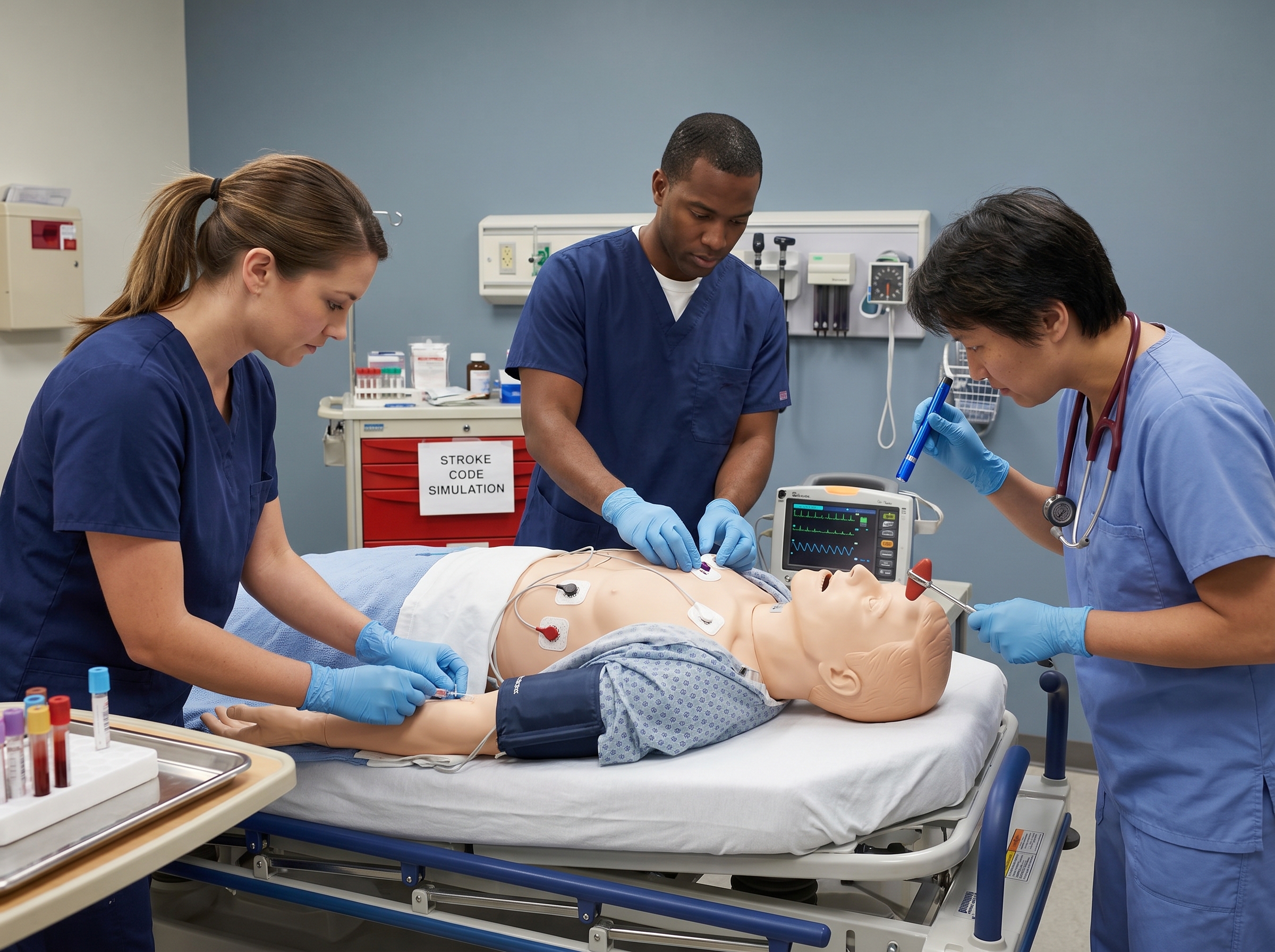
ACLS team members performing parallel tasks simultaneously during stroke code simulation training


This parallel processing model is the mechanism by which stroke centers consistently achieve sub-60-minute DTN times. It requires every team member to know the algorithm well enough to anticipate the next step without waiting for direction. That institutional knowledge is built through ACLS certification and reinforced through regular code team training and simulation exercises.


Research on structured stroke code protocols found that institutions with defined parallel workflow assignments achieved significantly lower DTN times than those relying on ad hoc team assembly. The difference was not technology or staffing ratios; it was protocol clarity and role preparation — both of which are core outputs of rigorous ACLS training.


Common Causes of DTN Delay and How ACLS Training Addresses Each

Quality improvement literature identifies several recurring bottlenecks in stroke code execution. Understanding these patterns — and how ACLS-trained teams eliminate them — is essential for any provider serious about optimizing outcomes.


Delayed Recognition at Triage

When triage staff fail to identify stroke symptoms, patients are triaged to lower acuity categories and may wait extended periods before receiving clinical evaluation. ACLS training that includes stroke recognition tools ensures that nurses and mid-level providers in triage positions have the knowledge to flag these patients immediately. Institutions that have implemented ACLS-trained triage nurses specifically for stroke recognition have documented substantial reductions in door-to-activation intervals.


Communication Failures During Handoffs

A poorly communicated stroke code — incomplete history from EMS, unclear symptom onset time, missing contraindication information — forces the receiving team to reconstruct the clinical picture from scratch, consuming critical minutes. The closed-loop communication principles embedded in ACLS training directly address this. When every provider in the chain uses standardized communication scripts, handoff information is complete, structured, and immediately actionable.


Consent Delays

Obtaining informed consent for thrombolytic therapy can introduce delays when providers are not prepared with efficient, clearly organized explanations of risks and benefits. ACLS-trained providers understand the risk profile of tPA — including the approximately 6% symptomatic intracranial hemorrhage risk — well enough to provide rapid, accurate informed consent discussions that do not unnecessarily prolong the decision process.


Uncertainty About Eligibility Criteria

One of the most common causes of delayed thrombolysis is provider uncertainty about contraindications. When an EM physician or NP is not confident about eligibility boundaries — recent surgery, prior ICH history, anticoagulant use, elevated INR — they may delay for additional consults rather than using available resources to make a timely decision. The current ACLS guidelines address updated thrombolytic eligibility criteria in detail, and providers who stay current through recertification are better equipped to make confident eligibility determinations without unnecessary consultation delays.


After the Code: Debriefing as a DTN Improvement Tool

The stroke code does not end with tPA administration or catheterization suite transfer. For ACLS-trained teams committed to continuous improvement, the code ends with a structured debrief. Post-event debriefing is one of the highest-yield quality improvement interventions available, yet it remains underutilized in most institutions.


A well-executed debrief reviews the timeline of each code activation, identifies specific delay points, acknowledges what went well, and assigns concrete action items for process improvement. Structured debriefing after ACLS events has been shown to reduce subsequent code times and improve team performance across multiple resuscitation scenarios, including stroke. Institutions that incorporate regular stroke code debriefs into their quality improvement programs show measurable, sustained DTN reductions over time.


The data generated by stroke code debriefs also feeds back into training. Specific knowledge gaps — uncertainty about eligibility criteria, inconsistent NIHSS scoring, delays in blood pressure management — become curriculum items for the next ACLS recertification cycle, creating a continuous learning loop that progressively sharpens team performance.


Extending Stroke Code Capability: ACLS in Rural and Telehealth Settings

Not every stroke patient arrives at a comprehensive stroke center with a 24/7 neurology team and an interventional suite on standby. Rural emergency departments, critical access hospitals, and community EDs manage the initial phase of stroke care without specialist backup — and in these settings, the ACLS-trained provider's ability to execute the stroke algorithm independently is even more critical.


Telestroke services have extended specialist consultation to remote facilities, enabling bedside providers to share clinical examination findings and imaging with remote neurologists in real time. But the value of a telestroke consultation is entirely dependent on the quality of information the bedside provider can generate and communicate. An ACLS-certified nurse or physician who has performed a structured NIHSS assessment and correctly identified imaging findings provides the remote neurologist with the data needed to make a treatment decision confidently. A provider unfamiliar with the stroke algorithm creates uncertainty that delays rather than accelerates treatment.


The integration of telemedicine and ACLS training in rural stroke management represents one of the most promising developments in closing the outcomes gap between urban and rural stroke care. Providers who invest in telemedicine-integrated ACLS training strategies are better positioned to serve patients in resource-limited environments where they may be the only trained responder available.


Putting It Into Practice: Getting and Staying ACLS Certified

If you work in an emergency department, a rapid response role, an inpatient unit that sees acute neurology deteriorations, or any prehospital setting, current ACLS certification is not optional — it is the baseline competency that enables you to function effectively in a stroke code. The question is not whether to certify, but how to do it in a way that genuinely builds the clinical fluency the protocol requires.


Affordable ACLS offers a fully online, self-paced ACLS certification course developed and taught by board-certified emergency medicine physicians. The curriculum covers the full suite of ACLS algorithms including the Suspected Stroke in Adult Algorithm, NIHSS assessment principles, thrombolytic eligibility determination, and the communication and team dynamics frameworks that make high-functioning stroke codes possible. At $99 for new certification and $89 for recertification, it is one of the most accessible options available without sacrificing clinical depth or AHA/ILCOR guideline alignment.


The self-paced format means you can study the stroke algorithm during the same shift you reviewed your hospital's stroke protocol, reinforcing both in tandem. Unlimited retakes ensure you genuinely master the material rather than just clearing a minimum threshold. And immediate digital certification means your credentials are available the same day you complete the course — no waiting for a card to arrive by mail.


For nurses who want a deeper dive into how ACLS certification specifically applies to their scope of practice in stroke care, the ultimate guide to ACLS certification for nurses covers everything from course selection to clinical application in detail. Whether you are certifying for the first time or renewing credentials that are approaching expiration, the investment pays immediate dividends in the clinical environment.


The Bottom Line: ACLS Training Is Stroke Care Infrastructure

Stroke code activation is not a passive process that happens when a patient walks through the door. It is an active, coordinated clinical response that depends on trained providers making rapid, accurate decisions under significant time pressure. The door-to-needle benchmark is a system-level outcome that reflects the aggregate competency of every individual in the chain — from the EMS provider who calls ahead, to the triage nurse who activates the code, to the EM physician who interprets the CT and orders the tPA, to the bedside nurse who administers it.


ACLS certification is the thread that runs through all of those roles. It builds the algorithmic discipline, the clinical pattern recognition, the communication frameworks, and the team coordination skills that convert a chaotic emergency into a streamlined, efficient response. The evidence is unambiguous: institutions with well-trained, ACLS-certified stroke teams consistently outperform those without on every meaningful quality metric, including DTN time, thrombolysis rates, and functional outcomes at discharge.


Research on code stroke alert systems confirms that structured activation protocols with trained providers drive measurable improvements across both day and night shifts — meaning the benefits of ACLS training are not limited to peak staffing hours but extend to the full 24-hour operational environment where strokes do not follow convenient schedules.


If you are committed to delivering the best possible stroke care — and to being the provider who accelerates your team's performance rather than slowing it down — ACLS certification is your foundation. The algorithm is the map. Training is what makes you fast enough to use it when it matters most.


ACLS Blogs

Stroke Code Activation: How ACLS-Trained Providers Drive Faster Door-to-Needle Times

When Minutes Literally Mean Brain

Every second counts in acute ischemic stroke. Clinicians have long used the phrase "time is brain" to capture a stark neurological reality: approximately 1.9 million neurons are lost for every minute that a large-vessel ischemic stroke goes untreated. That number should be burned into the memory of every provider who walks the floors of an emergency department, rides in an ambulance, or staffs a rapid response team. It is the biological foundation behind every stroke protocol, every code activation threshold, and every door-to-needle benchmark your hospital has ever adopted.

Emergency stroke team coordinating rapid response at patient bedside in emergency department


Yet despite decades of awareness campaigns and quality improvement initiatives, a meaningful gap persists between ideal and actual door-to-needle (DTN) performance. The 2026 AHA/ASA guidelines for the early management of acute ischemic stroke continue to push for DTN times of 60 minutes or less, with leading stroke centers targeting 45 minutes or below. Reaching those benchmarks is not an accident. It is the product of systematic training, clear team roles, and the kind of algorithmic discipline that ACLS certification is specifically designed to instill.


In this article, we break down exactly how ACLS-trained providers accelerate stroke code activation, compress time-to-treatment intervals, and ultimately improve functional outcomes for patients who arrive at your door with a potential stroke in progress. Whether you are an emergency nurse, an EM resident, a paramedic, or an NP in an urgent care setting that occasionally sees acute neurological presentations, understanding the intersection of ACLS training and stroke protocol execution will make you a more effective responder.


Why Door-to-Needle Time Is the Central Quality Metric

Door-to-needle time — the interval from a patient's arrival at the emergency department to the initiation of intravenous thrombolysis with alteplase (tPA) or tenecteplase (TNK) — is the single most actionable in-hospital quality metric for acute ischemic stroke care. Unlike the broader onset-to-treatment window, which extends from symptom onset and depends heavily on pre-hospital variables outside your control, DTN time is entirely within the hospital system's sphere of influence.


The original NINDS tPA stroke trial established thrombolysis efficacy within a 3-hour window, and subsequent data extended the eligible treatment window to 4.5 hours for appropriately selected patients. But within those windows, earlier is unambiguously better. Research published in the AHA journal Stroke demonstrated that for every 15-minute reduction in DTN time, the odds of a good functional outcome improve measurably. The clinical implication: a team that consistently achieves 40-minute DTN times is delivering meaningfully better care than one averaging 60 minutes, even though both technically meet the guideline threshold.


A landmark protocol study reported a median door-to-needle time of just 27 minutes after full implementation — a 48% reduction from a baseline of 52 minutes — with times dropping to 22 minutes when pre-hospital stroke code notification was activated prior to arrival. These are not outlier results from academic medical centers with unlimited resources. They are achievable outcomes when systematic ACLS-grounded stroke protocols are faithfully executed by well-trained teams.


How ACLS Training Builds the Cognitive Foundation for Stroke Response

ACLS certification is not just about running a cardiac arrest code. The curriculum explicitly includes the Suspected Stroke in Adult Algorithm — a structured, time-anchored decision tree that maps every critical action from initial recognition through imaging, eligibility determination, and thrombolytic administration. Providers who have internalized this algorithm arrive at the bedside with a pre-loaded mental model that enables them to act decisively under pressure rather than pausing to reconstruct a plan from scratch.


The ACLS Suspected Stroke in Adult Algorithm organizes the response into discrete time-stamped phases: immediate assessment and ABCs within 10 minutes of arrival, stroke team activation, CT imaging within 25 minutes, CT interpretation within 45 minutes, and fibrinolytic administration within 60 minutes. Each phase has defined actions and responsible roles. When every team member has been trained on this framework, the handoffs between phases become seamless rather than chaotic.


Beyond the algorithm itself, ACLS training equips providers with the clinical pattern recognition skills needed to identify stroke presentations that are atypical or easily confused with mimics. Hypoglycemia, Todd's paralysis, complex migraine, and hypertensive encephalopathy can all present with focal neurological deficits that resemble ischemic stroke. An ACLS-trained provider knows to check a point-of-care glucose immediately — a step built directly into the algorithm — because treating hypoglycemia takes minutes while unnecessary CT imaging and thrombolysis workup consumes the precious treatment window.


Stroke Code Activation: Getting the Trigger Right

The single highest-impact decision in the entire stroke response sequence is the code activation itself. Research consistently shows that patients for whom stroke code is activated at triage achieve dramatically shorter door-to-CT times — averaging 35 minutes versus over 64 minutes when activation does not occur at triage. Despite this, studies have found that up to 50% of suspected stroke patients meeting activation criteria do not have the protocol initiated appropriately. That failure is almost always a training gap, not a systems gap.


ACLS training addresses this directly by teaching providers to recognize the core stroke warning signs through validated tools. The Cincinnati Prehospital Stroke Scale and the BE-FAST mnemonic (Balance, Eyes, Face drooping, Arm weakness, Speech difficulty, Time to call 911) are both covered in ACLS stroke content. For ED nurses and triage staff — arguably the most important activators in the in-hospital chain — knowing these tools cold means the difference between a 30-minute DTN and a 90-minute DTN.


Pre-hospital notification from EMS is the upstream accelerant. When a paramedic or EMT with ACLS training recognizes a stroke in the field and calls ahead, the receiving team can mobilize before the patient arrives. The CT scanner can be pre-positioned, the stroke team can be en route, and the pharmacist can begin thrombolytic preparation. AHA's Get With The Guidelines — Stroke program data from 371,988 EMS-transported patients demonstrated that pre-hospital notification led to shorter door-to-imaging times (26 vs. 31 minutes), reduced DTN times, and higher rates of tPA administration within recommended windows.


Team Roles During a Stroke Code: Who Does What and When

A stroke code is a team sport, and ACLS training is what ensures every player knows their position. The algorithmic clarity of ACLS certification translates directly into role clarity during a real activation. Here is a walkthrough of the typical role distribution in an acute stroke response.


The Team Leader

In most ED stroke codes, a physician or advanced practice provider takes the team leader role. Their job is to synthesize incoming information — vitals, history, NIHSS score, imaging results — and make the go/no-go decision on thrombolytics. ACLS training specifically prepares providers for this command function, reinforcing the discipline of closed-loop communication, explicit role assignments, and decision-making under time pressure. The communication scripts from ACLS team dynamics training apply directly here: every order should be spoken clearly, repeated back, and confirmed as executed.


The Bedside Nurse

Emergency nurses are frequently the first clinical contact for stroke patients and carry enormous responsibility in the code. Their tasks include IV access (two large-bore IVs), blood draws for coagulation studies and metabolic panel, continuous cardiac monitoring, blood pressure assessment (critical for thrombolytic eligibility), and administration of tPA or TNK once ordered. ACLS training for nurses reinforces the importance of anticipating physician orders — a nurse who has studied the stroke algorithm knows what labs are coming before they are ordered, enabling parallel rather than sequential task execution. If you are an ED nurse who has not yet pursued ACLS certification, this is the clearest argument for doing so.


The Stroke Neurologist or Neurology Resident

At stroke-certified centers, a neurologist or neurology resident is typically activated as part of the code. Their primary contribution is the formal NIHSS scoring — a 15-item neurological examination that quantifies deficit severity and guides treatment decisions. The NIHSS is referenced within ACLS stroke content as the standard assessment tool, and providers who understand its structure can provide meaningful preliminary scoring while awaiting neurology arrival, preventing delays in imaging decisions.


Radiology and CT Technologist

The CT technologist who receives a pre-positioned stroke code patient can begin imaging within minutes of arrival. ACLS-trained EM providers understand what CT findings they are looking for — specifically the absence of hyperdense parenchymal hemorrhage, which is the primary imaging contraindication to thrombolysis — and can communicate meaningfully with radiology about urgency and protocol requirements.


NIHSS, ACLS, and the Eligibility Decision

One of the most consequential moments in a stroke code is the eligibility determination for thrombolytic therapy. The decision involves a convergence of clinical assessment (NIHSS score, symptom onset time, last known well), laboratory results (glucose, INR, platelet count), imaging findings (CT head, and often CT angiography for large vessel occlusion assessment), and a careful review of contraindications. This is exactly the kind of multi-variable, time-pressured clinical synthesis that ACLS training is designed to support.


NINDS stroke research has consistently demonstrated that the benefit of tPA is greatest when administered early within the treatment window — the 1995 NINDS trial showed the strongest functional outcomes in patients treated within 90 minutes of onset. For patients presenting in the 3-4.5 hour window, the benefit persists but is more modest, and the risk-benefit calculation requires greater precision. ACLS-trained providers understand this gradient and use it to prioritize urgency appropriately rather than treating all presentations with equivalent but insufficient speed.


The NIHSS score also informs mechanical thrombectomy decisions for large vessel occlusions. Patients with higher NIHSS scores and imaging evidence of proximal occlusion may be candidates for endovascular therapy, which the 2019 AHA/ASA stroke guidelines recommend up to 24 hours after last known well in appropriately selected patients. ACLS-trained emergency providers who understand this pathway ensure these patients are triaged correctly for the interventional suite rather than simply admitted to a medical floor after thrombolysis.


Parallel Processing: The ACLS-Trained Team's Competitive Advantage

One of the most powerful concepts embedded in ACLS training is the idea of parallel task execution. In a single-provider environment, tasks must be completed sequentially. In a well-coordinated ACLS team, multiple interventions happen simultaneously — one nurse secures IV access while another draws labs, the physician performs the NIHSS while radiology is prepping the scanner, and the pharmacist begins calculating the weight-based tPA dose as imaging is underway.

ACLS team members performing parallel tasks simultaneously during stroke code simulation training


This parallel processing model is the mechanism by which stroke centers consistently achieve sub-60-minute DTN times. It requires every team member to know the algorithm well enough to anticipate the next step without waiting for direction. That institutional knowledge is built through ACLS certification and reinforced through regular code team training and simulation exercises.


Research on structured stroke code protocols found that institutions with defined parallel workflow assignments achieved significantly lower DTN times than those relying on ad hoc team assembly. The difference was not technology or staffing ratios; it was protocol clarity and role preparation — both of which are core outputs of rigorous ACLS training.


Common Causes of DTN Delay and How ACLS Training Addresses Each

Quality improvement literature identifies several recurring bottlenecks in stroke code execution. Understanding these patterns — and how ACLS-trained teams eliminate them — is essential for any provider serious about optimizing outcomes.


Delayed Recognition at Triage

When triage staff fail to identify stroke symptoms, patients are triaged to lower acuity categories and may wait extended periods before receiving clinical evaluation. ACLS training that includes stroke recognition tools ensures that nurses and mid-level providers in triage positions have the knowledge to flag these patients immediately. Institutions that have implemented ACLS-trained triage nurses specifically for stroke recognition have documented substantial reductions in door-to-activation intervals.


Communication Failures During Handoffs

A poorly communicated stroke code — incomplete history from EMS, unclear symptom onset time, missing contraindication information — forces the receiving team to reconstruct the clinical picture from scratch, consuming critical minutes. The closed-loop communication principles embedded in ACLS training directly address this. When every provider in the chain uses standardized communication scripts, handoff information is complete, structured, and immediately actionable.


Consent Delays

Obtaining informed consent for thrombolytic therapy can introduce delays when providers are not prepared with efficient, clearly organized explanations of risks and benefits. ACLS-trained providers understand the risk profile of tPA — including the approximately 6% symptomatic intracranial hemorrhage risk — well enough to provide rapid, accurate informed consent discussions that do not unnecessarily prolong the decision process.


Uncertainty About Eligibility Criteria

One of the most common causes of delayed thrombolysis is provider uncertainty about contraindications. When an EM physician or NP is not confident about eligibility boundaries — recent surgery, prior ICH history, anticoagulant use, elevated INR — they may delay for additional consults rather than using available resources to make a timely decision. The current ACLS guidelines address updated thrombolytic eligibility criteria in detail, and providers who stay current through recertification are better equipped to make confident eligibility determinations without unnecessary consultation delays.


After the Code: Debriefing as a DTN Improvement Tool

The stroke code does not end with tPA administration or catheterization suite transfer. For ACLS-trained teams committed to continuous improvement, the code ends with a structured debrief. Post-event debriefing is one of the highest-yield quality improvement interventions available, yet it remains underutilized in most institutions.


A well-executed debrief reviews the timeline of each code activation, identifies specific delay points, acknowledges what went well, and assigns concrete action items for process improvement. Structured debriefing after ACLS events has been shown to reduce subsequent code times and improve team performance across multiple resuscitation scenarios, including stroke. Institutions that incorporate regular stroke code debriefs into their quality improvement programs show measurable, sustained DTN reductions over time.


The data generated by stroke code debriefs also feeds back into training. Specific knowledge gaps — uncertainty about eligibility criteria, inconsistent NIHSS scoring, delays in blood pressure management — become curriculum items for the next ACLS recertification cycle, creating a continuous learning loop that progressively sharpens team performance.


Extending Stroke Code Capability: ACLS in Rural and Telehealth Settings

Not every stroke patient arrives at a comprehensive stroke center with a 24/7 neurology team and an interventional suite on standby. Rural emergency departments, critical access hospitals, and community EDs manage the initial phase of stroke care without specialist backup — and in these settings, the ACLS-trained provider's ability to execute the stroke algorithm independently is even more critical.


Telestroke services have extended specialist consultation to remote facilities, enabling bedside providers to share clinical examination findings and imaging with remote neurologists in real time. But the value of a telestroke consultation is entirely dependent on the quality of information the bedside provider can generate and communicate. An ACLS-certified nurse or physician who has performed a structured NIHSS assessment and correctly identified imaging findings provides the remote neurologist with the data needed to make a treatment decision confidently. A provider unfamiliar with the stroke algorithm creates uncertainty that delays rather than accelerates treatment.


The integration of telemedicine and ACLS training in rural stroke management represents one of the most promising developments in closing the outcomes gap between urban and rural stroke care. Providers who invest in telemedicine-integrated ACLS training strategies are better positioned to serve patients in resource-limited environments where they may be the only trained responder available.


Putting It Into Practice: Getting and Staying ACLS Certified

If you work in an emergency department, a rapid response role, an inpatient unit that sees acute neurology deteriorations, or any prehospital setting, current ACLS certification is not optional — it is the baseline competency that enables you to function effectively in a stroke code. The question is not whether to certify, but how to do it in a way that genuinely builds the clinical fluency the protocol requires.


Affordable ACLS offers a fully online, self-paced ACLS certification course developed and taught by board-certified emergency medicine physicians. The curriculum covers the full suite of ACLS algorithms including the Suspected Stroke in Adult Algorithm, NIHSS assessment principles, thrombolytic eligibility determination, and the communication and team dynamics frameworks that make high-functioning stroke codes possible. At $99 for new certification and $89 for recertification, it is one of the most accessible options available without sacrificing clinical depth or AHA/ILCOR guideline alignment.


The self-paced format means you can study the stroke algorithm during the same shift you reviewed your hospital's stroke protocol, reinforcing both in tandem. Unlimited retakes ensure you genuinely master the material rather than just clearing a minimum threshold. And immediate digital certification means your credentials are available the same day you complete the course — no waiting for a card to arrive by mail.


For nurses who want a deeper dive into how ACLS certification specifically applies to their scope of practice in stroke care, the ultimate guide to ACLS certification for nurses covers everything from course selection to clinical application in detail. Whether you are certifying for the first time or renewing credentials that are approaching expiration, the investment pays immediate dividends in the clinical environment.


The Bottom Line: ACLS Training Is Stroke Care Infrastructure

Stroke code activation is not a passive process that happens when a patient walks through the door. It is an active, coordinated clinical response that depends on trained providers making rapid, accurate decisions under significant time pressure. The door-to-needle benchmark is a system-level outcome that reflects the aggregate competency of every individual in the chain — from the EMS provider who calls ahead, to the triage nurse who activates the code, to the EM physician who interprets the CT and orders the tPA, to the bedside nurse who administers it.


ACLS certification is the thread that runs through all of those roles. It builds the algorithmic discipline, the clinical pattern recognition, the communication frameworks, and the team coordination skills that convert a chaotic emergency into a streamlined, efficient response. The evidence is unambiguous: institutions with well-trained, ACLS-certified stroke teams consistently outperform those without on every meaningful quality metric, including DTN time, thrombolysis rates, and functional outcomes at discharge.


Research on code stroke alert systems confirms that structured activation protocols with trained providers drive measurable improvements across both day and night shifts — meaning the benefits of ACLS training are not limited to peak staffing hours but extend to the full 24-hour operational environment where strokes do not follow convenient schedules.


If you are committed to delivering the best possible stroke care — and to being the provider who accelerates your team's performance rather than slowing it down — ACLS certification is your foundation. The algorithm is the map. Training is what makes you fast enough to use it when it matters most.


blogs

More articles for you

all articles

Start Today!

Get certified at your own pace, on your schedule, from the comfort of your home.