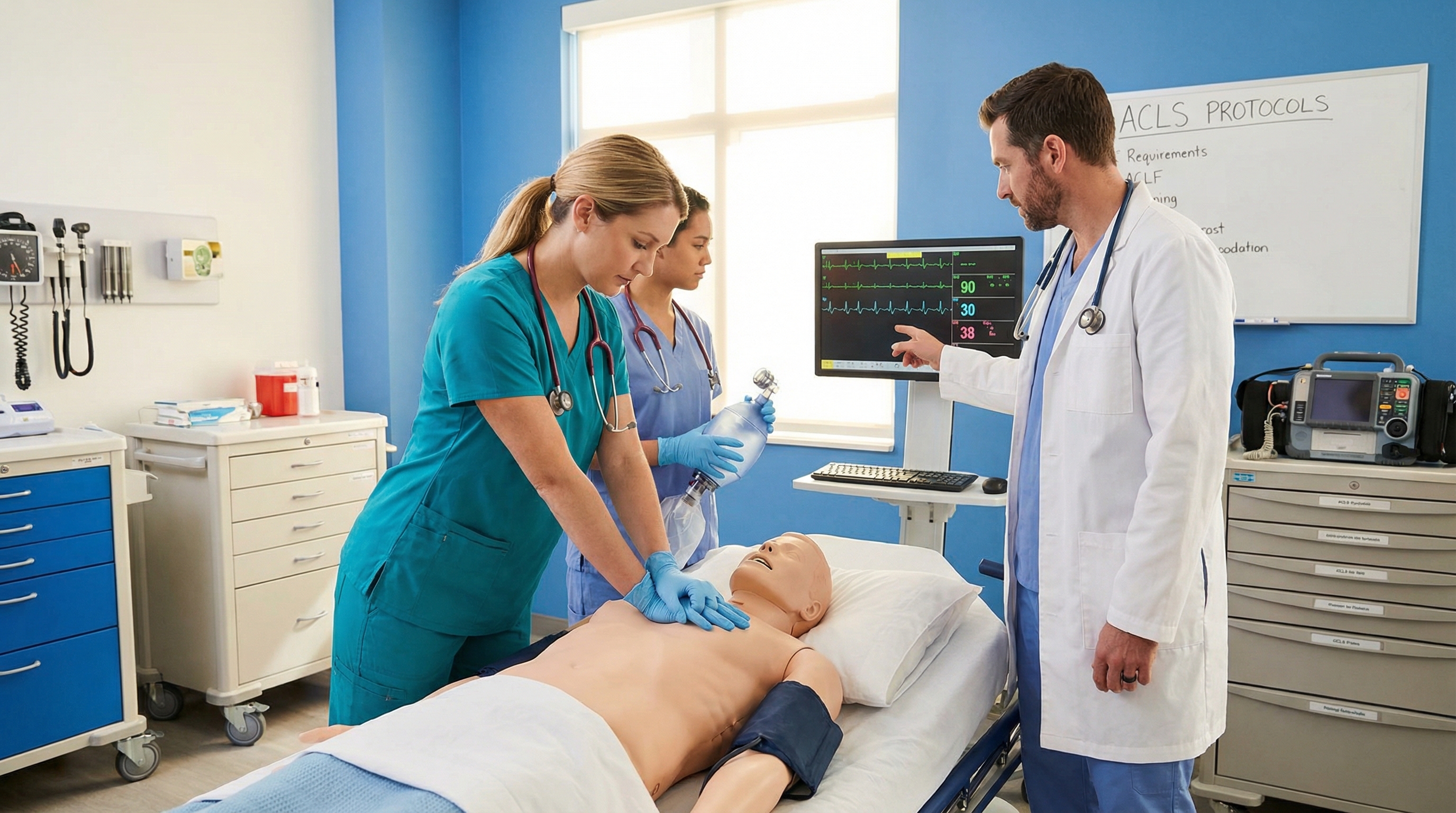
If you trained primarily on adult patients before stepping into a pediatric setting, bradycardia may feel like familiar territory. A slow heart rate, compromised cardiac output, intervention if the patient is symptomatic — straightforward enough. But the moment you apply that adult lens to a child, you risk missing the central truth that PALS is built around: pediatric bradycardia is almost always a respiratory problem first, not a cardiac one. That distinction flips the entire algorithmic approach, changes which medications you reach for, reorders your priorities, and can mean the difference between a child who walks out of the hospital and one who doesn't.
This article unpacks the physiological, algorithmic, and pharmacological contrasts between adult ACLS bradycardia management and pediatric PALS bradycardia management. Whether you're preparing for a PALS certification exam, refreshing ahead of recertification, or navigating a pediatric unit after years on a cardiac floor, understanding why PALS takes a different path will sharpen your clinical judgment in ways that directly affect outcomes.
To understand why the two protocols diverge, you have to start with how pediatric and adult cardiovascular systems are wired differently. In adults, cardiac output is maintained through a combination of heart rate and stroke volume. A healthy adult can compensate for a falling heart rate by increasing contractility and stroke volume — at least for a time. This is why adults with bradycardia may remain hemodynamically stable for minutes to hours, giving clinicians a meaningful window for assessment and intervention.
Children, especially infants and toddlers, lack that compensatory reserve. Their ventricles are less compliant, their stroke volume is relatively fixed, and they depend almost entirely on heart rate to maintain adequate cardiac output. When heart rate drops, cardiac output drops almost immediately. There is little buffer. A bradycardic infant is a child in physiologic crisis.
Even more important is what causes bradycardia in the first place. In adults, the culprit is usually a primary cardiac event — coronary artery disease, conduction system pathology, medication toxicity, or electrolyte disturbance. In children, the overwhelming cause is hypoxia secondary to respiratory failure. According to research published in StatPearls on cardiopulmonary arrest in children, the majority of pediatric cardiac arrests are caused by untreated progressive tissue hypoxia related to respiratory distress or failure, not primary cardiac events. Bradycardia in a child is often the heart signaling that the lungs have already been failing for some time.

This is the foundational insight PALS builds upon. Fix the airway, restore oxygenation, and you may resolve the bradycardia without any pharmacologic intervention at all. ACLS, designed for adults whose hearts are often the primary problem, doesn't carry that same respiratory-first orientation.
One of the most practically significant differences between PALS and ACLS is that there is no single bradycardia threshold in pediatrics. Adult ACLS uses 60 bpm as the action threshold — below that, with symptoms, you intervene. Pediatric providers have to internalize an age-graduated scale:
These numbers matter because a heart rate of 75 bpm in a newborn is dangerously slow — a genuine emergency — while the same number in an adolescent athlete is perfectly normal. Applying an adult cutoff to a pediatric patient isn't just imprecise; it can lead to delayed recognition of a deteriorating child.
But the PALS framework doesn't treat any number as automatically actionable in isolation. Clinical context is everything. Is the child awake and well-perfused, or are they obtunded with weak pulses and mottled skin? A heart rate of 55 bpm in a sleeping, otherwise stable school-aged child may be physiologic. The same number in a lethargic child with delayed capillary refill and labored breathing is a code waiting to happen. This is why mastering the PALS primary assessment is so foundational — the numbers only tell you part of the story.
Let's walk through each algorithm side by side to highlight where they converge and — more importantly — where they diverge.
In adult ACLS, bradycardia management follows a relatively linear sequence:
Atropine is the cornerstone drug in adult ACLS bradycardia. It works by blocking vagal tone on the SA and AV nodes, increasing heart rate through the parasympathetic pathway. This mechanism is highly effective in the most common adult causes of bradycardia — vagotonia, inferior MI with AV block, medication overdose — precisely because these are often reversible conduction problems. For a deeper understanding of how symptomatic bradycardia is assessed and treated in adult patients, that foundational context is worth reviewing alongside this comparison.
The PALS bradycardia algorithm operates from a different starting assumption: the patient is likely hypoxic until proven otherwise. The sequence reflects this:
The official AHA PALS Bradycardia with a Pulse Algorithm (2025) encodes this sequence, with airway and oxygenation at the top of every decision branch.
This is where the PALS approach most visibly flips ACLS, and where healthcare providers who cross between adult and pediatric settings are most likely to misremember under pressure. In adult ACLS, atropine leads. In pediatric PALS, epinephrine leads. The reasons are pharmacologically sound and worth understanding at a mechanistic level.
Atropine's mechanism is entirely dependent on an intact vagal nervous system exerting parasympathetic inhibition on the conduction system. In hypoxic pediatric bradycardia, the vagus is not the problem — severe metabolic derangement and hypoxemia are. Vagal blockade doesn't fix a hypoxic heart. Worse, infants have immature parasympathetic tone, and the vagal axis plays a less dominant role than it does in adults. Giving atropine as a first-line agent in hypoxic pediatric bradycardia doesn't address the underlying cause and may waste critical minutes.
Epinephrine, by contrast, works through adrenergic receptors — both alpha (vasoconstriction, improved perfusion pressure) and beta-1 (increased heart rate and contractility). In a hypoxic child whose heart is failing from inadequate oxygen delivery, epinephrine provides the catecholamine surge that can rescue both rate and contractility simultaneously. It is also the drug of choice if the child deteriorates into pulseless cardiac arrest, which means a single medication bridges both conditions without requiring a mid-resuscitation switch.
Atropine still has a role in PALS — it is appropriate when the bradycardia is clearly vagally mediated (for example, during laryngoscopy, in a child with known AV block, or when vagal stimulus is the obvious trigger) or when primary AV block is identified. But it is a targeted intervention for a specific mechanism, not a reflexive first-line drug. Understanding the nuances of atrioventricular blocks helps clarify exactly when atropine earns its place in the pediatric algorithm versus when epinephrine must lead.
One of the most counterintuitive aspects of PALS for providers coming from adult practice is that CPR may begin in a child with a palpable pulse. In adult ACLS, you initiate CPR only when there is no pulse. In PALS, if a child's heart rate is below 60 bpm with signs of poor perfusion despite oxygenation, CPR is indicated even if a pulse is present.
The rationale is physiologic. A heart rate below 60 bpm in a poorly perfusing infant represents cardiac output so low that the circulation has already effectively failed from a tissue perfusion standpoint. Waiting for complete pulselessness before starting chest compressions in a child with a heart rate of 40 bpm and mottled skin is waiting too long. The evidence supports this: research published in PMC data on pediatric in-hospital cardiac arrest outcomes shows that children treated with CPR before complete pulseless arrest develops have significantly better survival rates — as high as 64% — compared to those who deteriorate to full arrest first.
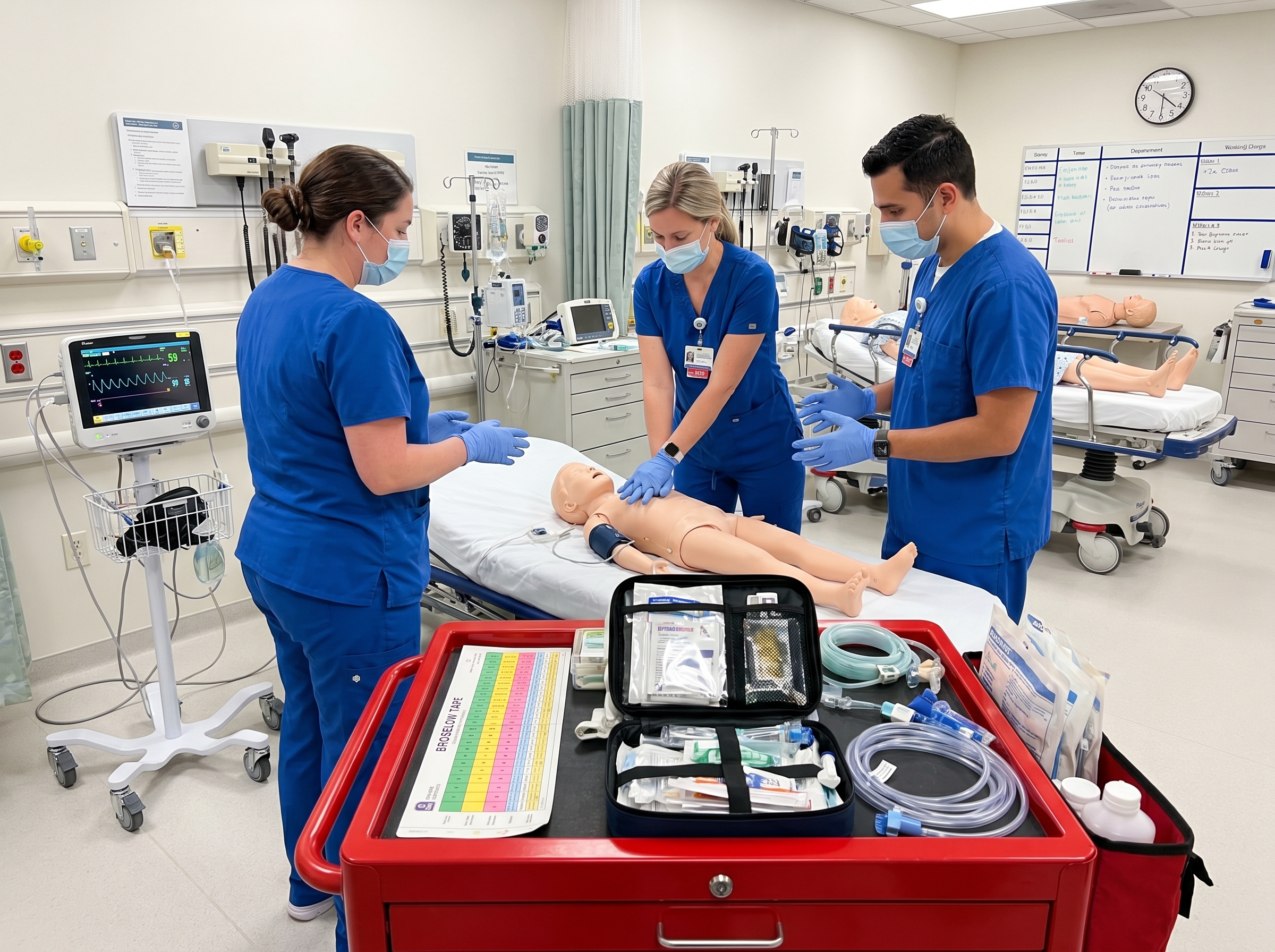
This distinction has major implications for team training. Providers who hesitate to begin compressions on a child with a slow but present pulse — because that's not how adult ACLS is taught — may inadvertently allow avoidable deterioration. In high-acuity pediatric settings, this is exactly the nuance that PALS certification is designed to ingrain through repetition and scenario-based practice.
In adult ACLS, transcutaneous pacing is an early consideration — positioned alongside or immediately after the first atropine dose fails, and it plays a prominent role in treating high-degree AV blocks in adults with structural heart disease. In pediatric PALS, transcutaneous pacing is a rescue intervention used later, after airway optimization and at least two rounds of medication have failed to restore adequate rate and perfusion.
Why the difference? Several reasons. First, the most common cause of pediatric bradycardia (hypoxia) doesn't respond to pacing — it responds to oxygenation. Pacing a hypoxic heart without first correcting the underlying deficiency treats the symptom while ignoring the disease. Second, transcutaneous pacing in children is technically more challenging, and pediatric-specific pad placement and energy settings require dedicated training. Third, in infants, the pacing threshold can be harder to achieve reliably.
Transcutaneous pacing does have genuine pediatric indications — particularly congenital heart disease with complete AV block, post-cardiac surgery conduction abnormalities, or sinus node dysfunction that is intrinsic rather than hypoxia-driven. In these scenarios, the mechanism is cardiac, the approach mirrors adult reasoning more closely, and pacing may be lifesaving. Understanding transcutaneous pacing in full clinical context helps providers apply it correctly regardless of the patient's age.
PALS training emphasizes identifying and treating reversible causes, and the most clinically important causes of pediatric bradycardia fall into a recognizable pattern:
Correctly identifying the cause shapes every downstream decision. Hypoxic bradycardia demands airway management first. Vagal bradycardia may respond directly to atropine. Structural bradycardia may require pacing. The PALS framework forces you to reason about mechanism before reaching for a drug, which is a fundamentally different cognitive discipline than the more protocol-driven adult ACLS sequence.
In the pediatric patient, bradycardia in the context of shock is particularly ominous. While tachycardia is the expected physiologic response to hypovolemia and infection in children, a child who becomes bradycardic in the setting of clinical shock has often exhausted their compensatory mechanisms. This is late decompensated shock, and it carries a dramatically worse prognosis than compensated shock with appropriate tachycardia.
PALS integrates the bradycardia algorithm with shock recognition precisely because these presentations overlap. A septic child who develops bradycardia needs simultaneous airway management, fluid resuscitation, vasopressor support, and consideration of CPR — not a sequential, one-problem-at-a-time approach. This complex intersection is explored in depth in the context of pediatric septic shock PALS assessment and early intervention strategies, which illustrates how multiple PALS pathways converge in the highest-acuity patients.
Beyond the algorithm itself, managing pediatric bradycardia as a team presents unique challenges that don't arise in the same way with adults. Weight-based dosing requires rapid, accurate calculation under pressure. Equipment sizing — from ET tube diameter to defibrillator pad size to IV catheter gauge — varies by age and weight. The emotional intensity of a deteriorating child affects team dynamics and communication in ways that differ from adult codes and that warrant their own preparation.
PALS training addresses these realities by emphasizing structured team roles, closed-loop communication, and the use of length-based resuscitation tools like the Broselow tape for weight-based drug calculations. For providers who work across both adult and pediatric settings, maintaining fluency in both ACLS and PALS frameworks — keeping them mentally compartmentalized so that adult reflexes don't override pediatric decision-making — is a genuine cognitive challenge that deserves deliberate practice, not just occasional review.
This is particularly relevant for nurses, paramedics, and respiratory therapists who rotate between units or work in mixed-acuity environments. Knowing which protocol you're running before a code begins — adult ACLS or pediatric PALS — is not a trivial administrative detail. It determines the drug you reach for first, the CPR threshold you apply, and the priority order of every intervention on your mental checklist.
The differences outlined in this article aren't academic. They are operationally significant in ways that show up in real resuscitations. Providers who treat pediatric bradycardia using adult ACLS intuition — leading with atropine, skipping airway optimization, waiting for pulselessness before starting CPR — are working from the wrong algorithm. PALS certification exists precisely to replace those adult defaults with pediatric-specific cognitive maps that function reliably under pressure.
According to research on pediatric in-hospital cardiac arrest published in PMC, bradycardic rhythms with poor perfusion account for the initial presentation in more than half of in-hospital pediatric cardiac arrest events. These are precisely the cases where recognizing and acting on the PALS framework — not ACLS intuition — determines whether a child makes it to the other side of a code.
For clinicians who need to get certified or recertified without sacrificing hours of clinical time, a fully online, self-paced PALS course developed by practicing emergency physicians makes it possible to complete the credentialing process on a schedule that fits real clinical demands. Affordable ACLS offers PALS certification at $109 and PALS recertification at $99 — both based on current AHA and ILCOR guidelines, both immediately downloadable upon passing, and both backed by a money-back guarantee if your employer doesn't accept the credential. If you're also due for ACLS, the ACLS + PALS bundle brings both certifications together at $183.
For providers who want a side-by-side summary to anchor clinical memory, here are the most operationally important contrasts:
These distinctions are not matters of degree — they reflect genuinely different physiological realities about pediatric versus adult patients. A provider who internalizes both frameworks, recognizes which context they're operating in, and can switch fluently between them is exactly the kind of clinician that high-acuity pediatric settings depend on.
Pediatric bradycardia and adult bradycardia may share a name and a number on the monitor, but they demand fundamentally different clinical responses. PALS doesn't borrow from ACLS and add pediatric dosing tables — it reorients the entire approach around the respiratory etiology of bradycardia, the unique cardiovascular physiology of children, and the compensatory limitations that make pediatric patients far less forgiving of delays. That reorientation means leading with the airway, advancing CPR earlier, choosing epinephrine over atropine as the primary pharmacologic intervention, and reserving transcutaneous pacing as a last resort rather than an early backup.
For any clinician who transitions between pediatric and adult environments, maintaining two distinct algorithmic frameworks is not optional — it is an essential safety competency. PALS certification provides the structured, evidence-based foundation to build that competency, and recertification keeps it current as guidelines evolve. Deepening your understanding of atrioventricular blocks and other conduction pathologies that present differently across age groups adds another dimension to this clinical foundation.
If you're due for PALS certification or recertification and want to solidify your understanding of the pediatric bradycardia algorithm alongside every other PALS pathway, Affordable ACLS offers a fully online, self-paced PALS course developed by board-certified emergency physicians. Complete it on your schedule, download your certificate immediately upon passing, and return to clinical practice with the algorithmic clarity that every pediatric patient deserves.
.jpg)