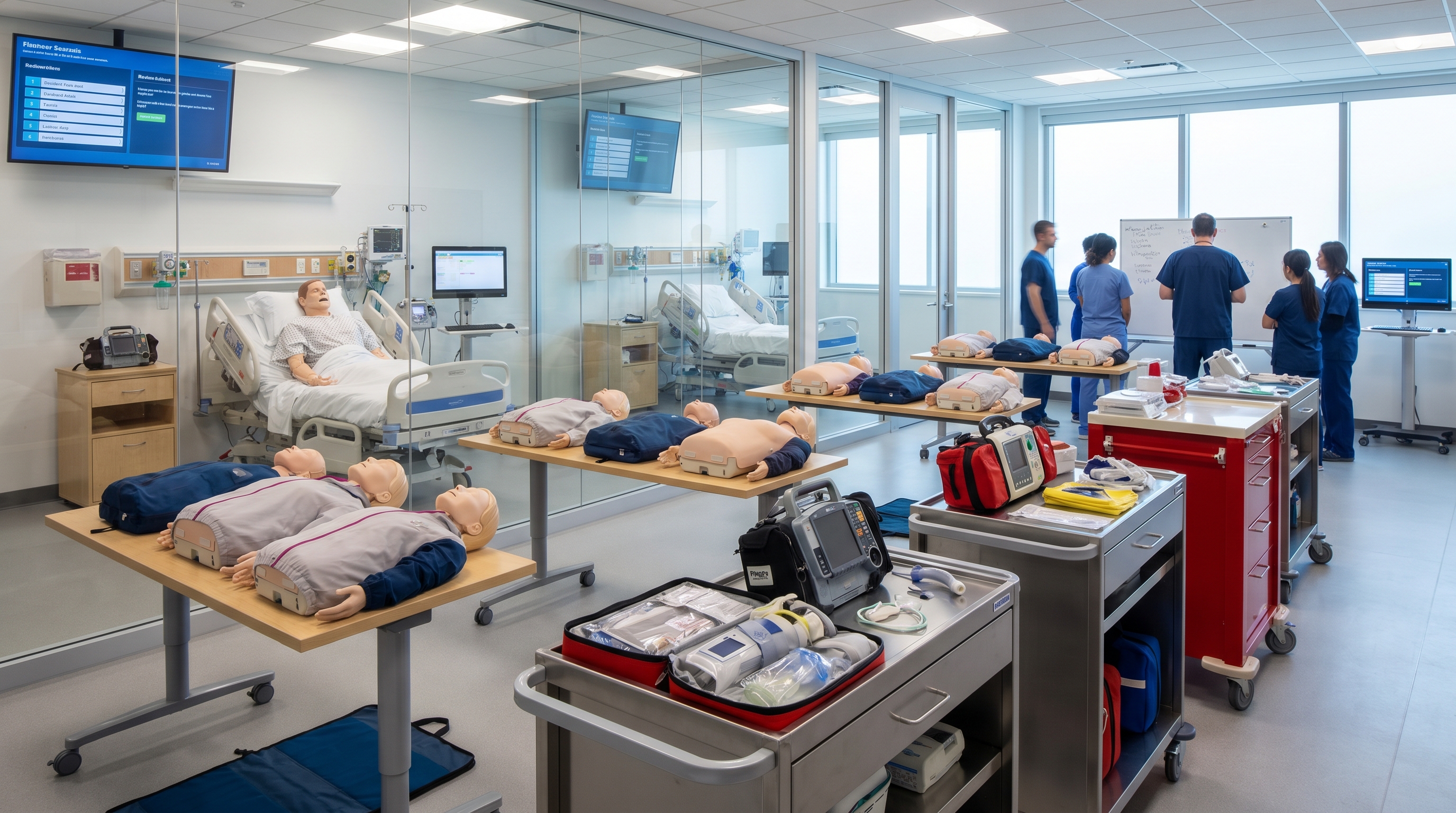
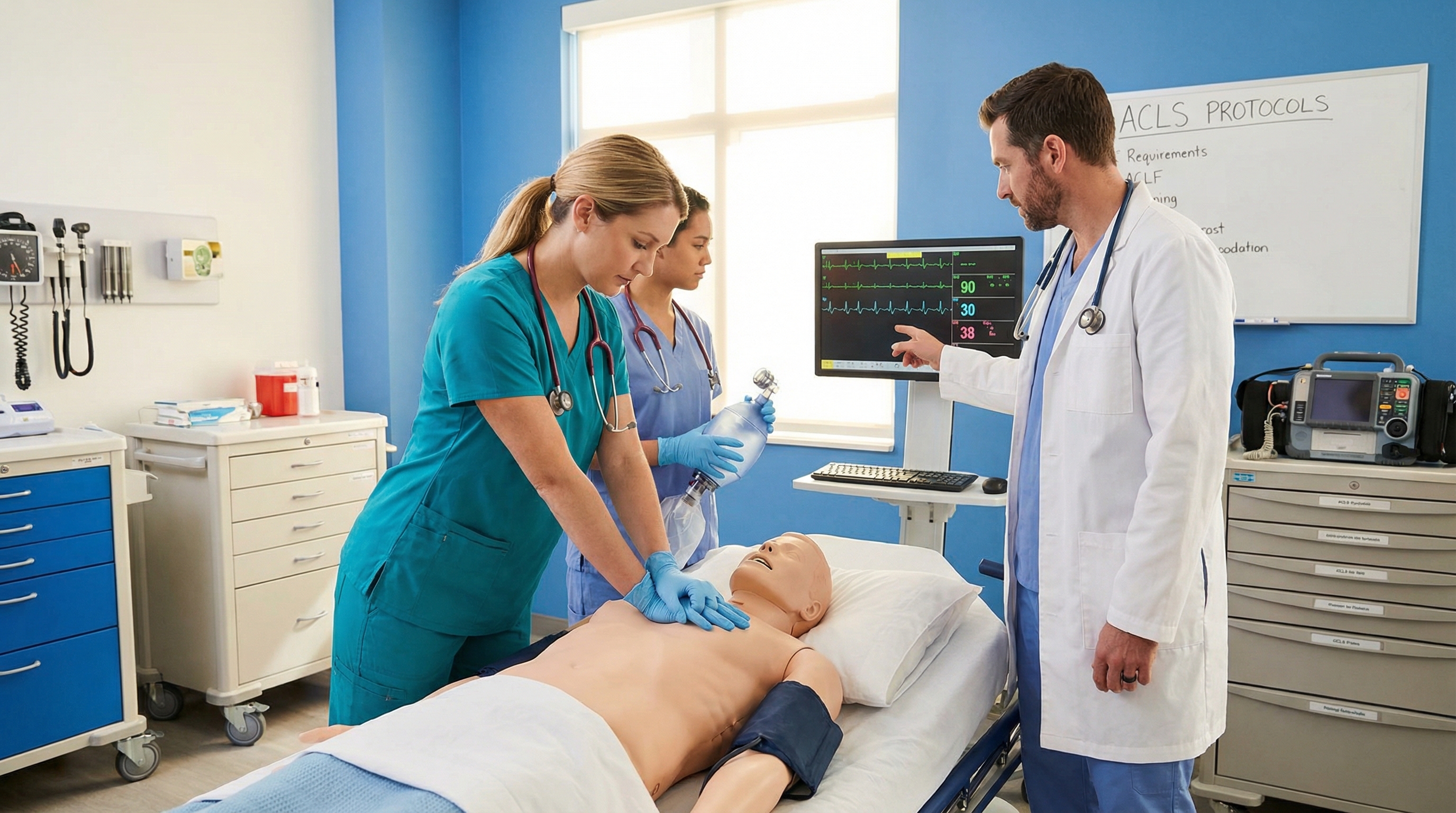
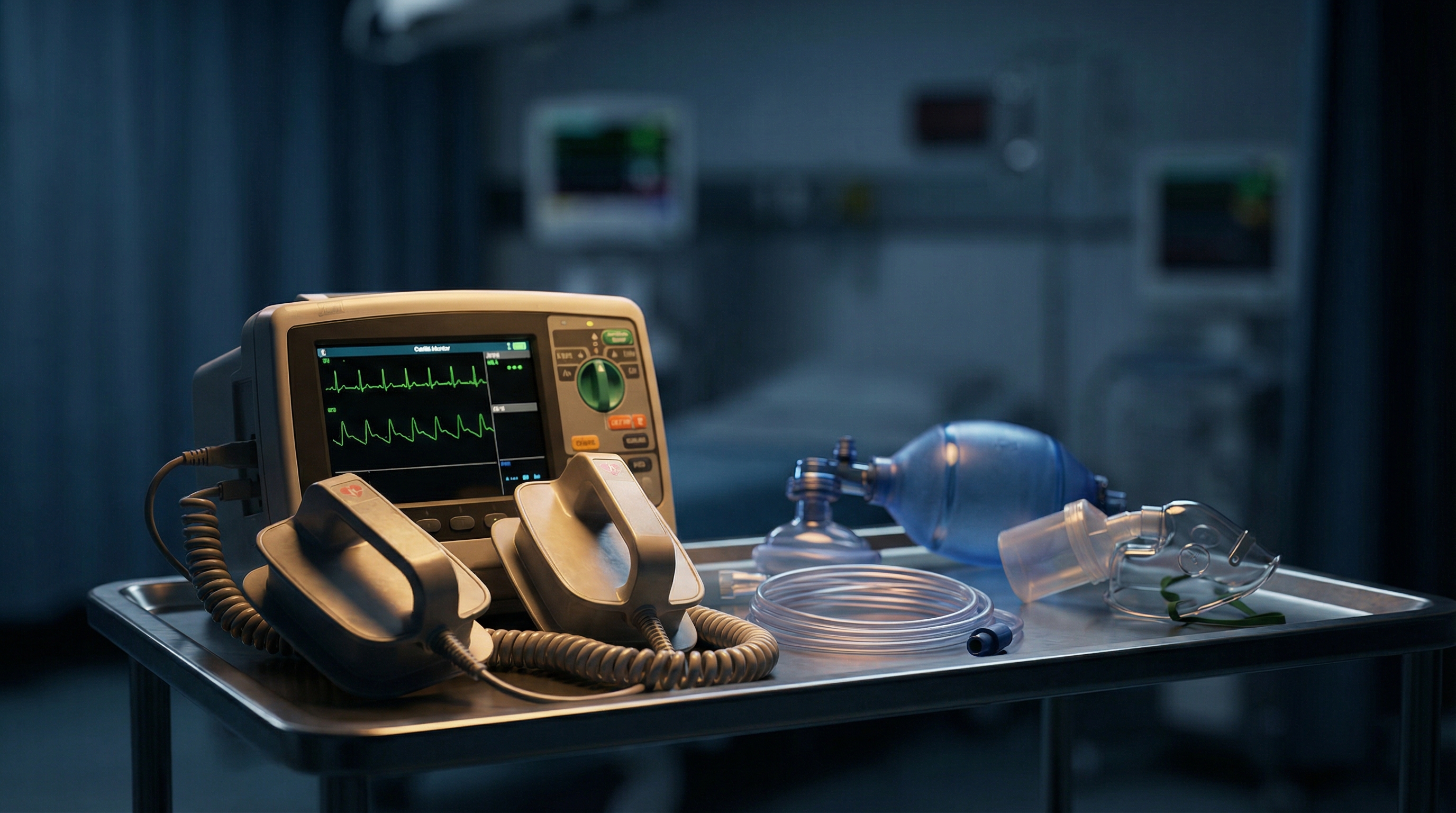
You've accepted a shift on a unit you've worked twice in the past six months. You know the basics — the med room is somewhere down the hall, the charge nurse will give you a quick orientation, and the patients will need care whether you know where the crash cart is or not. For float pool nurses and per diem clinicians, this is simply Tuesday.
The float pool model is one of modern nursing's most demanding roles. You're expected to be competent, calm, and clinically sharp regardless of whether you're on your home unit or stepping into an unfamiliar specialty floor. And when a code happens — when a patient's heart stops and the rapid response team is seconds away — the unit's geography, staff hierarchy, and equipment layout are no longer abstract concerns. They become immediate survival variables.
This guide is written peer-to-peer, from clinical providers who understand what it actually means to walk into an unknown unit and deliver high-quality emergency care. We'll walk through the preparation strategies, certification mindset, and in-the-moment skills that keep float pool and per diem nurses code-ready — no matter where they land.

Floating is one of the most consistently cited stressors in nursing practice. A 2025 qualitative analysis and scoping review published in ScienceDirect identified floating to unfamiliar units as a significant source of anxiety, reduced confidence, and increased risk for adverse events — not because float nurses lack skills, but because context matters enormously in high-acuity situations.
The challenges aren't abstract. When you don't know where the defibrillator is mounted, which drawer holds the amiodarone, or how this particular unit calls a code, precious seconds evaporate during the most critical window of a patient's survival. Research consistently shows that the first few minutes of cardiac arrest response are when float and per diem nurses are at their greatest disadvantage — not due to ACLS knowledge gaps, but due to environmental unfamiliarity.
According to research published in Nursing journal on addressing floating and patient safety, the implementation of structured safety integration tools — including checklists specifically designed for float nurse onboarding — can significantly reduce transition time, increase professional confidence, and lower staff-related stress on unfamiliar units. The data supports what experienced float nurses already know: preparation and systems matter more than raw clinical talent when the environment is foreign.
Here's the good news: the algorithms don't change from floor to floor. Whether you're floating to cardiac telemetry, a med-surg step-down, or the oncology unit, the ACLS framework for managing ventricular fibrillation, pulseless electrical activity, asystole, and unstable tachycardia is identical. Your certification is your common language in a room full of strangers.
This is precisely why keeping your ACLS certification current and your knowledge sharp is non-negotiable for float pool and per diem nurses. Unlike unit-based nurses who may encounter codes regularly and reinforce their skills through repetition, float nurses often work in lower-acuity environments between high-stakes assignments. That knowledge gap can accumulate silently — until the moment it matters most.
For nurses who float across multiple facilities or work per diem at more than one hospital system, managing certification requirements across multiple employers adds an additional layer of complexity. The standard ACLS certification cycle is two years, but different facilities may have staggered internal review requirements or unit-specific competency assessments that run on independent timelines.
The practical solution for per diem and float nurses is to pursue online ACLS certification that can be completed between shifts, on your schedule, without coordinating around a classroom in a facility where you may not even be primary staff. Self-paced online ACLS courses built on current AHA and ILCOR guidelines give you the flexibility to certify or recertify at 11 PM before a morning float assignment — and your certificate is available immediately upon completion.
Experienced float nurses develop a non-negotiable personal orientation ritual. Before you take a single patient assignment, you should complete a rapid environmental assessment that takes less than ten minutes but could save a life. Think of it as your pre-flight checklist.
Every time you arrive on an unfamiliar unit, locate and confirm the following:
This isn't excessive caution — it's professional standard of care. High-performing rapid response teams depend on every member — including float nurses — being oriented to the operational infrastructure before a crisis occurs. The nurses who are most effective during codes on unfamiliar units are the ones who completed this checklist three hours earlier during their quiet orientation window.
One of the underappreciated challenges for float nurses during codes is not the algorithms — it's the social dynamics. On a home unit, everyone knows each other's strengths, communication styles, and tendencies. The team runs codes as a semi-rehearsed unit. When a float nurse arrives at a code in progress, they're entering an established social system mid-performance.
The most effective strategy is immediate, explicit role communication. When you arrive at a code scene, don't assume a role quietly — announce your availability and qualifications clearly. A simple statement like "I'm a float nurse with ACLS, where do you need me?" cuts through ambiguity and lets the team leader assign you appropriately. This kind of direct communication is at the heart of effective ACLS team communication scripts that save lives during code blues.
If no one immediately assigns you a role, default to compressions. High-quality CPR is the single most consistently impactful intervention during cardiac arrest, and it's universally needed. Beginning chest compressions establishes your clinical presence and utility within the team while the code leader organizes the response. You can transition to other roles as the team stabilizes.
Closed-loop communication is especially important when you're the unfamiliar face in the room. Repeat back every order you receive: "Epinephrine 1 mg IV, confirmed." Document your timing if you're able. Ask for clarification explicitly rather than inferring — "Is this the same Pyxis access code as the main hospital, or is there a unit-specific override?" — rather than assuming. Miscommunication during codes is one of the leading causes of medication errors, and it's significantly more likely when team members don't share institutional context.
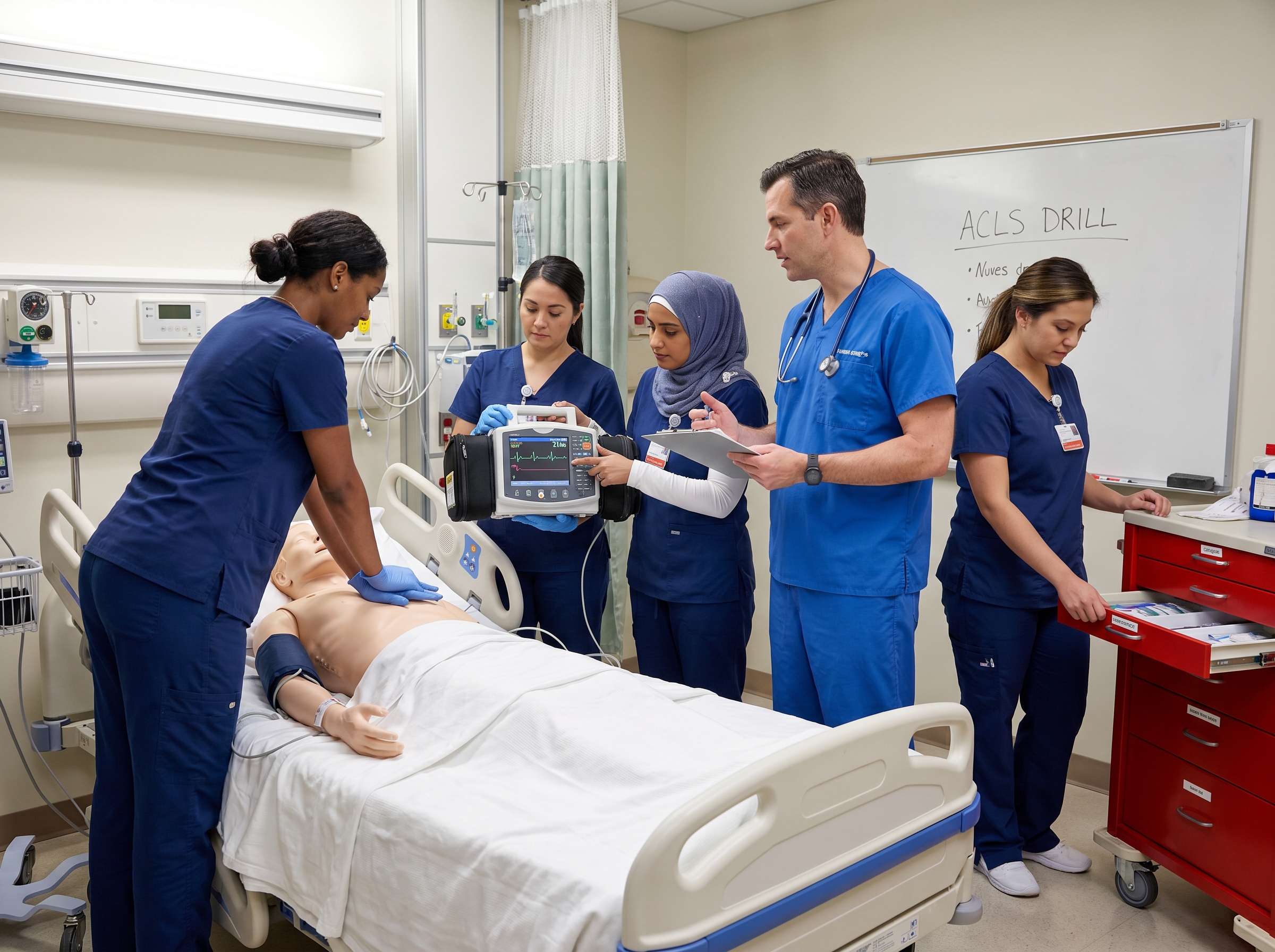
Float assignments are disproportionately weighted toward nights, weekends, and holidays — the shifts when regular staff call out and census fluctuates unpredictably. This means float nurses are most frequently working on unfamiliar units during the shifts when supervisory support is least available, pharmacy is running on skeleton staffing, and the unit's own nursing complement may already be short.
This is not a complaint — it's a clinical reality that deserves a deliberate preparation strategy. The night shift ACLS toolkit is especially relevant for float nurses because it addresses decision fatigue, reduced backup resources, and the cognitive load of navigating both unfamiliar unit logistics and high-acuity patient care simultaneously.
Practical strategies for night float assignments include:
For float pool nurses employed by a single hospital system, the facility typically manages ACLS recertification schedules. But per diem nurses working across multiple employers — or those employed through staffing agencies — often carry full personal responsibility for keeping their certifications current.
The challenge is practical: per diem schedules are by definition unpredictable. Taking a full-day classroom ACLS course requires coordinating availability with a course date, traveling to a simulation center, and paying out-of-pocket fees that can run $150 to $300 at hospital-affiliated programs. For nurses working variable hours across multiple facilities, this logistical friction is real. According to float pool management best practices from Nursa, all per diem and float nurses must maintain valid ACLS certification, but the mechanisms for doing so are left entirely to the individual clinician.
Time-flexible online certification is specifically designed for nurses in non-traditional schedules — including per diem and float pool clinicians who can't predict when their next block of free time will open up. Online ACLS courses built on current AHA and ILCOR guidelines allow you to complete certification in 1-2 hours from any device, pause and resume as your schedule allows, and download your certificate immediately upon passing.
Affordable ACLS's online ACLS certification is $109 for initial certification and $99 for recertification — a fraction of the cost of traditional programs, with no scheduling conflicts, no facility fees, and unlimited retakes at no extra charge. For per diem nurses managing their own certification expenses, this cost differential adds up significantly across a career.
Perhaps most importantly for float and per diem nurses: the certification is recognized by employers across the country. Because it's based on the same AHA and ILCOR guidelines that govern all ACLS curricula, a certificate from an online program carries the same clinical validity as one earned in a hospital's simulation lab. The science doesn't change based on delivery format.
If you've ever wondered whether your online ACLS certification will pass scrutiny when you're onboarding at a new facility as a float nurse, the answer is straightforward: facilities care about guideline compliance and currency, not delivery format. What employers look for in ACLS certification is evidence that you understand current resuscitation science — not that you sat in a particular classroom.
The gold standard remains AHA/ILCOR guideline compliance, a valid expiration date, and demonstrated competency in the core ACLS algorithms. Online certifications that meet these criteria — including written assessment that verifies knowledge of rhythm recognition, drug dosing, and algorithm decision points — satisfy employer requirements at hospitals, health systems, and staffing agencies nationwide. As noted by travel nursing requirements guidance from TravelNursing.org, ACLS certification is recognized uniformly across state lines because it reflects standardized AHA evidence-based guidelines rather than state-specific requirements.
For per diem nurses with multiple employer relationships, proactively sharing your certification documentation at the start of each new assignment or contract streamlines onboarding and prevents last-minute compliance gaps from delaying your start date. Keep a digital copy accessible on your phone for immediate sharing.
One of the most candid conversations in float pool nursing involves what might be called the confidence gap — the difference between knowing ACLS algorithms intellectually and feeling genuinely prepared to lead or contribute effectively to a code in an unfamiliar environment. This gap is real, it's clinically significant, and it's largely addressable with deliberate preparation.
Research in academic nursing literature consistently identifies confidence as a mediating factor in code response quality. Nurses who feel prepared perform better — not because confidence changes their knowledge base, but because it reduces the cognitive interference that comes from anxiety, uncertainty about role, and environmental unfamiliarity. Mental preparation for codes extends beyond memorizing algorithms — it includes visualizing your response, rehearsing communication patterns, and developing a personal pre-code ritual that activates clinical mode.
For float nurses, this mental preparation takes on added dimensions. You're not just preparing for a generic code scenario — you're preparing to execute under conditions of environmental uncertainty. Techniques that help include:
Per diem nurses working through staffing agencies face a distinct certification management challenge: different client facilities may have different expiration thresholds, documentation requirements, or internal verification systems. Some hospitals won't onboard a per diem nurse whose ACLS certification expires within 90 days, even if it's technically current. Others require a copy uploaded directly into their credentialing system before the first shift.
Building a personal certification management system is not optional for per diem agency nurses — it's a professional necessity. Best practices include:
The fundamental advantage every well-prepared float and per diem nurse carries is a set of portable, universal clinical skills that function identically regardless of environment. These are the anchors of your code-readiness.
High-quality CPR mechanics. The physics of effective chest compressions — rate of 100-120 per minute, depth of at least 2 inches, full recoil, minimal interruptions — don't change between units. You can deliver effective CPR on any surface, on any patient, in any hospital. This non-negotiable foundational skill is one no environmental unfamiliarity can neutralize.
Cardiac rhythm recognition. A monitor showing ventricular fibrillation looks the same on a cardiac unit as it does on an orthopedic floor. Your ability to rapidly identify shockable versus non-shockable rhythms, recognize return of spontaneous circulation, and identify peri-arrest rhythms requiring immediate intervention travels with you everywhere.
Closed-loop communication. The communication framework from ACLS training — read-back confirmation, explicit role assignments, direct address by name — is a portable skill that improves code performance in any team configuration. When you don't know your teammates, this structured communication approach compensates for the lack of shared history and reduces the risk of assumption-based errors.
ACLS pharmacology. Epinephrine dosing, amiodarone protocols, atropine indications, and adenosine sequencing are the same in every facility. Your pharmacological knowledge base is an asset that no unfamiliar unit can diminish — provided you maintain it through regular certification renewal and self-directed review.
Basic airway management. Bag-valve mask ventilation technique is a foundational skill that float nurses can execute confidently regardless of which specific advanced airway supplies are stocked on a given unit. If you're waiting for the respiratory therapist or anesthesia team to arrive, effective BVM ventilation during that window saves lives.
The logistics of traditional in-person ACLS courses create real barriers for float pool and per diem nurses. Course schedules don't accommodate variable shifts. Traveling to a simulation center on your day off after a run of overnight floats is genuinely exhausting. And at $150 to $300 per course, the cost falls entirely on nurses who are already managing their own certification without the institutional support that full-time staff receive.
Online ACLS certification through a physician-developed platform like Affordable ACLS addresses all of these barriers directly. Online ACLS certification for nurses offers the same guideline-based content in a format that respects the realities of non-traditional schedules. You complete the course when you have a window — before a float shift, between assignments, or during an unexpected day off. The platform is accessible from any device, so there's no requirement to be at a desktop or in a particular location.
For per diem nurses managing certification across multiple facilities, the immediate digital certificate eliminates the wait that classroom programs impose. There's no waiting for a card to be mailed, no administrative processing window, and no ambiguity about whether your certification documentation will arrive before your next assignment starts. You complete the final assessment, pass, and download your certificate in the same session.
Current pricing for online ACLS through Affordable ACLS: Certification $109 and Recertification $99. BLS certification is $69 and Recertification is $59. For float and per diem nurses who may also need BLS or PALS, bundle pricing is available — the ACLS plus BLS bundle is $123, providing both certifications for less than many single-course classroom programs charge alone. All courses include unlimited retakes at no extra charge, and a money-back guarantee applies if your employer does not accept the certification.
Float pool and per diem nursing is not a backup plan — it's a specialized clinical role that demands a particular kind of preparedness. The nurses who thrive in these positions aren't the ones who know every unit's layout by heart. They're the ones who carry a portable, well-maintained skill set, complete a systematic orientation ritual on every unfamiliar unit, and approach codes with a structured communication framework that compensates for lack of shared team history.
Your ACLS certification is the portable credential that anchors your code-readiness regardless of which unit you're assigned to. Keeping it current, understanding the algorithms deeply rather than superficially, and pairing that knowledge with consistent pre-shift preparation is what allows float nurses to show up in an unfamiliar room and be genuinely useful when seconds matter.
If your ACLS certification is coming up for renewal — or if you've been carrying an expired certificate longer than you're comfortable admitting — online recertification through Affordable ACLS takes less time than a float shift orientation and less money than most in-person alternatives. The algorithms haven't changed. Your preparation can start today.
.jpg)