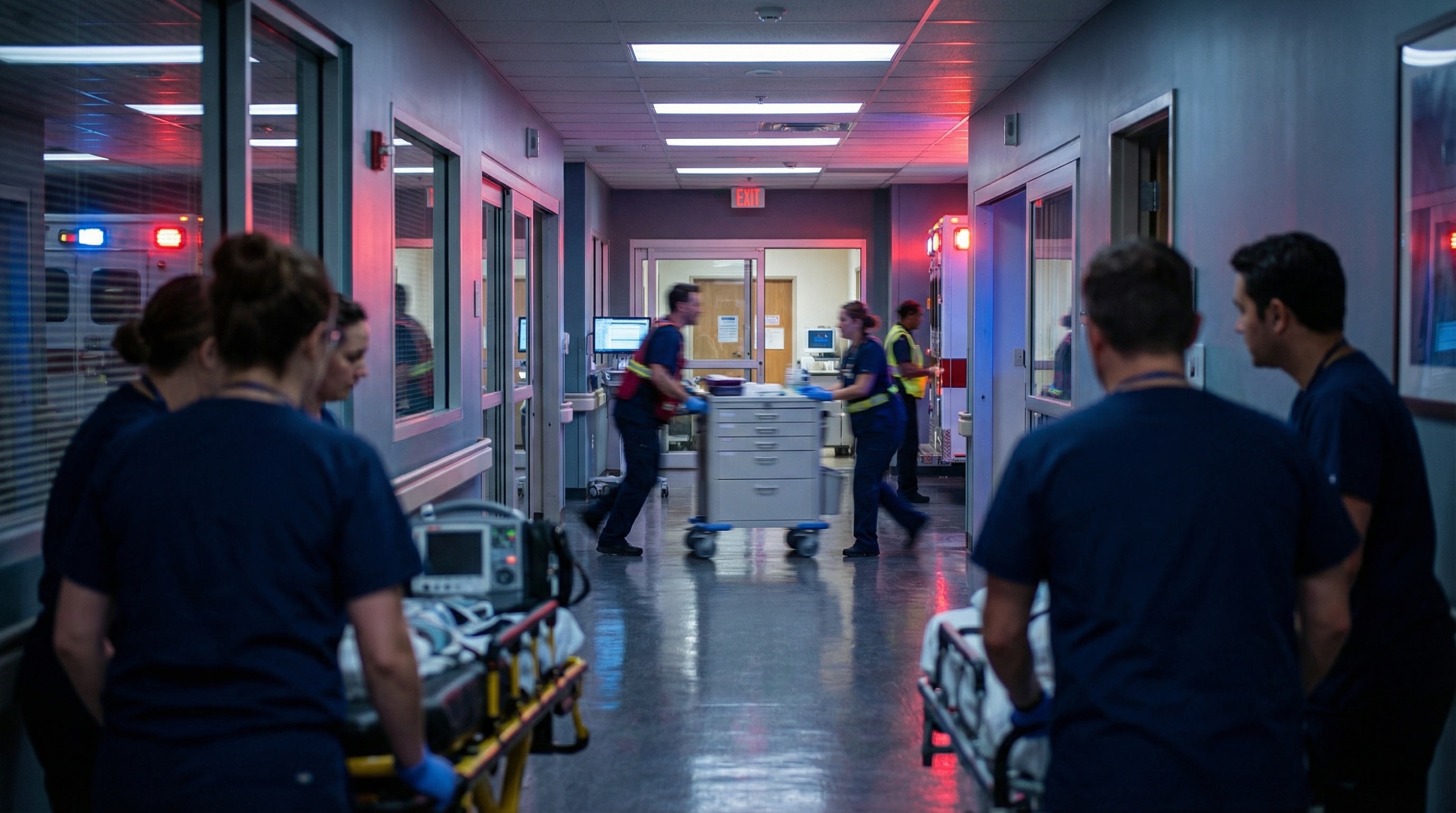
In a busy emergency department or ICU, the clinical calculus of resuscitation often feels urgent and immediate. You assess airway, breathing, circulation. You run algorithms. You follow protocols. But beneath every cardiac arrest decision is a human being shaped by a lifetime of beliefs, cultural traditions, and spiritual convictions that may have a profound impact on how that person wants to face death — and whether they want resuscitation attempted at all.
Do Not Resuscitate (DNR) orders — more precisely called Do Not Attempt Resuscitation (DNAR) orders — are among the most ethically and emotionally charged documents in medicine. They represent a patient's or family's decision to forgo CPR and advanced life support interventions in the event of cardiac or respiratory arrest. For healthcare providers trained in ACLS, BLS, or PALS, encountering a DNR in a real clinical scenario demands both clinical clarity and cultural sensitivity.
Research published across multiple peer-reviewed journals confirms that religious and cultural identity significantly shapes patient preferences around resuscitation, advance directives, and end-of-life care. According to a systematic review of religious beliefs about end-of-life issues in the five major world religions, there is substantial variation in how communities approach DNR decisions — often in direct tension with standard Western medical assumptions about patient autonomy. As certified providers, understanding these dynamics is not optional. It is a core clinical competency.

American medicine has long operated under an individualistic framework: the patient is the primary decision-maker, autonomy is paramount, and advance directives are the gold standard for expressing end-of-life preferences. This framework, while ethically robust in many contexts, does not reflect how the majority of the world's cultures actually make life-and-death decisions.
In many Middle Eastern, Asian, and Southern European cultural traditions, family is the primary decision-making unit — not the individual. A patient from a Confucian or collectivist background may defer entirely to a family elder when asked about resuscitation preferences. A deeply religious Muslim patient may believe that only God can determine the moment of death, making a physician-initiated DNR feel theologically problematic. A Jewish patient guided by Orthodox halakhic principles may feel religiously obligated to pursue every available life-sustaining measure, regardless of prognosis.
These are not edge cases. They represent billions of people. And when healthcare providers lack the knowledge or communication tools to navigate these perspectives sensitively, the consequences are real: families in conflict with medical teams, patients dying without having their values honored, and providers left with moral distress and unanswered ethical questions.
For providers who want to deliver truly competent emergency and critical care, enhancing cultural competence in ACLS training is not a soft skill add-on. It is a clinical imperative.
The following is not intended as theological authority, but as a practical clinical overview to help providers recognize common religious frameworks they may encounter. Individual variation within any tradition is enormous, and assumptions should always be confirmed through direct, respectful conversation.
Jewish law (halakha) places extraordinary value on human life, derived from the principle of pikuach nefesh — the obligation to preserve life above nearly all other commandments. Under Orthodox interpretation, this creates a strong presumption toward aggressive resuscitation. A DNR may be considered incompatible with religious obligation unless death is considered truly imminent and inevitable.
However, even within Orthodox communities, many rabbinical authorities distinguish between actively shortening life and withholding interventions that only prolong dying. Conservative and Reform Jewish perspectives tend to allow more latitude for patient-directed DNR decisions and comfort-focused care. The key for providers is to avoid assuming uniformity across Jewish patients and to invite dialogue about the specific religious guidance the patient or family follows.
Islamic bioethics holds that life is a trust from God (amanah) and that human beings do not have the right to take their own lives or hasten death. The Quran's teaching that only God determines the moment of death leads some scholars to view DNR orders as theologically problematic — potentially equivalent to abandoning God-given life.
At the same time, Islamic jurisprudence also acknowledges the principle of la darar — do no harm — and many contemporary Islamic scholars accept that withholding burdensome treatment from a patient who is actively dying does not constitute prohibited euthanasia. Research confirms that Muslim patients are among the least likely to consent to DNR orders, but this varies significantly by country of origin, degree of religious practice, and specific scholarly tradition followed. Always ask, never assume.
Christian perspectives on DNR vary widely across denominations and individual belief. The Catholic tradition distinguishes between ordinary and extraordinary measures of care. The National Catholic Bioethics Center notes that there are circumstances where a DNR is morally acceptable — particularly when aggressive resuscitation would be disproportionate to any likely benefit — and other circumstances where it is not. Most Catholic moral theology permits forgoing extraordinary, burdensome treatment while still requiring basic care.
Protestant traditions span a wide spectrum. Some patients in evangelical or Pentecostal traditions may hold beliefs in miraculous healing that lead them to resist DNR conversations. Others may find peace and spiritual meaning in accepting natural death. Jehovah's Witnesses, while well-known for refusing blood transfusions, do not necessarily refuse DNR orders but have specific requirements about acceptable medical interventions that must be carefully documented.
Hindu belief in karma and the concept of a spiritually meaningful death may lead some patients or families to prefer that death occur in a peaceful, undisturbed state — without the violent physical intervention of CPR. Some Hindu families may request that a dying person be placed on the floor or face east, practices that healthcare teams should be prepared to accommodate when medically possible.
Buddhist perspectives vary across traditions, but the concept of mindful dying and the importance of consciousness at the moment of death lead many Buddhist patients to be concerned about sedation and aggressive interventions near death. Importantly, research from Taiwan found that patients identifying with Buddhist or Daoist traditions were statistically less likely to consent to DNR orders — partly due to the influence of filial piety, which may lead family members to insist on full resuscitative efforts regardless of a patient's own stated wishes.
Indigenous American, African, and other traditional communities may hold beliefs about death, ancestral connection, and the proper transition of the spirit that strongly influence resuscitation preferences. These perspectives are often deeply private and not easily communicated to medical teams. Secular or non-religious patients, meanwhile, may approach DNR decisions through purely pragmatic or quality-of-life frameworks — but should never be assumed to lack strong values simply because they do not identify with a named religion.
In the United States, the Patient Self-Determination Act of 1991 enshrined the legal right of competent adults to refuse medical treatment, including resuscitation. This principle of patient autonomy — the right to determine what happens to one's own body — underpins the entire framework of advance directives and DNR orders.
According to StatPearls' comprehensive overview of Do Not Resuscitate orders, a DNR is a physician-written order directing the healthcare team not to initiate CPR in the event of cardiac or respiratory arrest. It must be based on a conversation between the physician, the patient (or legally authorized surrogate), and documented in the medical record. The American Medical Association's ethics guidance is explicit: physicians must respect patient decisions to refuse care even when those decisions will result in death, as outlined in the AMA Code of Medical Ethics on DNAR orders.
For ACLS-certified providers, it is critical to understand what a DNR does and does not mean. A DNR specifically addresses CPR. It does not automatically mean do nothing. Patients with DNR orders can and do receive pain management, antibiotics, IV fluids, and other medical treatments. The scope of a DNR must be clearly communicated to every member of the care team. Misunderstanding this boundary is a common source of confusion, especially in emergency settings.
Providers who want to fully understand the intersection of documentation, legal compliance, and resuscitation protocols should review guidance on how to navigate legal considerations for ACLS compliance, which covers documentation obligations and institutional responsibilities in detail.
The most important tool a provider has in navigating cultural and religious DNR discussions is not a protocol — it is a conversation. The following strategies can help providers approach these discussions with the sensitivity and clinical effectiveness they require.
Never assume a patient's resuscitation preferences based on their apparent religion, ethnicity, or nationality. Cultural identity is complex and individual. A person may identify as Muslim but follow a more liberal scholarly tradition. A patient may be Jewish but non-observant. Always open with curiosity: ask what values and beliefs are important to the patient when thinking about their medical care, creating space for them to share what matters most rather than what you expect to hear.
In collectivist cultures, family involvement in medical decision-making is not merely preferred — it is expected and honored. Excluding the family may be perceived as disrespectful or even harmful. At the same time, if a patient is competent, their wishes are legally and ethically primary. The goal is to create space where both patient and family feel heard, while ensuring the patient's own voice is not overridden. When language barriers exist, professional medical interpreters — not family members — should be used to ensure accurate and uncoerced communication. The National Coalition for Hospice and Palliative Care offers detailed guidance on culturally respectful end-of-life communication.
Hospital chaplains and spiritual care professionals are an underused resource in resuscitation and end-of-life discussions. A skilled chaplain can often navigate the intersection of religious belief and medical decision-making in ways that a physician cannot, providing patients and families with theological grounding for their choices while supporting the care team's goals. Engaging these resources early — before a crisis — is always preferable.
Once a DNR decision is reached, it must be documented clearly and communicated to every team member involved in the patient's care. Ambiguity in code status is dangerous. During resuscitation events, clear team communication scripts during code blues are essential for preventing confusion and errors. If cultural or religious accommodations are part of the care plan, these should be explicitly noted in the chart and discussed at handoffs.
Resuscitation decisions, once made, do not end the emotional work. For families who have agreed to a DNR based on their religious or cultural values, the period following a death may involve specific rituals, mourning practices, or spiritual needs that healthcare providers should be prepared to support. For some traditions, the body must be handled in specific ways immediately after death — a need that must be communicated quickly to the care team.
Healthcare providers themselves are not immune to the emotional weight of these situations. Nurses and physicians who work regularly with dying patients and their families carry a significant psychological burden. Resources on grief support for medical professionals navigating loss in the healthcare field offer practical strategies for processing this work without burning out.
Nurses, in particular, often bear the most sustained emotional contact with dying patients and grieving families. Specific guidance on how nurses can help the grieving patient provides tools for navigating bedside conversations with compassion and clinical skill.
The psychological impact extends to witnesses of resuscitation attempts as well. Whether it is a family member who watched CPR, a nursing student present at their first code, or a colleague who responded to a cardiac arrest, the trauma of witnessing these events is real and deserving of structured support. Understanding how witnesses are affected by trauma is part of providing complete, person-centered care.
When a resuscitation event involves significant cultural, religious, or ethical complexity — a family in conflict about code status, a DNR that was disputed at the bedside, a patient whose wishes were not clearly documented — the care team deserves a structured opportunity to process what happened. Clinical debriefing after high-stakes events is now recognized as a best practice in emergency medicine and critical care.
Debriefing serves multiple functions: it helps teams identify communication breakdowns, process emotional reactions, reinforce clinical learning, and develop better protocols for future similar situations. Providers who want to integrate this practice into their teams' culture should explore the evidence for enhancing patient outcomes through debriefing after ACLS events.
When cultural misunderstandings contributed to a difficult resuscitation or DNR conversation, debriefing is an opportunity for the team to reflect on what they knew, what they assumed, and what they wish they had asked differently. This kind of reflective learning builds the cultural competence that no single protocol can fully provide.
BLS-certified providers working in home health, hospice, or community settings face a unique version of the DNR challenge. Unlike hospital providers who work within institutional code status systems, home health and hospice workers may respond to emergencies where the legal status of a DNR is unclear, the patient's wishes have changed, or family members are in acute distress and demanding resuscitation despite an existing order.
Navigating these situations requires both technical knowledge and human skill. The intersection of BLS training and end-of-life care is explored in depth in resources on hospice and palliative care: navigating BLS training and end-of-life decisions. Understanding state-specific POLST (Physician Orders for Life-Sustaining Treatment) and MOLST forms — which translate advance directive wishes into portable medical orders — is essential for any provider working in community settings. The StatPearls overview of advance directives provides a thorough grounding in the documentation and legal framework surrounding these orders.
Traditional ACLS and BLS training is rightly focused on the clinical mechanics of resuscitation: compressions, ventilations, rhythm recognition, defibrillation, medication administration. These skills are non-negotiable and life-saving. But the modern certification curriculum increasingly recognizes that clinical skill alone is insufficient for truly effective emergency care.
The AHA's and ILCOR's guidelines acknowledge the importance of systems of care that include communication, team dynamics, and patient-centered values. Research on patients' spiritual and religious beliefs and their influence on resuscitation decisions demonstrates that providers who initiate these conversations earlier achieve better alignment between patient values and clinical care plans. Providers who want to develop a more complete emergency skill set should consider how the cultural and ethical dimensions of resuscitation fit alongside the technical ones.
At Affordable ACLS, our courses are developed by board-certified emergency medicine physicians with over 20 years of real-world clinical experience — including in diverse, complex patient populations. Our ACLS, BLS, and PALS courses are AHA/ILCOR-compliant, 100% online, and self-paced, so you can revisit key concepts on your own schedule. At $109 for ACLS, $69 for BLS, and $109 for PALS — with recertification rates starting at $59 — professional development should never be a financial barrier to clinical excellence.
The following framework is designed as a starting point for providers navigating DNR conversations with patients or families from diverse cultural and religious backgrounds:

The ability to run a flawless cardiac arrest algorithm is a remarkable skill that saves lives. But in the real world of healthcare, some of the most important decisions made around a patient's cardiac event happen not during the resuscitation itself, but in the conversations that precede it — conversations about what the patient actually wants, what their family believes, and how their deepest values should shape their care.
Navigating DNR decisions with cultural and religious sensitivity is not a compromise of clinical standards. It is their highest expression. When providers take the time to understand a patient's worldview, honor their autonomy within that worldview, and communicate with clarity and compassion, they deliver care that is not only technically excellent but genuinely human.
This is the standard of care that emergency medicine physicians, nurses, paramedics, and all ACLS-certified providers should aspire to — and it starts with being willing to ask, to listen, and to learn.
Ready to strengthen your clinical foundation alongside your cultural competence? Explore our affordable, self-paced ACLS, BLS, and PALS certification and recertification courses at Affordable ACLS. Questions? Call us at 866-655-2157 or email support@affordableacls.com.
.jpg)