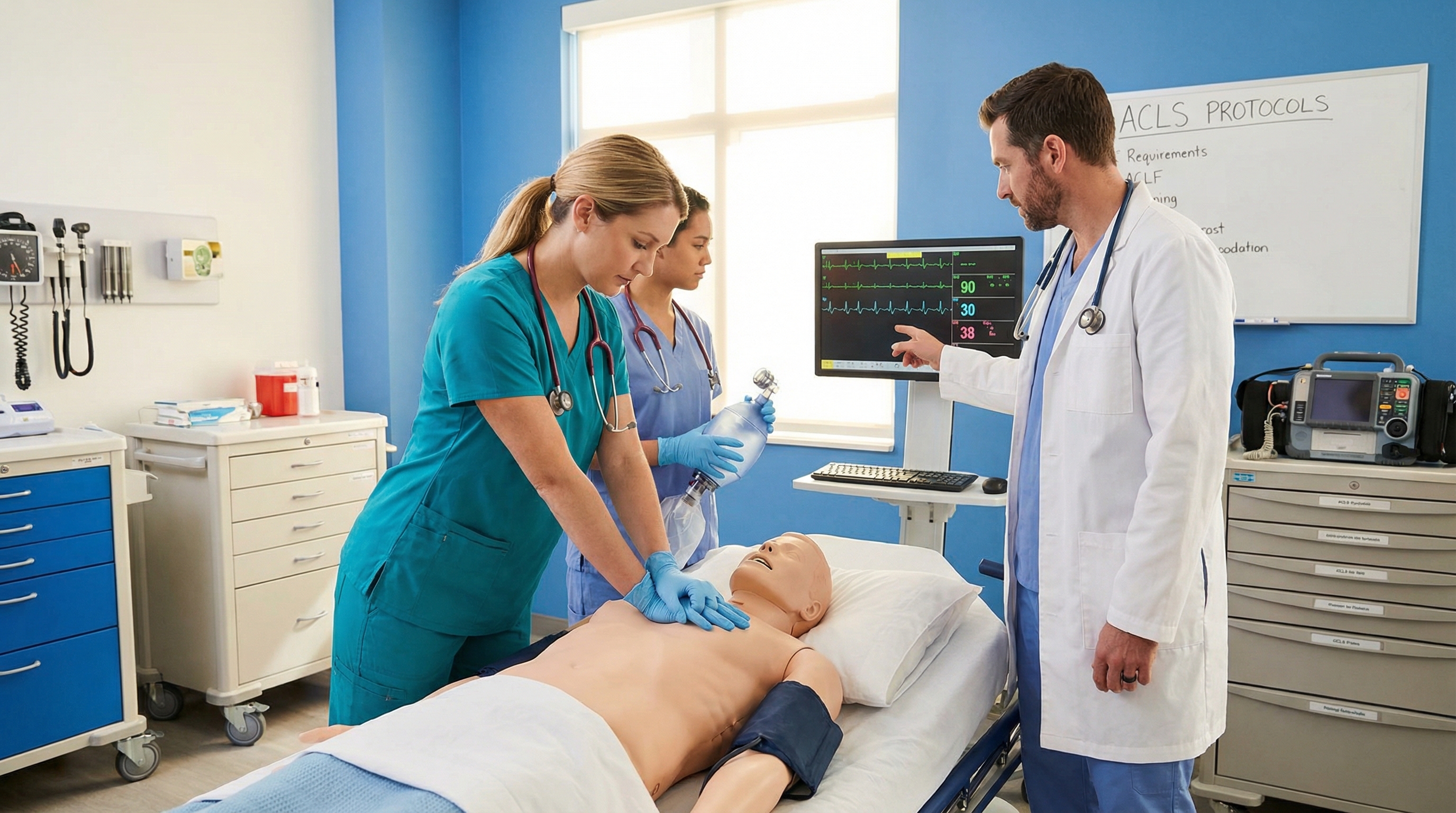
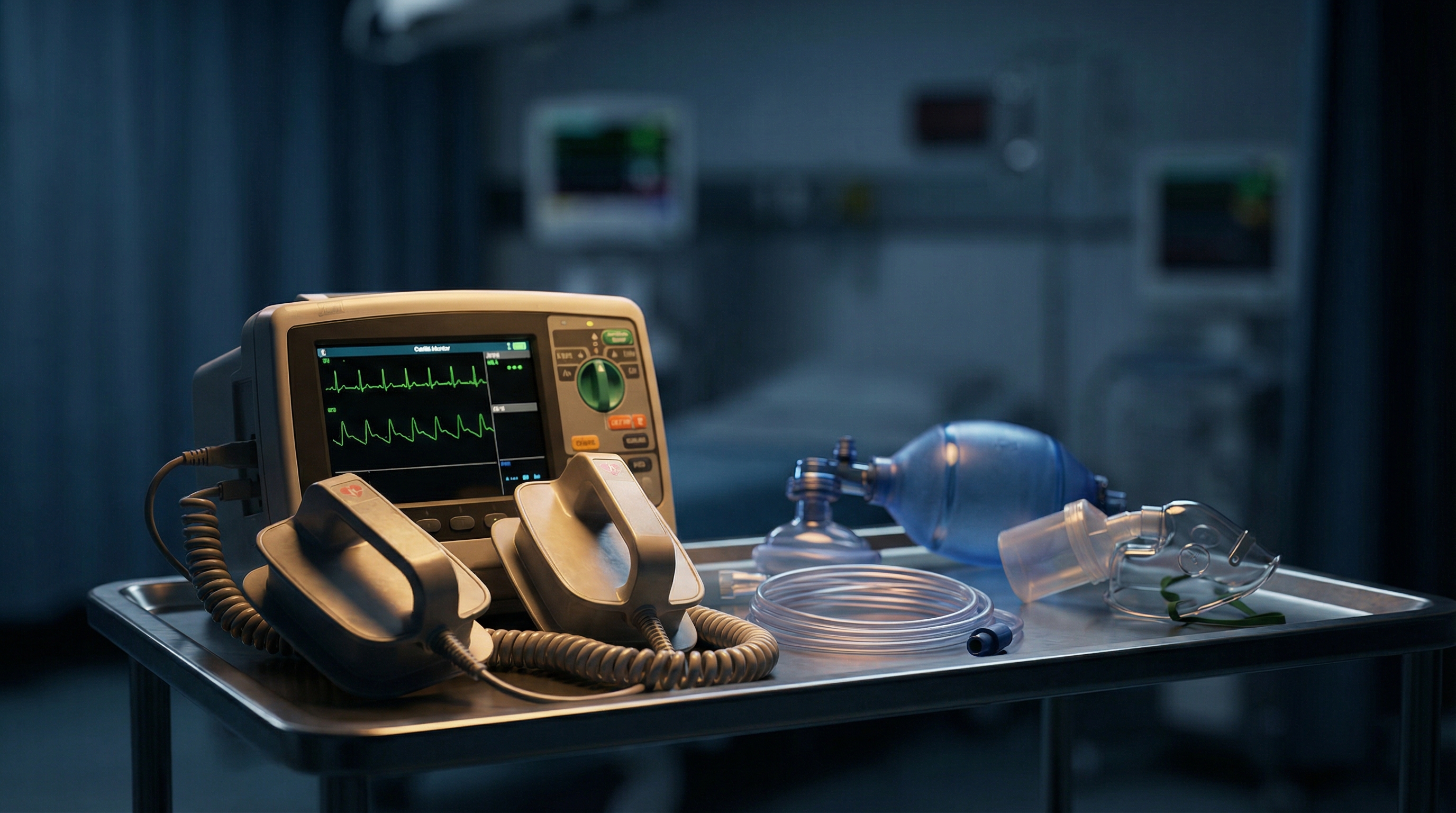
The monitor flatlines. The team disperses. Gloves come off, documentation gets started, and within minutes the resuscitation bay is being reset for the next patient. For most code teams, that is where the event ends — and that is exactly the problem.
What happens in the minutes and hours after a cardiac arrest resuscitation is just as critical to long-term team performance as anything that happened during the code itself. Structured debriefing — the deliberate, facilitated review of a resuscitation event — is one of the most evidence-backed tools available to emergency and critical care teams. Yet it remains underutilized in clinical settings across the country.
As emergency physicians, we have seen firsthand what a well-run debrief can do: it surfaces communication breakdowns that nearly derailed the code, validates the nurse who correctly flagged a medication timing issue, and gives the resident their first real feedback loop beyond the simulation lab. Debriefs turn high-stakes events into structured learning opportunities — without waiting for the annual performance review cycle.

This article breaks down the two primary debrief formats — hot debriefs and cold debriefs — how each works, when to use them, and the growing body of research showing that hospitals which debrief consistently produce better outcomes for cardiac arrest patients. If your team is not debriefing after codes, you are leaving performance data on the table.
Cardiac arrest resuscitation is one of the highest-acuity, highest-complexity events in clinical medicine. The window for effective intervention is narrow, team roles must be executed with precision, and communication failures under pressure can cost lives. Even experienced teams make errors — not from incompetence, but from the inherent chaos of a time-critical, multidisciplinary event.
Debriefing is the structured mechanism by which teams identify, process, and learn from those errors and successes. According to a landmark study published in JAMA Internal Medicine, implementing a standardized debriefing program for in-hospital cardiac arrest teams was directly associated with improved CPR process compliance and better patient survival rates. This is not a soft outcome metric — this is survival.
Research from AHA-affiliated investigators published in Circulation: Cardiovascular Quality and Outcomes found that hospitals which debriefed frequently — after 81% or more of in-hospital cardiac arrest cases — demonstrated significantly higher adherence to resuscitation process measures compared to hospitals that rarely or only occasionally debriefed. The data is consistent and compelling: debriefing is not optional if you care about outcomes.
Beyond outcomes data, there is a human dimension to debriefing that cannot be overlooked. Codes are emotionally demanding. Providers grieve, second-guess, and carry the weight of failed resuscitations. A well-facilitated debrief creates a structured psychological container for those reactions — normalizing the emotional response while redirecting the team toward learning and improvement. For a deeper look at the mental and emotional preparation required for high-stakes resuscitation, see our guide on preparing for your first real code beyond the algorithms.
A hot debrief is conducted immediately after the resuscitation event — typically within five to fifteen minutes of the code ending. The team has not yet dispersed. The event is fresh. The goal is rapid, focused reflection while details are still vivid and emotionally immediate.
Hot debriefs are short by design. They are not the place for a comprehensive root-cause analysis or a deep dive into system-level issues. They exist to acknowledge the emotional weight of the event, identify one or two things the team did well, surface one or two immediate opportunities for improvement, validate individual contributions and flag any urgent process concerns, and set the stage for deeper review in a cold debrief if needed.
One of the most widely studied and adopted frameworks for hot debriefs in emergency medicine is the STOP5 model, developed specifically for resuscitation room cases. As described in a study published in PMC via the Clinical and Experimental Emergency Medicine journal, STOP5 structures the debrief around five elements: Summarize the case, Things that went well, Opportunities to improve, Points to action, and a 5-minute time limit. The time constraint is intentional — it forces focus and respects that providers have other patients to attend to.
A critical theme in hot debriefs is communication. In studies analyzing hot debrief content after in-hospital cardiac arrests, communication failures and personnel coordination issues were among the most frequently cited concerns — appearing in roughly 25% of all debrief comments. This aligns with everything we know about high-performance resuscitation: the technical skills are learnable, but closed-loop communication under pressure is where many teams break down. Our breakdown of ACLS team dynamics and communication scripts that save lives during code blues goes deeper on exactly this topic.
A cold debrief takes place hours to days after the resuscitation event — typically 24 to 72 hours later, though some institutional programs schedule them weekly or monthly to cover multiple cases. The delay is not a flaw; it is a feature. Cold debriefs offer something a hot debrief cannot: perspective.
With time comes data. CPR quality metrics from resuscitation recording devices, rhythm strip reviews, medication timing logs, and nursing documentation can all be pulled and presented in a cold debrief. This transforms the debrief from a subjective memory exercise into a data-driven performance review. Cold debriefs are also more inclusive — they can involve team members who were not present at the original code but who are part of the resuscitation quality improvement process.
Research from a pediatric critical care setting published in PMC found that cold debriefs conducted as part of a structured resuscitation quality improvement collaborative were associated with improved patient survival. Notably, the qualitative content of cold debriefs differed meaningfully from hot debriefs — cold debrief participants focused more on patient care processes, environmental compliance, and system-level issues, while hot debriefs surfaced more interpersonal and communication concerns.
A common cold debrief format follows a plus-delta structure: participants identify what went well (plus) and what should change (delta). Some institutions incorporate a structured facilitator guide and anonymous pre-debrief surveys to reduce status hierarchy effects — making it safe for bedside nurses and technicians to share observations that attending physicians might not have seen. This psychological safety element is essential. Without it, cold debriefs risk becoming performance reviews for junior staff rather than genuine systems learning events.
The most effective debriefing programs do not choose between hot and cold formats — they use both, with each serving a distinct purpose. Think of it this way: the hot debrief catches the immediate emotional signal and surfaces the most obvious performance gaps while everyone still remembers exactly what happened. The cold debrief processes the data, expands the discussion to include people who were not at the bedside, and drives systemic change.
Across key dimensions, the two formats differ significantly. On timing, hot debriefs occur within 5 to 15 minutes post-code while cold debriefs take place 24 hours to several days later. On duration, hot debriefs run 5 to 15 minutes while cold debriefs run 20 to 60 minutes depending on format and case complexity. On participants, hot debriefs include the immediate code team while cold debriefs can include broader stakeholders including quality improvement staff. On data availability, hot debriefs rely on fresh memory while cold debriefs incorporate objective CPR metrics, documentation review, and recorded device data. On primary focus, hot debriefs address communication, team coordination, and emotional processing while cold debriefs address systems, processes, and quality metrics. On output, hot debriefs produce immediate action items while cold debriefs produce quality improvement initiatives and policy changes.
A 2025 mixed-methods analysis of both hot and cold debriefs after in-hospital cardiac arrest in a pediatric ICU found that the two formats identified distinct areas for improvement — meaning neither format alone captured the full picture. Teams that used both approaches had access to a more comprehensive view of their performance than teams relying on a single debrief type. The integration of both formats is now recommended by leading resuscitation science authorities as part of a comprehensive quality improvement approach.
Knowing that debriefs improve outcomes is not the same as actually doing them consistently. The barrier is rarely knowledge — it is logistics, culture, and leadership buy-in. Here is what high-performing institutions get right.
Every code debrief needs a designated facilitator. This is not automatically the code team leader or the attending physician — in many institutions, it is a trained debrief champion, a charge nurse, or a resuscitation quality coordinator. What matters is that someone is explicitly responsible for initiating and guiding the debrief. Without a designated leader, debriefs either do not happen or devolve into unstructured venting. If you are building toward a leadership role in resuscitation, our guide on transitioning from student to code team leader covers the competencies required to run these conversations effectively.
Ad hoc debriefs rarely work. Structured frameworks like STOP5 for hot debriefs or plus-delta for cold debriefs give participants a shared language and a predictable process. According to the StatPearls reference on debriefing techniques in medical simulation, structured debriefs consistently outperform unstructured ones in producing measurable behavior change and skill retention. Print the framework. Post it in the resuscitation room. Make it easy for facilitators to follow even when they are tired and emotionally drained from the code.
The most technically perfect debrief structure fails if team members do not feel safe speaking honestly. Psychological safety — the belief that one can speak up without punishment or humiliation — is the foundational prerequisite for effective debriefing. Facilitators must actively model this by acknowledging their own uncertainties, avoiding blame language, and explicitly framing the debrief as a systems learning exercise rather than an individual performance evaluation. This is especially important in hierarchical clinical environments where nurses and technicians may hesitate to critique attending physician decisions.
The best way to normalize debriefing is to practice it regularly — not just after real codes, but after simulation exercises. Mock codes are the ideal training ground for debrief facilitation because the stakes are lower and the team can experiment with format and structure. Our comprehensive resource on how to build an effective mock code program at your healthcare facility includes guidance on incorporating debriefs into your simulation curriculum.
Debrief findings only drive improvement if they are captured and acted upon. Build a simple documentation template — even a single-page form — that records what went well, what needs improvement, and what specific action items were assigned. Review these records quarterly to identify recurring themes. This transforms individual debriefs into a longitudinal quality improvement dataset. For related guidance, see our article on ACLS documentation best practices and how thorough code records protect your license.
One of the most powerful tools in cold debrief facilitation is objective CPR quality data. Modern defibrillators and resuscitation recording devices capture compression rate, depth, recoil, chest compression fraction, and hands-off intervals in real time. This data can be downloaded and displayed during a cold debrief, giving the team a factual basis for discussion that removes memory bias and interpersonal defensiveness.

Research published by AHA investigators found that when teams reviewed objective CPR metrics during debriefs, they were significantly more likely to identify specific, actionable improvements compared to teams debriefing from memory alone. Compression depth and chest compression fraction — two metrics strongly associated with survival — showed the greatest improvement in teams that received data-driven feedback. This is the foundation of high-performance CPR methodology, which our team has covered in depth in our guide to high-performance CPR and team-based strategies that improve survival rates.
If your facility does not yet use CPR feedback devices, the investment is worth making. Even basic audio-feedback AEDs provide real-time compression rate and depth guidance. For cold debrief purposes, downloadable data from more advanced defibrillators allows teams to review the entire resuscitation timeline — when vasopressors were administered, when rhythm checks occurred, and where hands-off intervals exceeded guideline thresholds. This level of specificity is impossible to achieve through memory alone and is what separates data-driven debriefs from general discussion sessions.
Performance improvement is the primary goal of structured debriefing — but it is not the only goal. Cardiac arrest events, particularly those involving young patients or prolonged resuscitations, carry a significant emotional burden for the team. Hot debriefs create the first formal space to acknowledge that burden without pathologizing it.
Research examining the relationship between post-resuscitation debriefings and emergency department nurse perceptions of teamwork found that nurses who participated in structured debriefs reported higher perceptions of team cohesion and psychological safety compared to those who did not. This is not a trivial finding. Nurses who feel supported and heard are more likely to speak up during the next code, more likely to raise concerns before a patient deteriorates, and more likely to remain in demanding clinical roles long-term.
Effective debrief facilitators create space for emotional acknowledgment without allowing it to derail the learning objectives. A simple opening statement — "Before we talk about the clinical piece, I want to check in with everyone. That was a difficult case. How is the team doing?" — sets a tone that distinguishes a genuine debrief from a sterile process review. This moment matters, particularly for team members who may be experiencing their first resuscitation death or their first code that did not go according to plan.
It is worth noting that debrief culture extends beyond unsuccessful resuscitations. Codes that result in return of spontaneous circulation (ROSC) also benefit from structured review — because the work is not finished, and because team performance during the code has direct implications for what comes next. For a comprehensive look at post-ROSC management, see our article on post-ROSC care and what happens after the heart starts beating again.
Debriefing is not an informal best practice — it is embedded in the most authoritative resuscitation guidelines in the world. The American Heart Association incorporated post-resuscitation debriefing into its ACLS and PALS guidelines beginning in 2011, and subsequent guideline updates have reinforced and expanded this recommendation.
The 2020 AHA Guidelines for CPR and Emergency Cardiovascular Care include specific recommendations for team debriefing and systematic feedback as mechanisms for increasing future resuscitation success. The guidelines also recommend quarterly mock codes with post-event debriefs as a minimum standard for resuscitation skill maintenance — a threshold that many healthcare facilities do not currently meet.
A 2021 AHA scientific statement on best practices for education and training of resuscitation teams for in-hospital cardiac arrest identified debriefing as a core element of high-performing resuscitation programs. The statement highlighted that top-performing hospitals — those with the best in-hospital cardiac arrest survival rates — consistently incorporated structured debriefs, both hot and cold, into their resuscitation quality improvement infrastructure.
If your ACLS certification training did not include meaningful coverage of team debriefing as a discipline, it may be worth revisiting that content. At Affordable ACLS, our ACLS course is developed by board-certified emergency physicians and explicitly covers team dynamics, closed-loop communication, and the leadership skills required to run high-quality resuscitation events — including what to do after the code ends.
Even well-intentioned debrief programs can fail if they fall into predictable traps. Here are the most common pitfalls and how to avoid them.
Team dynamics, communication under pressure, and post-event learning are not peripheral to ACLS — they are central to it. The AHA designed ACLS as a team-based certification precisely because cardiac arrest resuscitation is not a solo performance. The team leader skills covered in ACLS training — closed-loop communication, role clarity, workload monitoring — are the same skills that make debriefs effective.
At Affordable ACLS, our online ACLS certification course is built by practicing ER physicians who run codes and debrief teams regularly. For $109 — or $99 for renewal — you get a self-paced, AHA and ILCOR-aligned curriculum that covers not just the algorithms and pharmacology, but the team dynamics and leadership competencies that determine whether those algorithms get executed correctly under pressure. The course includes unlimited retakes, a money-back guarantee, and immediate digital certification upon completion.
Whether you are a new provider building your foundational skills or an experienced clinician looking to sharpen your team leadership capabilities, structured learning is the foundation that makes debriefing meaningful. Without a shared language around resuscitation science, debriefs lack the technical specificity to drive real improvement. The clinical vocabulary — compression fraction, no-flow time, vasopressor timing — has to be second nature before it can be productively analyzed in a debrief setting.
Cardiac arrest resuscitation is among the most demanding events in clinical medicine. The teams that perform best over time are not necessarily those with the most experienced providers — they are the teams that learn fastest, and debriefing is how learning happens systematically in high-stakes clinical environments.
Hot debriefs capture the immediate human experience: what felt chaotic, what communication broke down, what this team needs right now to process what just happened. Cold debriefs capture the data story: what the metrics show, what the documentation reveals, what systematic changes will prevent the same gaps from appearing in the next code. Together, they create a feedback loop that no amount of algorithm memorization can replicate.
The evidence is clear. The guidelines are explicit. The tools are available. What remains is the organizational will to make debriefing a standard expectation rather than an optional afterthought — something that happens after every code, for every team, in every unit where cardiac arrest care is delivered.
If you are building or strengthening your resuscitation team's capabilities, start with solid ACLS certification and a commitment to post-event review. Your next debrief might be the conversation that saves the next patient.
.jpg)