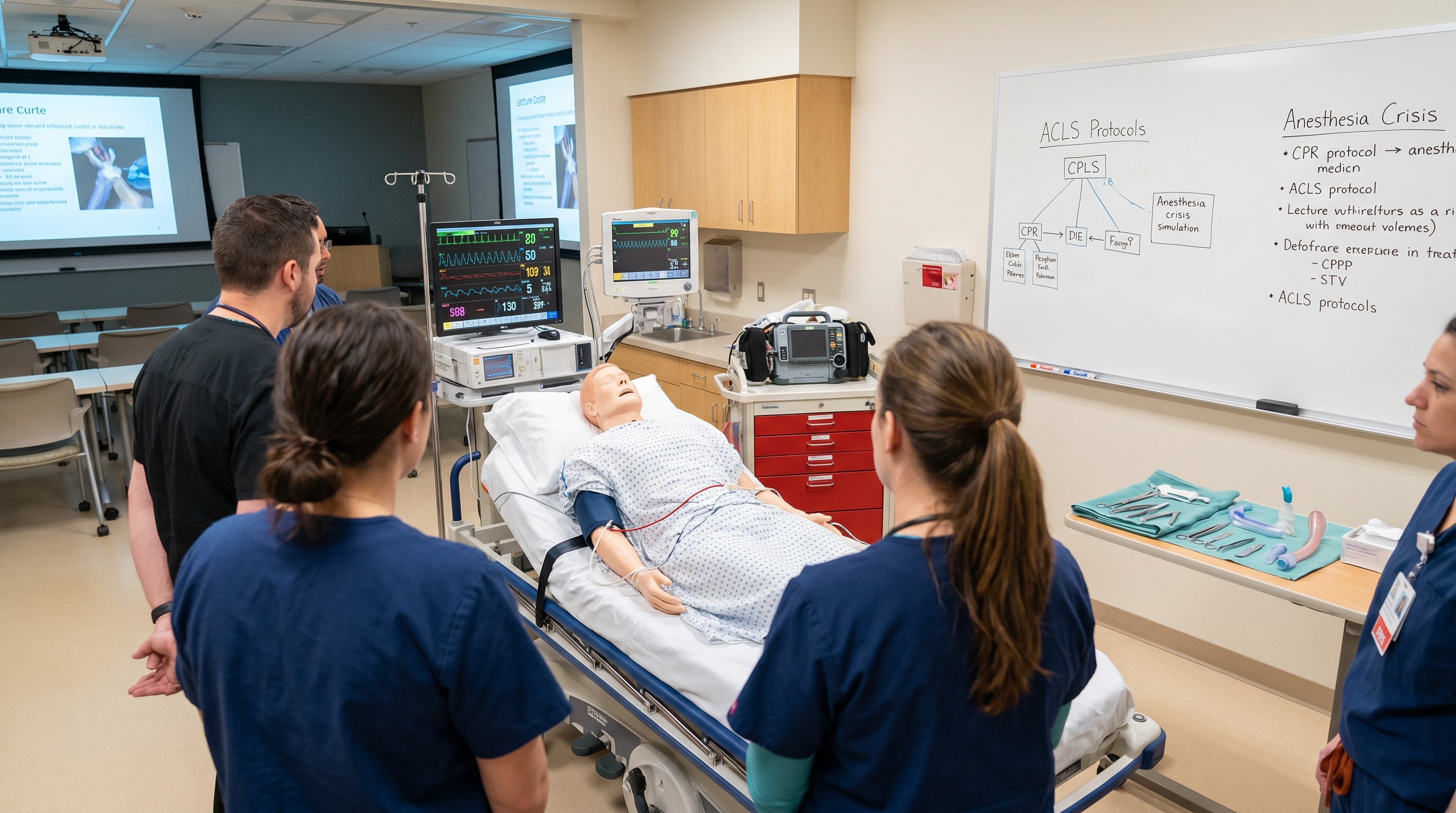
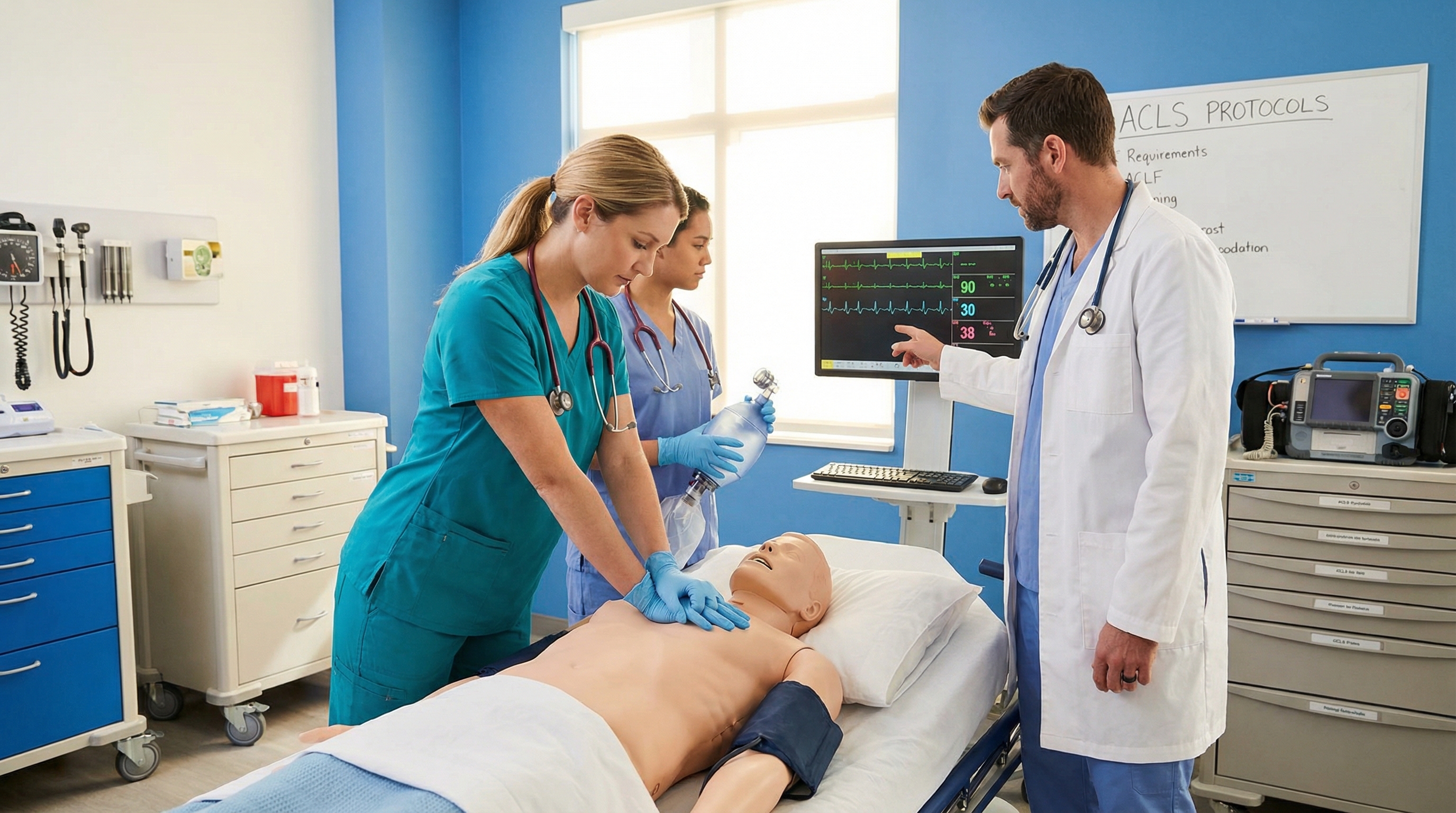
Plastic surgery and cosmetic surgery centers occupy a unique and often underappreciated position in the landscape of outpatient healthcare. Patients walk in seeking rhinoplasties, abdominoplasties, liposuction procedures, and breast augmentations — procedures that carry the outward appearance of routine, elective care. Yet behind every surgical suite, anesthesia is being administered. And wherever anesthesia is administered, the potential for a life-threatening cardiac event exists.
According to research published in the National Institutes of Health's PubMed Central, intraoperative cardiac arrest occurs at a rate of approximately 1.3 events per 10,000 surgical procedures in major U.S. health systems. Anesthesia-attributable cardiac arrests — those directly caused by anesthetic agents or airway complications — make up a meaningful portion of those events. In a high-volume cosmetic surgery practice performing hundreds of cases per year, that statistical reality is not something that can be deferred to a hospital down the road.
This is why Advanced Cardiovascular Life Support (ACLS) certification is not merely a credential box to check. For plastic and cosmetic surgeons, CRNAs, OR nurses, and surgical techs working in office-based or accredited ambulatory settings, ACLS is the clinical foundation that determines whether a team can bridge a patient from collapse to survival. This article explores the specific cardiac risks facing cosmetic surgery centers, what ACLS competencies matter most in this environment, and how your team can build a credible, compliant emergency response infrastructure.

It would be easy to assume that elective cosmetic procedures carry minimal medical risk — after all, most patients are healthy adults seeking aesthetic improvements rather than medically necessary interventions. But this assumption is clinically dangerous. Several factors converge to create a meaningful cardiac risk profile in cosmetic surgical settings.
Depth and duration of anesthesia. Many cosmetic procedures require moderate to deep sedation or general anesthesia maintained over extended timeframes. A lengthy liposuction case or combined procedure (commonly called a "mommy makeover") may place a patient under anesthesia for three to five hours. The longer the anesthetic exposure, the greater the cumulative risk of hemodynamic instability, arrhythmia, or airway compromise.
Tumescent lidocaine toxicity. Liposuction frequently involves the infusion of large volumes of tumescent solution containing lidocaine and epinephrine. When administered in excess or absorbed too rapidly, lidocaine toxicity can trigger serious cardiac arrhythmias — including wide-complex tachycardia and ventricular fibrillation. This is a scenario that demands immediate ACLS intervention, including recognition of local anesthetic systemic toxicity (LAST) and administration of lipid emulsion therapy as an adjunct to standard resuscitation.
Fat embolism syndrome. During liposuction or other fat-manipulating procedures, fat particles can enter the circulation and trigger fat embolism syndrome — a condition that may present with sudden respiratory distress, altered mental status, and cardiovascular collapse. Recognizing and managing pulseless electrical activity (PEA) in this context requires the systematic, structured approach that ACLS training reinforces.
Vasoactive medications and blood pressure extremes. Epinephrine-containing local anesthetics are near-universal in cosmetic surgery. Inadvertent intravascular injection or excessive systemic absorption can cause acute hypertensive crises, tachyarrhythmias, and — in predisposed patients — myocardial ischemia. Teams must be capable of rapidly identifying and treating these rhythm disturbances.
Distance from hospital resources. Unlike hospital-based ORs, most office-based surgical suites and freestanding ambulatory surgery centers operate without immediate access to a crash cart team, cardiac catheterization lab, or intensive care unit. Your staff is your only safety net. The knowledge and muscle memory instilled through ACLS training is what fills that gap.
The major surgical facility accreditation organizations — including the American Association for Accreditation of Ambulatory Surgery Facilities (AAAASF), The Joint Commission, and the Accreditation Association for Ambulatory Health Care (AAAHC) — all establish emergency preparedness standards that include ACLS certification requirements for key personnel.
AAAASF, which has historically had strong ties to the plastic surgery community through its history detailed in peer-reviewed literature, requires that facilities maintain staff certified in advanced life support. Its standards mandate emergency preparedness protocols, accessible resuscitation equipment, and regular competency assessments. Facilities that fail to demonstrate compliance risk denial or loss of accreditation — and the legal, reputational, and patient safety consequences that follow.
The American Society of Plastic Surgeons (ASPS) also provides patient safety resources and guidance on accredited facility standards, reinforcing that operating in an accredited environment is a baseline expectation of safe cosmetic surgical practice. Accreditation isn't just a marketing credential — it's the structural framework that keeps teams accountable to emergency readiness standards year after year.
For the practicing cosmetic surgeon or surgery center administrator, the practical takeaway is straightforward: ACLS certification for core clinical staff is not optional. It is a documented, enforceable requirement embedded in the standards of every major accrediting body that governs outpatient surgical practice.
ACLS is a broad clinical framework, but certain competencies are especially critical in the cosmetic and plastic surgery context. Understanding which skills matter most helps clinical leaders prioritize training emphasis and mock code scenarios.
PEA — cardiac arrest with organized electrical activity on the monitor but no effective pulse — is one of the most challenging resuscitation scenarios, and it is disproportionately common in perioperative settings. Fat embolism, tension pneumothorax from a procedural complication, hypovolemia from blood loss, and pulmonary embolism can all present as PEA. The ACLS framework's systematic use of the H's and T's mnemonic (hypovolemia, hypoxia, hydrogen ion, hypo/hyperkalemia, hypothermia; tension pneumothorax, tamponade, toxins, thrombosis) gives teams a structured approach to identifying the reversible cause quickly — which is the only path to successful resuscitation in PEA arrest.
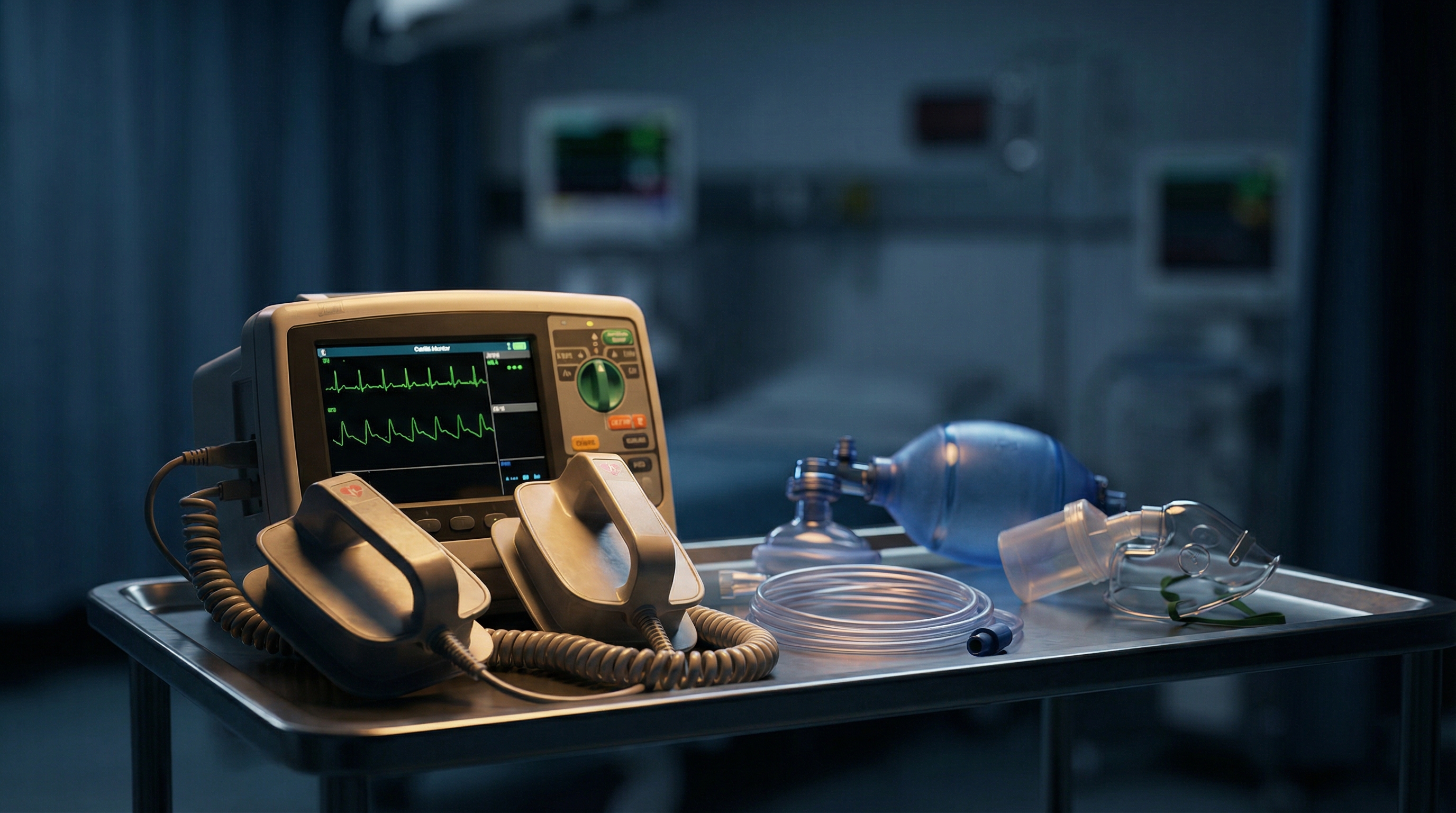
Shockable rhythms — VF and pulseless VT — require immediate defibrillation paired with high-quality CPR. In the cosmetic surgery setting, these rhythms may arise from lidocaine toxicity, epinephrine-induced arrhythmia, or underlying but undiagnosed coronary artery disease in patients who presented as "healthy." ACLS certification ensures that all clinical staff recognize these rhythms on a monitor, know the appropriate energy settings for the defibrillator in your facility, and can execute a coordinated shock delivery without delay.
Research consistently identifies airway complications as the leading cause of anesthesia-attributable cardiac arrests — accounting for approximately 64% of such events according to published data. Whether the emergency involves laryngospasm during emergence from anesthesia, failed intubation, or post-sedation airway obstruction in a heavily sedated patient, ACLS-trained staff must be prepared to manage bag-mask ventilation, assist with advanced airway placement, and coordinate oxygen delivery effectively while the primary provider stabilizes the airway.
Vagal responses during surgical procedures — particularly in patients under lighter planes of anesthesia — can trigger profound bradycardia with hemodynamic compromise. Opioids, high neuraxial blocks, and certain volatile anesthetics can depress heart rate as well. ACLS protocols for symptomatic bradycardia, including atropine administration and transcutaneous pacing, must be immediately accessible knowledge for your team. Our detailed resource on understanding symptomatic bradycardia provides a practical clinical review that is directly applicable to perioperative scenarios.
Every cosmetic procedure involves exposure to multiple potential allergens — latex, antibiotics, antiseptics, anesthetic agents, and injectable medications. Anaphylaxis can develop rapidly and can mimic or precipitate cardiac arrest. ACLS teams must recognize anaphylaxis, administer epinephrine promptly, and manage concurrent cardiovascular collapse. For a deeper dive into this intersection, our guide on managing anaphylaxis in clinical settings covers the overlap between allergic emergencies and ACLS-level interventions in detail.
A single ACLS-certified provider is not a code-ready team. Effective emergency response in the surgical setting requires role clarity, practiced coordination, and facility-level systems. Here is what that infrastructure looks like in practice.
At minimum, accreditation standards typically require that at least one ACLS-certified provider be present whenever anesthesia is being administered. In practice, the gold standard is broader: the surgeon, the anesthesia provider, and the circulating nurse should all hold current ACLS certification. In a high-volume practice with multiple rooms running simultaneously, you need ACLS competence in every room — not just one room covered by one provider who may be occupied.
Our comprehensive overview of ACLS essentials for ambulatory surgery center staff outlines the staffing and competency expectations that translate directly to the cosmetic surgery environment. The principles are the same whether you are running a hospital-adjacent ASC or a private office-based surgical suite.
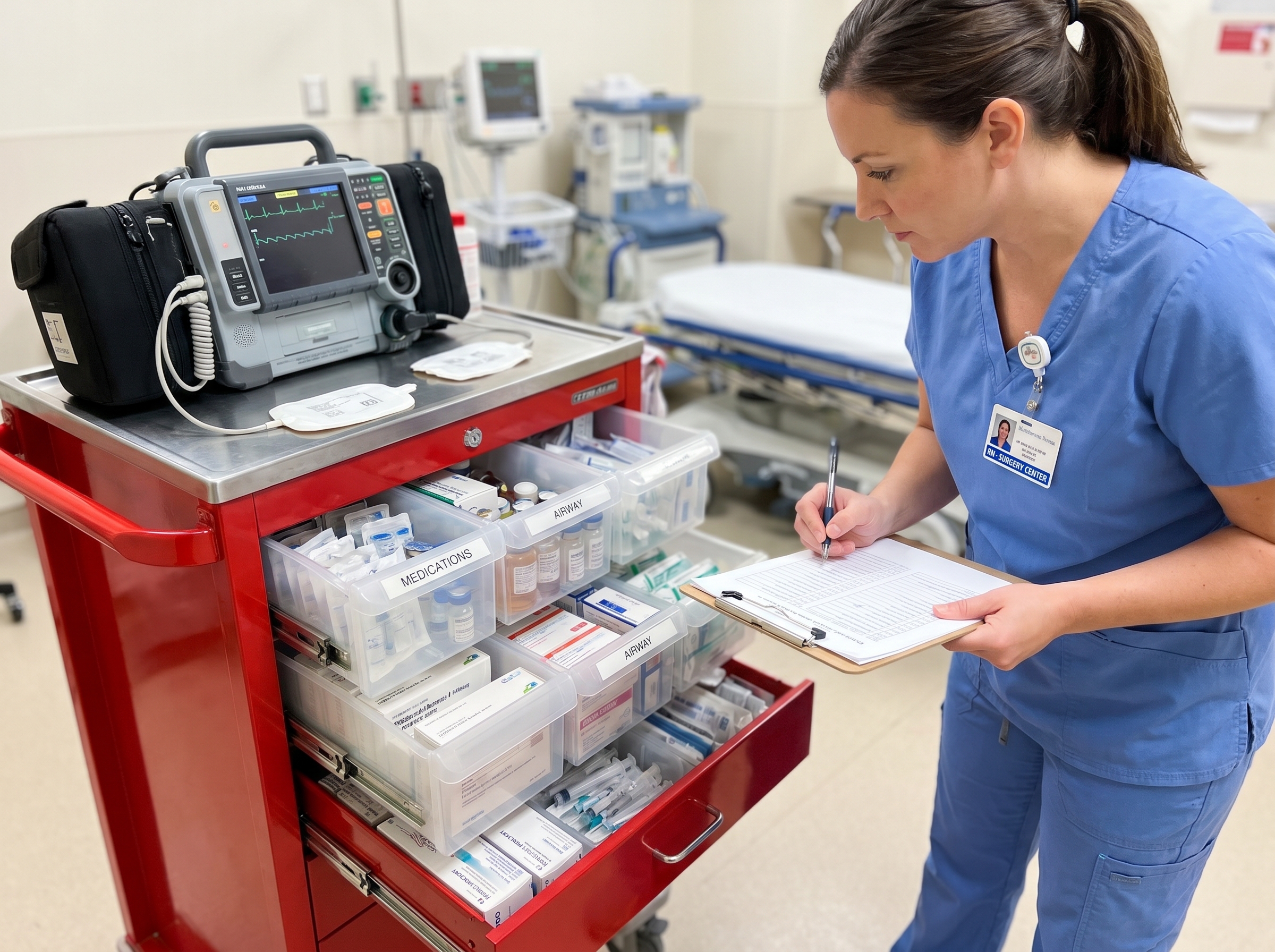
ACLS knowledge is only as effective as the equipment available to execute it. Every cosmetic surgery center performing procedures under sedation or general anesthesia must maintain a crash cart with:
Crash cart checks should be formalized — dated logs, assigned responsibility, and scheduled replacement of expired medications. ACLS documentation best practices, including how to maintain resuscitation records that protect your license, are detailed in our guide on ACLS documentation best practices.
Certification establishes baseline knowledge. Mock code drills translate that knowledge into coordinated team behavior under stress. In a cosmetic surgery center, mock codes should simulate the scenarios most likely to occur in your specific practice: a pulseless patient on the table at minute 90 of a liposuction case; a patient in laryngospasm in the PACU; a VF arrest triggered three minutes after injection of tumescent solution.
These drills expose gaps in role clarity, reveal missing equipment, and build the kind of automatic, habitual response that saves lives when real emergencies unfold. For a structured approach to implementing mock codes at your facility, our guide on how to build an effective mock code program provides a practical, step-by-step framework applicable to outpatient surgical settings.
The need for emergency preparedness does not stop at the operating room door. The broader aesthetic medicine ecosystem — including medical spas, dermatology offices offering injectable treatments, and laser suites — faces its own subset of emergencies. While these settings typically operate at lower procedural risk levels, they are not immune to cardiac events, allergic reactions, and vasovagal crises.
For aesthetic injectors and spa medicine providers, BLS certification is the baseline standard — and for clinical leads in those environments, ACLS is the appropriate credential. Our article on why injectors and aesthetic providers need BLS certification covers the emergency risk landscape specific to non-surgical aesthetic settings.
Cosmetic dentistry offices that offer sedation services share many of the same risks as plastic surgery centers when it comes to anesthesia-related emergencies. For an in-depth look at that clinical crossover, the principles covered in our resource on dental sedation emergencies and ACLS preparedness are directly translatable to the office-based surgical context.
The 2025 American Heart Association Guidelines for CPR and Emergency Cardiovascular Care, published in Circulation, represent a significant evolution in how cardiac arrest is approached in clinical settings. Complementing these guidelines is the PeRLS 2025 framework — Perioperative Resuscitation and Life Support — which recognizes that intraoperative cardiac arrests are fundamentally different from community cardiac arrests and require contextual, cause-directed intervention rather than the generic ACLS algorithm applied in isolation.
The PeRLS framework, reviewed extensively by NYSORA, emphasizes that perioperative arrests are almost always witnessed events with a known clinical context — meaning the resuscitation team has immediate access to information about what the patient was given, what procedure was being performed, and what physiologic events preceded the arrest. This contextual intelligence is what enables rapid identification of reversible causes and directed intervention. ACLS-certified teams in cosmetic surgery centers are positioned to leverage exactly this advantage — but only if their training is current and their protocols are rehearsed.
For cosmetic surgery teams, the practical application of these updated guidelines means ensuring your ACLS training reflects current algorithmic guidance — including updated vasopressor dosing considerations, updated defibrillation protocols, and the integration of point-of-care ultrasound where available for rapid differential diagnosis during PEA arrest.
One of the persistent barriers to maintaining current ACLS certification across an entire surgical team is the logistical challenge of scheduling. Surgeons have OR time. CRNAs have back-to-back cases. Nurses and surgical techs work rotating shifts. Coordinating a traditional in-person ACLS renewal for five to fifteen clinical staff members is a genuine operational burden — which is precisely why many cosmetic surgery teams allow certifications to lapse.
Online ACLS certification eliminates that barrier. Affordable ACLS — founded by Board Certified Emergency Medicine physicians — offers fully online, self-paced ACLS certification and recertification that is aligned with current AHA and ILCOR guidelines. The curriculum is rigorous and clinically grounded, the platform is accessible from any device, and immediate digital certification is issued upon successful completion. There are unlimited retakes, a money-back guarantee, and no need to coordinate a group schedule around anyone's cases.
Pricing is straightforward and genuinely accessible:
For surgery centers looking to certify or recertify an entire team, group solutions are available. Contact Affordable ACLS at 866-655-2157 or support@affordableacls.com to discuss group pricing and implementation options for your facility.
ACLS certification is valid for two years. In a busy cosmetic surgery practice, those two years pass faster than anticipated — and a lapsed certification discovered during an accreditation inspection is a far more serious problem than the hour or two it takes to complete an online recertification course.
Best practice for surgery center administrators is to build a certification tracking system that includes each team member's certification expiration date, an automated 90-day advance renewal reminder, and a designated staff member responsible for ensuring compliance before each accreditation review cycle. Treat ACLS certification the way you treat medication expiration dates on your crash cart: it has a shelf life, and when it expires, it is no longer a reliable tool.
Recertification through Affordable ACLS can be completed in a matter of hours at each provider's convenience — no days off required, no travel, no scheduling conflicts. For staff who allow their certification to lapse entirely, full certification is available at minimal additional cost. Either way, there is no logistical justification for operating an anesthesia-capable surgical center with non-current ACLS credentials.
Plastic and cosmetic surgery centers operate at the intersection of patient trust and clinical risk. Patients arrive believing their procedure is safe. In the hands of a well-trained, properly certified team operating in an accredited facility with rehearsed emergency protocols, it is. But that safety is not passive — it is actively constructed through certification, equipment readiness, mock code practice, and the institutional culture that treats emergency preparedness as a non-negotiable operational standard.
ACLS certification is the clinical cornerstone of that infrastructure. Whether your team is managing a straightforward rhinoplasty under light sedation or a complex multi-procedure case under general anesthesia, the capacity to recognize and respond to a cardiac event in the first critical minutes is what stands between a patient outcome and a tragedy.
Affordable ACLS makes it practical and affordable for every member of your cosmetic surgery team to hold current, clinically rigorous ACLS certification — without the scheduling headaches of traditional in-person courses. Your patients trust you with their safety. Your certification should reflect that trust.
Ready to certify or recertify your cosmetic surgery team? Visit AffordableACLS.com, call 866-655-2157, or email support@affordableacls.com to get started today.
.jpg)