ACLS Blogs

ACLS Considerations for Patients with Implanted Cardiac Devices: Pacemakers, ICDs, and LVADs During Resuscitation

When Lifesaving Devices Complicate the Resuscitation

Cardiac implantable electronic devices — pacemakers, implantable cardioverter-defibrillators (ICDs), and left ventricular assist devices (LVADs) — are increasingly common. Millions of Americans now live with one of these devices, and as their prevalence rises, so does the probability that you will manage a cardiac arrest in a patient who has one implanted. These devices do not eliminate the risk of cardiac arrest; in many cases, they simply change the clinical picture when arrest occurs.


For the resuscitation team, that changed picture demands a modified approach. Standard ACLS algorithms remain the backbone of your response, but each category of implanted device introduces specific considerations that, if ignored, can reduce the effectiveness of your interventions or — in the case of LVADs — lead to unnecessary chest compressions in a patient who is actually being adequately perfused. This article breaks down what you need to know about managing cardiac arrest in patients with pacemakers, ICDs, and LVADs, drawing on the 2025 AHA Adult Advanced Life Support Guidelines and current evidence.
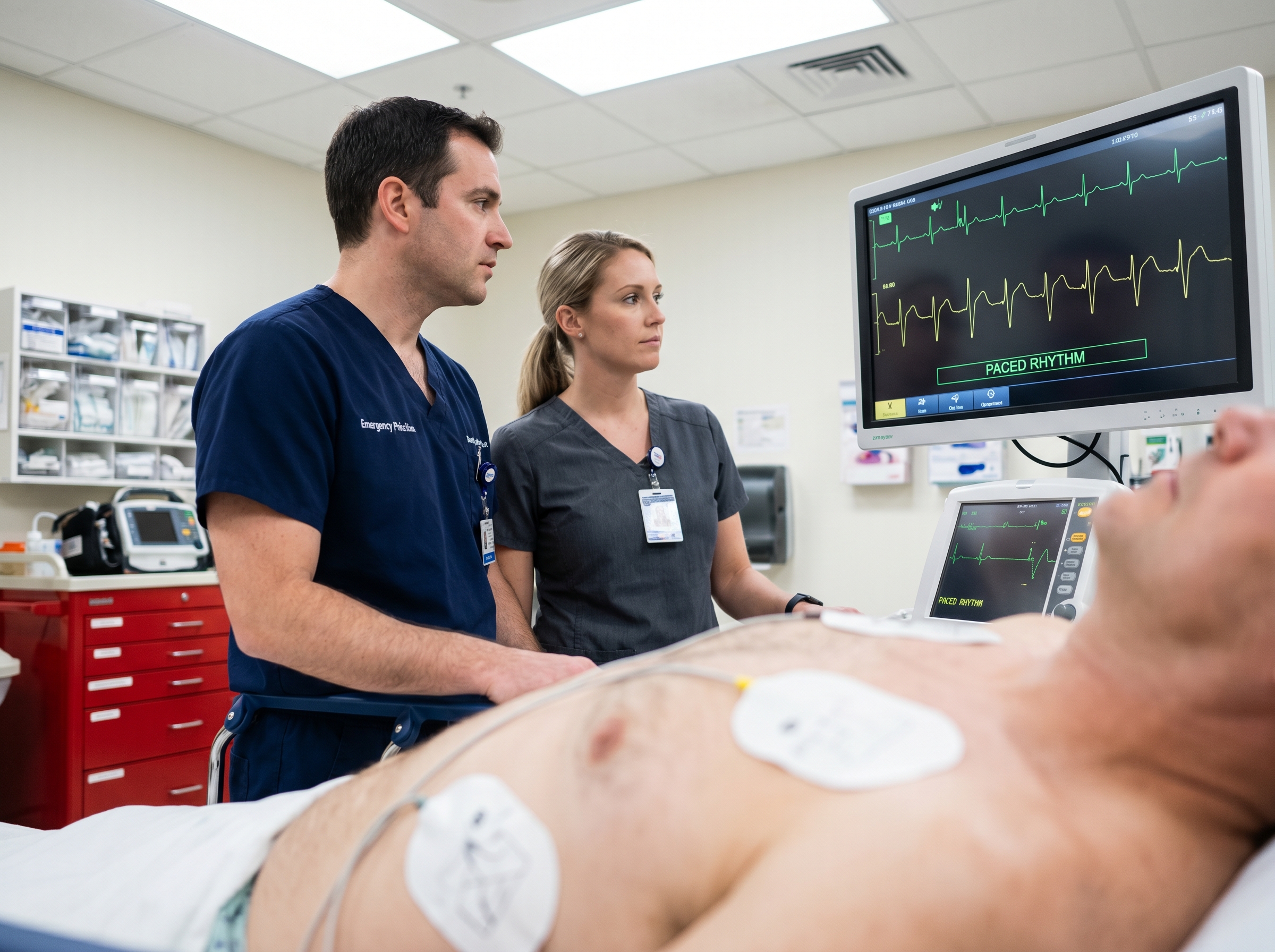
Emergency team reviewing pacemaker ECG rhythm on cardiac monitor during resuscitation


Pacemakers: Understanding the Device Before You Shock

A permanent pacemaker delivers electrical impulses to maintain a minimum heart rate when the intrinsic rate falls below a programmed threshold. In pacemaker-dependent patients — those who have no reliable intrinsic rhythm — the device is not a backup system; it is the primary driver of cardiac output. When these patients arrest, your response must account for both the underlying cause of arrest and the behavior of the pacemaker under resuscitation conditions.


Recognizing Pacemaker Artifacts on the ECG

The first challenge is ECG interpretation. Pacemaker spikes — narrow vertical deflections — precede paced beats and can obscure the underlying rhythm. In a pacemaker-dependent patient in cardiac arrest, you may see pacing spikes firing without corresponding mechanical capture: a condition called pacemaker failure to capture. This is electrically similar to pulseless electrical activity (PEA) and should be approached as such.


Equally important is recognizing that pacemaker spikes can mimic QRS complexes on automated monitors, potentially causing a defibrillator to misread the rhythm. Always correlate rhythm interpretation with clinical assessment — no pulse means no cardiac output regardless of what the monitor shows. Our overview of pulseless electrical activity causes and treatment covers the systematic approach to organized rhythms without a pulse, which applies directly to pacemaker failure scenarios.


Defibrillation Pad Placement in Pacemaker Patients

If defibrillation is indicated, pad placement matters more than most clinicians realize. Placing defibrillation pads directly over a pacemaker pulse generator can damage the device and, more critically, can divert current away from the myocardium — reducing defibrillation efficacy. The standard recommendation is to position pads at least 8 cm (approximately 3 inches) from the implanted generator.


Both anterior-lateral and anterior-posterior pad configurations are acceptable in patients with pacemakers or ICDs. If the standard anterior-lateral position places a pad directly over the generator (most commonly implanted in the left infraclavicular region), shift to an anterior-posterior configuration or move the anterior pad to a more lateral or apical position. Do not delay defibrillation while trying to optimize placement; a reasonable position that avoids direct pad-over-device contact is sufficient. After resuscitation, the device should be interrogated to confirm settings remain accurate — defibrillation can alter pacemaker programming.


Magnet Application: When and Why

Applying a magnet over a pacemaker switches most devices to asynchronous pacing mode (DOO or VOO depending on device type), causing the pacemaker to fire at a fixed rate regardless of sensed intrinsic activity. This is relevant during resuscitation when electromagnetic interference from defibrillation, external pacing equipment, or other sources might inhibit demand pacing and cause the pacemaker to withhold output in a pacemaker-dependent patient.


However, magnet use is not without risk. In some device models, magnet application can trigger reprogramming or activate other programmable functions. In a resuscitation scenario where device interrogation is not immediately available, magnet use should be reserved for situations where pacemaker inhibition from electromagnetic interference is suspected as a contributing cause of hemodynamic deterioration. Always remove the magnet after defibrillation and reassess pacing function.


Transcutaneous Pacing as a Bridge

In patients where the implanted pacemaker has failed — due to battery depletion, lead fracture, sensing errors, or device damage from a prior shock — transcutaneous pacing (TCP) provides a critical bridge to more definitive therapy. Our detailed guide to transcutaneous pacing technique and indications walks through setup, capture confirmation, and sedation considerations that are especially relevant when the implanted device cannot be relied upon. Remember that TCP does not eliminate the need to identify and treat the underlying cause of pacemaker failure.


Implantable Cardioverter-Defibrillators: Coordinating with the Device

An ICD continuously monitors the cardiac rhythm and delivers therapy — antitachycardia pacing, synchronized cardioversion, or defibrillation shocks — when it detects ventricular tachycardia or ventricular fibrillation meeting its programmed criteria. During cardiac arrest, the ICD may be actively attempting to treat the same arrhythmia you are. Understanding how to work with, and when to override, an active ICD is essential ACLS knowledge.


Recognizing an Active ICD During Resuscitation

If a patient in cardiac arrest has an ICD, you may observe the device delivering shocks during resuscitation. These shocks are visible on the cardiac monitor as high-amplitude artifacts and may be felt by rescuers in direct contact with the patient — though the energy delivered to rescuers through an intact chest wall is minimal and not dangerous. Do not interrupt CPR solely because the ICD is firing. Continue high-quality chest compressions while allowing the device up to 30–60 seconds to complete its therapy cycle.


Assess ICD effectiveness by watching the post-shock ECG. A successful ICD shock typically produces a brief period of asystole or a low-amplitude undulating baseline followed by organized rhythm — the heart's electrical system resetting. If the rhythm on the monitor does not change substantially after ICD therapy, the device is not achieving conversion, and external defibrillation should not be delayed. Understanding shockable rhythms including ventricular tachycardia and fibrillation helps you interpret these post-shock ECG patterns quickly and accurately.


Delivering External Defibrillation with an ICD In Situ

External defibrillation is not contraindicated in patients with an ICD, but the same pad placement principles described for pacemakers apply. Position pads at least 8 cm from the ICD generator to avoid current diversion and potential device damage. Most ICDs are implanted in the left infraclavicular position; in many patients, standard anterior-lateral pad placement naturally achieves adequate separation, but verify this visually before charging.


The 2025 multisociety Appropriate Use Criteria for ICDs published in JACC acknowledges the unique resuscitation considerations for patients with CIEDs, including guidance relevant to concurrent ICD therapy during external resuscitation. After successful resuscitation, ICD interrogation is mandatory — external shocks and CPR can both alter device programming and lead behavior.


One practical note: if the ICD is firing repeatedly without converting the rhythm — sometimes called an ICD storm — this is a sign that the device's internal defibrillation threshold has been exceeded or that the arrhythmia is refractory. External defibrillation with higher delivered energy is indicated. Review our full discussion of ventricular fibrillation causes, symptoms, and treatment for the broader clinical context that informs energy selection and shock sequencing.


Using a Magnet to Suspend ICD Therapy

Unlike with pacemakers, applying a magnet over most ICDs does not change pacing mode — it suspends shock delivery. This is important in two specific scenarios. First, if the ICD is delivering inappropriate shocks (for example, in response to rapidly conducted atrial fibrillation being sensed as VF), a magnet can halt the shocks while the team addresses the underlying rhythm. Second, if the ICD is firing so frequently that it is interfering with assessment and CPR, brief magnet application can pause shocks while external defibrillation is prepared. Always remove the magnet once external therapy is ready and confirm that the ICD resumes appropriate function after ROSC.


Left Ventricular Assist Devices: A Fundamentally Different Resuscitation Problem

LVADs present the most complex resuscitation challenge of the three device categories. A continuous-flow LVAD mechanically unloads the left ventricle by pulling blood from the LV apex and ejecting it into the aorta, largely bypassing native LV contractile function. In patients with advanced heart failure supported by an LVAD, the device may be generating the majority of systemic cardiac output — which means the usual signs of cardiac arrest (absent pulse, absent blood pressure) may be present even when the patient is adequately perfused by the device.


Recognizing True Cardiac Arrest in an LVAD Patient

Because continuous-flow LVADs produce non-pulsatile or minimally pulsatile flow, a palpable pulse is frequently absent even in LVAD patients who are awake, alert, and hemodynamically stable. Applying standard cardiac arrest criteria — unresponsiveness plus absent pulse — to an LVAD patient risks initiating chest compressions in a patient who is being adequately perfused by the device. This is not a theoretical concern. Unnecessary CPR in an LVAD patient can displace the inflow cannula from the LV apex, damage the outflow graft, or cause myocardial trauma.


The AHA Scientific Statement on CPR in Patients with Mechanical Circulatory Support recommends assessing perfusion rather than relying on pulse checks alone. The algorithm for suspected arrest in an LVAD patient should prioritize: assessing responsiveness and breathing, checking the LVAD controller for alarm codes and flow parameters, obtaining a Doppler mean arterial pressure (MAP), and measuring end-tidal CO2 (EtCO2) if the patient has been intubated. Begin chest compressions only if MAP falls below 50 mmHg, EtCO2 is below 20 mmHg, or the device is clearly not functioning — not simply because a pulse cannot be palpated.

Nurses assessing LVAD patient perfusion using Doppler in ICU setting


CPR Technique in LVAD Patients

When compressions are truly indicated in an LVAD patient, technique matters. Place your hands on the lower half of the sternum in the standard position — do not compress directly over the LVAD driveline exit site on the abdomen. Standard compression depth and rate (100–120/min, 2–2.4 inches) are recommended; there is insufficient evidence to support modified compression parameters for LVAD patients at this time.


Simultaneously troubleshoot the device. LVAD alarms and controller displays provide real-time information about device function, flow estimation, and power status. If the LVAD has stopped due to a power failure, reconnect to the backup power source or battery pack immediately. If the device is functioning but the patient has a shockable rhythm (VT/VF), defibrillation takes priority — an LVAD cannot maintain output in the face of VF, and the device will not restart until organized rhythm is restored.


Shockable Rhythms and Defibrillation in LVAD Patients

LVAD patients are at elevated risk for ventricular arrhythmias, and many also have an implanted ICD. If VF or pulseless VT is identified, proceed with external defibrillation per standard ACLS protocols. Pad placement for defibrillation follows the same principles as with ICDs — avoid direct pad-over-device placement, and maintain at least 8 cm separation from any implanted generator. Most LVAD patients have their device positioned in the left upper abdominal quadrant or the LV apex region, so standard pad placement (right parasternal and left lateral) is generally adequate, but confirm visually. A full understanding of the reversible causes of cardiac arrest — the Hs and Ts — is especially important in LVAD patients, where mechanical causes (inflow cannula obstruction, outflow graft thrombosis, suction events) must be considered alongside metabolic and arrhythmic etiologies.


Post-Resuscitation Care for LVAD Patients

After ROSC in an LVAD patient, the post-resuscitation care phase requires close coordination with the LVAD team or the implanting center. LVAD parameters must be reassessed — flow rate, power consumption, and pulsatility index should be reviewed to confirm appropriate device function. The device driveline and all connections should be inspected for displacement or damage. Post-cardiac arrest care principles — targeted temperature management, hemodynamic optimization, neurological monitoring — apply equally to LVAD patients, though the hemodynamic targets may need to be adjusted in consultation with the LVAD team. Our detailed breakdown of post-ROSC care principles provides the framework that you can adapt to the LVAD context.


Device-Related Bradycardia: A Separate but Equally Urgent Problem

Not all device emergencies present as cardiac arrest. Pacemaker malfunction can produce symptomatic bradycardia — including hypotension, altered mental status, and syncope — without full cardiac arrest. This is a clinical scenario where the resuscitation team must identify pacemaker failure as the etiology of symptomatic bradycardia and initiate appropriate treatment, including atropine, transcutaneous pacing, or preparation for transvenous pacing, while the underlying cause of device failure is investigated. Our clinical review of symptomatic bradycardia causes and treatment covers the pharmacologic and electrical interventions that bridge pacemaker-dependent patients through device failure crises.


Preparing Your Team Before the Emergency

The single most effective intervention for improving outcomes in device-related cardiac arrest is preparation. Emergency departments, ICUs, and cardiac care units that routinely care for patients with CIEDs or LVADs should establish and drill protocols that address: immediate identification of device type from patient records or medical alert information, location of device-specific magnets and driveline emergency kits, rapid contact protocols for the LVAD program and electrophysiology service, and staff competency in rhythm interpretation in patients with pacemakers and ICDs.


Device identification is not always straightforward in the emergency setting. Chest X-ray, when time permits, can identify device type and lead configuration. In the absence of records, a conservative approach — treating the device as pacemaker-dependent and maintaining at least 8 cm pad separation — minimizes risk while allowing resuscitation to proceed. Research published in PubMed from the National Inpatient Sample confirms that shockable rhythms, monitored setting, and shorter CPR duration are associated with improved survival in LVAD cardiac arrest — all outcomes influenced by team preparation and rapid identification.


AEDs and CIEDs in Public Settings

For clinicians who may be called to respond to an out-of-hospital arrest, it is worth noting that automated external defibrillators are not contraindicated in patients with pacemakers or ICDs. The AED will analyze the rhythm and, if a shockable rhythm is detected, prompt a shock. Apply pads as directed by the AED, but move the pad if it would land directly over a visible device bulge. Most AED pad placement guides now explicitly address implanted device positioning. Our comprehensive guide to AEDs for adults and children covers device-specific placement guidance that complements these clinical considerations.


Clinical Pearls: Device-Specific Resuscitation at a Glance

Given the breadth of device-specific considerations, a quick-reference summary is valuable for real-time clinical decision-making:


  • Pacemaker — pad placement: Maintain at least 8 cm from the generator. Anterior-posterior or shifted anterior-lateral configurations are both acceptable. Do not delay defibrillation to achieve perfect positioning.
  • Pacemaker — magnet: Converts to asynchronous pacing mode. Use when electromagnetic interference is suspected of inhibiting demand pacing. Remove after defibrillation.
  • Pacemaker — failure to capture: Treat as PEA. Investigate reversible causes. Bridge with transcutaneous pacing if needed.
  • ICD — active therapy: Allow 30–60 seconds for device to complete its cycle before external defibrillation. Continue CPR. ICD shocks do not harm rescuers.
  • ICD — magnet: Suspends shock therapy (does not change pacing mode). Use for inappropriate shocks or ICD storm interfering with resuscitation.
  • ICD — external defibrillation: Not contraindicated. Same 8 cm pad separation rule applies. Interrogate device after ROSC.
  • LVAD — pulse assessment: Absent pulse does not equal cardiac arrest. Assess MAP (target above 50 mmHg), EtCO2 (target above 20 mmHg), device alarms, and responsiveness before initiating compressions.
  • LVAD — CPR: Standard position on lower sternum. Avoid driveline exit site. Troubleshoot device simultaneously. Reconnect power if device has stopped.
  • LVAD — VF/VT: Defibrillate per standard protocol. LVAD cannot sustain output in VF. Device will not restart until organized rhythm returns.
  • All devices — post-ROSC: Interrogate the device. Confirm lead integrity and programming. Contact the implanting center or device manufacturer hotline.


Documentation in Device-Involved Resuscitations

Device-involved resuscitations carry additional documentation requirements. Record device type and model if known, location of device in chest, pad placement configuration used, any magnet application (timing and duration), ICD therapy observed (number of shocks, apparent effectiveness), LVAD alarm codes and flow parameters at time of arrest, and post-ROSC device status. Thorough documentation protects both the patient — by ensuring the receiving team has complete information — and the clinician. The principles of ACLS documentation best practices apply with additional urgency in device-involved cases where device-specific decisions may be reviewed by electrophysiology, the manufacturer, and, in adverse outcomes, by legal or regulatory bodies.


Staying Current on a Rapidly Evolving Topic

The landscape of cardiac implantable devices is evolving rapidly. Subcutaneous ICDs, leadless pacemakers, wearable defibrillator vests, and next-generation LVADs each introduce resuscitation nuances that older guidelines do not fully address. The 2025 multisociety Appropriate Use Criteria for ICDs, CRT, and pacing, covering 335 clinical scenarios including LVAD-ICD combinations, reflects how complex device management has become. Staying current requires ongoing education, not just periodic recertification.


ACLS certification that covers device-related resuscitation nuances — rhythm interpretation in paced patients, defibrillation technique with implanted devices, and the unique physiology of LVAD patients — gives clinicians the confidence to act correctly under pressure. If your last ACLS recertification did not address these topics in depth, it may be time to refresh. At Affordable ACLS, our courses are developed by board-certified emergency physicians and align with the latest AHA and ILCOR guidelines. Our self-paced ACLS certification program covers the full spectrum of advanced cardiac life support, including rhythm interpretation, electrical therapy, and management of special populations — at a price that makes annual review accessible. Reach us at 866-655-2157 or support@affordableacls.com.


The Bottom Line: Devices Change the Details, Not the Foundation

Patients with pacemakers, ICDs, and LVADs require a modified approach to resuscitation — but the foundation remains the same: high-quality CPR, early defibrillation when indicated, systematic identification of reversible causes, and coordinated team response. The device-specific modifications — pad placement, magnet use, ICD coordination, and LVAD-specific arrest recognition — are learnable and, with preparation, executable under pressure.


The increasing prevalence of cardiac implantable electronic devices means that device-involved cardiac arrest is no longer a rare subspecialty scenario. It is a mainstream clinical event that every ACLS-trained provider should be prepared to manage. Build device-related scenarios into your team simulation practice, review your facility's protocols, and ensure your ACLS knowledge is current. Your next patient with a device implanted may not give you time to look anything up.


ACLS Blogs

ACLS Considerations for Patients with Implanted Cardiac Devices: Pacemakers, ICDs, and LVADs During Resuscitation

When Lifesaving Devices Complicate the Resuscitation

Cardiac implantable electronic devices — pacemakers, implantable cardioverter-defibrillators (ICDs), and left ventricular assist devices (LVADs) — are increasingly common. Millions of Americans now live with one of these devices, and as their prevalence rises, so does the probability that you will manage a cardiac arrest in a patient who has one implanted. These devices do not eliminate the risk of cardiac arrest; in many cases, they simply change the clinical picture when arrest occurs.


For the resuscitation team, that changed picture demands a modified approach. Standard ACLS algorithms remain the backbone of your response, but each category of implanted device introduces specific considerations that, if ignored, can reduce the effectiveness of your interventions or — in the case of LVADs — lead to unnecessary chest compressions in a patient who is actually being adequately perfused. This article breaks down what you need to know about managing cardiac arrest in patients with pacemakers, ICDs, and LVADs, drawing on the 2025 AHA Adult Advanced Life Support Guidelines and current evidence.

Emergency team reviewing pacemaker ECG rhythm on cardiac monitor during resuscitation


Pacemakers: Understanding the Device Before You Shock

A permanent pacemaker delivers electrical impulses to maintain a minimum heart rate when the intrinsic rate falls below a programmed threshold. In pacemaker-dependent patients — those who have no reliable intrinsic rhythm — the device is not a backup system; it is the primary driver of cardiac output. When these patients arrest, your response must account for both the underlying cause of arrest and the behavior of the pacemaker under resuscitation conditions.


Recognizing Pacemaker Artifacts on the ECG

The first challenge is ECG interpretation. Pacemaker spikes — narrow vertical deflections — precede paced beats and can obscure the underlying rhythm. In a pacemaker-dependent patient in cardiac arrest, you may see pacing spikes firing without corresponding mechanical capture: a condition called pacemaker failure to capture. This is electrically similar to pulseless electrical activity (PEA) and should be approached as such.


Equally important is recognizing that pacemaker spikes can mimic QRS complexes on automated monitors, potentially causing a defibrillator to misread the rhythm. Always correlate rhythm interpretation with clinical assessment — no pulse means no cardiac output regardless of what the monitor shows. Our overview of pulseless electrical activity causes and treatment covers the systematic approach to organized rhythms without a pulse, which applies directly to pacemaker failure scenarios.


Defibrillation Pad Placement in Pacemaker Patients

If defibrillation is indicated, pad placement matters more than most clinicians realize. Placing defibrillation pads directly over a pacemaker pulse generator can damage the device and, more critically, can divert current away from the myocardium — reducing defibrillation efficacy. The standard recommendation is to position pads at least 8 cm (approximately 3 inches) from the implanted generator.


Both anterior-lateral and anterior-posterior pad configurations are acceptable in patients with pacemakers or ICDs. If the standard anterior-lateral position places a pad directly over the generator (most commonly implanted in the left infraclavicular region), shift to an anterior-posterior configuration or move the anterior pad to a more lateral or apical position. Do not delay defibrillation while trying to optimize placement; a reasonable position that avoids direct pad-over-device contact is sufficient. After resuscitation, the device should be interrogated to confirm settings remain accurate — defibrillation can alter pacemaker programming.


Magnet Application: When and Why

Applying a magnet over a pacemaker switches most devices to asynchronous pacing mode (DOO or VOO depending on device type), causing the pacemaker to fire at a fixed rate regardless of sensed intrinsic activity. This is relevant during resuscitation when electromagnetic interference from defibrillation, external pacing equipment, or other sources might inhibit demand pacing and cause the pacemaker to withhold output in a pacemaker-dependent patient.


However, magnet use is not without risk. In some device models, magnet application can trigger reprogramming or activate other programmable functions. In a resuscitation scenario where device interrogation is not immediately available, magnet use should be reserved for situations where pacemaker inhibition from electromagnetic interference is suspected as a contributing cause of hemodynamic deterioration. Always remove the magnet after defibrillation and reassess pacing function.


Transcutaneous Pacing as a Bridge

In patients where the implanted pacemaker has failed — due to battery depletion, lead fracture, sensing errors, or device damage from a prior shock — transcutaneous pacing (TCP) provides a critical bridge to more definitive therapy. Our detailed guide to transcutaneous pacing technique and indications walks through setup, capture confirmation, and sedation considerations that are especially relevant when the implanted device cannot be relied upon. Remember that TCP does not eliminate the need to identify and treat the underlying cause of pacemaker failure.


Implantable Cardioverter-Defibrillators: Coordinating with the Device

An ICD continuously monitors the cardiac rhythm and delivers therapy — antitachycardia pacing, synchronized cardioversion, or defibrillation shocks — when it detects ventricular tachycardia or ventricular fibrillation meeting its programmed criteria. During cardiac arrest, the ICD may be actively attempting to treat the same arrhythmia you are. Understanding how to work with, and when to override, an active ICD is essential ACLS knowledge.


Recognizing an Active ICD During Resuscitation

If a patient in cardiac arrest has an ICD, you may observe the device delivering shocks during resuscitation. These shocks are visible on the cardiac monitor as high-amplitude artifacts and may be felt by rescuers in direct contact with the patient — though the energy delivered to rescuers through an intact chest wall is minimal and not dangerous. Do not interrupt CPR solely because the ICD is firing. Continue high-quality chest compressions while allowing the device up to 30–60 seconds to complete its therapy cycle.


Assess ICD effectiveness by watching the post-shock ECG. A successful ICD shock typically produces a brief period of asystole or a low-amplitude undulating baseline followed by organized rhythm — the heart's electrical system resetting. If the rhythm on the monitor does not change substantially after ICD therapy, the device is not achieving conversion, and external defibrillation should not be delayed. Understanding shockable rhythms including ventricular tachycardia and fibrillation helps you interpret these post-shock ECG patterns quickly and accurately.


Delivering External Defibrillation with an ICD In Situ

External defibrillation is not contraindicated in patients with an ICD, but the same pad placement principles described for pacemakers apply. Position pads at least 8 cm from the ICD generator to avoid current diversion and potential device damage. Most ICDs are implanted in the left infraclavicular position; in many patients, standard anterior-lateral pad placement naturally achieves adequate separation, but verify this visually before charging.


The 2025 multisociety Appropriate Use Criteria for ICDs published in JACC acknowledges the unique resuscitation considerations for patients with CIEDs, including guidance relevant to concurrent ICD therapy during external resuscitation. After successful resuscitation, ICD interrogation is mandatory — external shocks and CPR can both alter device programming and lead behavior.


One practical note: if the ICD is firing repeatedly without converting the rhythm — sometimes called an ICD storm — this is a sign that the device's internal defibrillation threshold has been exceeded or that the arrhythmia is refractory. External defibrillation with higher delivered energy is indicated. Review our full discussion of ventricular fibrillation causes, symptoms, and treatment for the broader clinical context that informs energy selection and shock sequencing.


Using a Magnet to Suspend ICD Therapy

Unlike with pacemakers, applying a magnet over most ICDs does not change pacing mode — it suspends shock delivery. This is important in two specific scenarios. First, if the ICD is delivering inappropriate shocks (for example, in response to rapidly conducted atrial fibrillation being sensed as VF), a magnet can halt the shocks while the team addresses the underlying rhythm. Second, if the ICD is firing so frequently that it is interfering with assessment and CPR, brief magnet application can pause shocks while external defibrillation is prepared. Always remove the magnet once external therapy is ready and confirm that the ICD resumes appropriate function after ROSC.


Left Ventricular Assist Devices: A Fundamentally Different Resuscitation Problem

LVADs present the most complex resuscitation challenge of the three device categories. A continuous-flow LVAD mechanically unloads the left ventricle by pulling blood from the LV apex and ejecting it into the aorta, largely bypassing native LV contractile function. In patients with advanced heart failure supported by an LVAD, the device may be generating the majority of systemic cardiac output — which means the usual signs of cardiac arrest (absent pulse, absent blood pressure) may be present even when the patient is adequately perfused by the device.


Recognizing True Cardiac Arrest in an LVAD Patient

Because continuous-flow LVADs produce non-pulsatile or minimally pulsatile flow, a palpable pulse is frequently absent even in LVAD patients who are awake, alert, and hemodynamically stable. Applying standard cardiac arrest criteria — unresponsiveness plus absent pulse — to an LVAD patient risks initiating chest compressions in a patient who is being adequately perfused by the device. This is not a theoretical concern. Unnecessary CPR in an LVAD patient can displace the inflow cannula from the LV apex, damage the outflow graft, or cause myocardial trauma.


The AHA Scientific Statement on CPR in Patients with Mechanical Circulatory Support recommends assessing perfusion rather than relying on pulse checks alone. The algorithm for suspected arrest in an LVAD patient should prioritize: assessing responsiveness and breathing, checking the LVAD controller for alarm codes and flow parameters, obtaining a Doppler mean arterial pressure (MAP), and measuring end-tidal CO2 (EtCO2) if the patient has been intubated. Begin chest compressions only if MAP falls below 50 mmHg, EtCO2 is below 20 mmHg, or the device is clearly not functioning — not simply because a pulse cannot be palpated.

Nurses assessing LVAD patient perfusion using Doppler in ICU setting


CPR Technique in LVAD Patients

When compressions are truly indicated in an LVAD patient, technique matters. Place your hands on the lower half of the sternum in the standard position — do not compress directly over the LVAD driveline exit site on the abdomen. Standard compression depth and rate (100–120/min, 2–2.4 inches) are recommended; there is insufficient evidence to support modified compression parameters for LVAD patients at this time.


Simultaneously troubleshoot the device. LVAD alarms and controller displays provide real-time information about device function, flow estimation, and power status. If the LVAD has stopped due to a power failure, reconnect to the backup power source or battery pack immediately. If the device is functioning but the patient has a shockable rhythm (VT/VF), defibrillation takes priority — an LVAD cannot maintain output in the face of VF, and the device will not restart until organized rhythm is restored.


Shockable Rhythms and Defibrillation in LVAD Patients

LVAD patients are at elevated risk for ventricular arrhythmias, and many also have an implanted ICD. If VF or pulseless VT is identified, proceed with external defibrillation per standard ACLS protocols. Pad placement for defibrillation follows the same principles as with ICDs — avoid direct pad-over-device placement, and maintain at least 8 cm separation from any implanted generator. Most LVAD patients have their device positioned in the left upper abdominal quadrant or the LV apex region, so standard pad placement (right parasternal and left lateral) is generally adequate, but confirm visually. A full understanding of the reversible causes of cardiac arrest — the Hs and Ts — is especially important in LVAD patients, where mechanical causes (inflow cannula obstruction, outflow graft thrombosis, suction events) must be considered alongside metabolic and arrhythmic etiologies.


Post-Resuscitation Care for LVAD Patients

After ROSC in an LVAD patient, the post-resuscitation care phase requires close coordination with the LVAD team or the implanting center. LVAD parameters must be reassessed — flow rate, power consumption, and pulsatility index should be reviewed to confirm appropriate device function. The device driveline and all connections should be inspected for displacement or damage. Post-cardiac arrest care principles — targeted temperature management, hemodynamic optimization, neurological monitoring — apply equally to LVAD patients, though the hemodynamic targets may need to be adjusted in consultation with the LVAD team. Our detailed breakdown of post-ROSC care principles provides the framework that you can adapt to the LVAD context.


Device-Related Bradycardia: A Separate but Equally Urgent Problem

Not all device emergencies present as cardiac arrest. Pacemaker malfunction can produce symptomatic bradycardia — including hypotension, altered mental status, and syncope — without full cardiac arrest. This is a clinical scenario where the resuscitation team must identify pacemaker failure as the etiology of symptomatic bradycardia and initiate appropriate treatment, including atropine, transcutaneous pacing, or preparation for transvenous pacing, while the underlying cause of device failure is investigated. Our clinical review of symptomatic bradycardia causes and treatment covers the pharmacologic and electrical interventions that bridge pacemaker-dependent patients through device failure crises.


Preparing Your Team Before the Emergency

The single most effective intervention for improving outcomes in device-related cardiac arrest is preparation. Emergency departments, ICUs, and cardiac care units that routinely care for patients with CIEDs or LVADs should establish and drill protocols that address: immediate identification of device type from patient records or medical alert information, location of device-specific magnets and driveline emergency kits, rapid contact protocols for the LVAD program and electrophysiology service, and staff competency in rhythm interpretation in patients with pacemakers and ICDs.


Device identification is not always straightforward in the emergency setting. Chest X-ray, when time permits, can identify device type and lead configuration. In the absence of records, a conservative approach — treating the device as pacemaker-dependent and maintaining at least 8 cm pad separation — minimizes risk while allowing resuscitation to proceed. Research published in PubMed from the National Inpatient Sample confirms that shockable rhythms, monitored setting, and shorter CPR duration are associated with improved survival in LVAD cardiac arrest — all outcomes influenced by team preparation and rapid identification.


AEDs and CIEDs in Public Settings

For clinicians who may be called to respond to an out-of-hospital arrest, it is worth noting that automated external defibrillators are not contraindicated in patients with pacemakers or ICDs. The AED will analyze the rhythm and, if a shockable rhythm is detected, prompt a shock. Apply pads as directed by the AED, but move the pad if it would land directly over a visible device bulge. Most AED pad placement guides now explicitly address implanted device positioning. Our comprehensive guide to AEDs for adults and children covers device-specific placement guidance that complements these clinical considerations.


Clinical Pearls: Device-Specific Resuscitation at a Glance

Given the breadth of device-specific considerations, a quick-reference summary is valuable for real-time clinical decision-making:


  • Pacemaker — pad placement: Maintain at least 8 cm from the generator. Anterior-posterior or shifted anterior-lateral configurations are both acceptable. Do not delay defibrillation to achieve perfect positioning.
  • Pacemaker — magnet: Converts to asynchronous pacing mode. Use when electromagnetic interference is suspected of inhibiting demand pacing. Remove after defibrillation.
  • Pacemaker — failure to capture: Treat as PEA. Investigate reversible causes. Bridge with transcutaneous pacing if needed.
  • ICD — active therapy: Allow 30–60 seconds for device to complete its cycle before external defibrillation. Continue CPR. ICD shocks do not harm rescuers.
  • ICD — magnet: Suspends shock therapy (does not change pacing mode). Use for inappropriate shocks or ICD storm interfering with resuscitation.
  • ICD — external defibrillation: Not contraindicated. Same 8 cm pad separation rule applies. Interrogate device after ROSC.
  • LVAD — pulse assessment: Absent pulse does not equal cardiac arrest. Assess MAP (target above 50 mmHg), EtCO2 (target above 20 mmHg), device alarms, and responsiveness before initiating compressions.
  • LVAD — CPR: Standard position on lower sternum. Avoid driveline exit site. Troubleshoot device simultaneously. Reconnect power if device has stopped.
  • LVAD — VF/VT: Defibrillate per standard protocol. LVAD cannot sustain output in VF. Device will not restart until organized rhythm returns.
  • All devices — post-ROSC: Interrogate the device. Confirm lead integrity and programming. Contact the implanting center or device manufacturer hotline.


Documentation in Device-Involved Resuscitations

Device-involved resuscitations carry additional documentation requirements. Record device type and model if known, location of device in chest, pad placement configuration used, any magnet application (timing and duration), ICD therapy observed (number of shocks, apparent effectiveness), LVAD alarm codes and flow parameters at time of arrest, and post-ROSC device status. Thorough documentation protects both the patient — by ensuring the receiving team has complete information — and the clinician. The principles of ACLS documentation best practices apply with additional urgency in device-involved cases where device-specific decisions may be reviewed by electrophysiology, the manufacturer, and, in adverse outcomes, by legal or regulatory bodies.


Staying Current on a Rapidly Evolving Topic

The landscape of cardiac implantable devices is evolving rapidly. Subcutaneous ICDs, leadless pacemakers, wearable defibrillator vests, and next-generation LVADs each introduce resuscitation nuances that older guidelines do not fully address. The 2025 multisociety Appropriate Use Criteria for ICDs, CRT, and pacing, covering 335 clinical scenarios including LVAD-ICD combinations, reflects how complex device management has become. Staying current requires ongoing education, not just periodic recertification.


ACLS certification that covers device-related resuscitation nuances — rhythm interpretation in paced patients, defibrillation technique with implanted devices, and the unique physiology of LVAD patients — gives clinicians the confidence to act correctly under pressure. If your last ACLS recertification did not address these topics in depth, it may be time to refresh. At Affordable ACLS, our courses are developed by board-certified emergency physicians and align with the latest AHA and ILCOR guidelines. Our self-paced ACLS certification program covers the full spectrum of advanced cardiac life support, including rhythm interpretation, electrical therapy, and management of special populations — at a price that makes annual review accessible. Reach us at 866-655-2157 or support@affordableacls.com.


The Bottom Line: Devices Change the Details, Not the Foundation

Patients with pacemakers, ICDs, and LVADs require a modified approach to resuscitation — but the foundation remains the same: high-quality CPR, early defibrillation when indicated, systematic identification of reversible causes, and coordinated team response. The device-specific modifications — pad placement, magnet use, ICD coordination, and LVAD-specific arrest recognition — are learnable and, with preparation, executable under pressure.


The increasing prevalence of cardiac implantable electronic devices means that device-involved cardiac arrest is no longer a rare subspecialty scenario. It is a mainstream clinical event that every ACLS-trained provider should be prepared to manage. Build device-related scenarios into your team simulation practice, review your facility's protocols, and ensure your ACLS knowledge is current. Your next patient with a device implanted may not give you time to look anything up.


blogs

More articles for you

all articles

Start Today!

Get certified at your own pace, on your schedule, from the comfort of your home.