ACLS Blogs

Recognizing Agonal Breathing: Why This Misunderstood Sign Delays Lifesaving CPR

The Breathing That Isn't Breathing

You're in the grocery store, at the gym, or standing in a hospital hallway when someone collapses. They appear unconscious — but then you notice something unsettling: they're making sounds. Labored, irregular, almost snoring-like gasps. Their chest seems to rise slightly. Your brain registers one thing: they're breathing. So you wait, you call for help, and precious seconds tick away.


What you just witnessed was agonal breathing — one of the most misunderstood and consistently misidentified signs in emergency medicine. It's not breathing in any functional sense. It's a brainstem reflex, a dying gasp that signals cardiac arrest rather than survival. And yet, research consistently shows it causes critical delays in CPR initiation, costing lives that could have been saved.


For healthcare providers at every level — nurses, paramedics, physicians, and first responders — developing a clear, confident ability to recognize agonal breathing is not optional. It's a foundational clinical skill that directly impacts patient outcomes. This article breaks down exactly what agonal breathing is, why it's so frequently mistaken for normal breathing, what the evidence says about its impact on CPR delays, and how training can close this dangerous recognition gap.
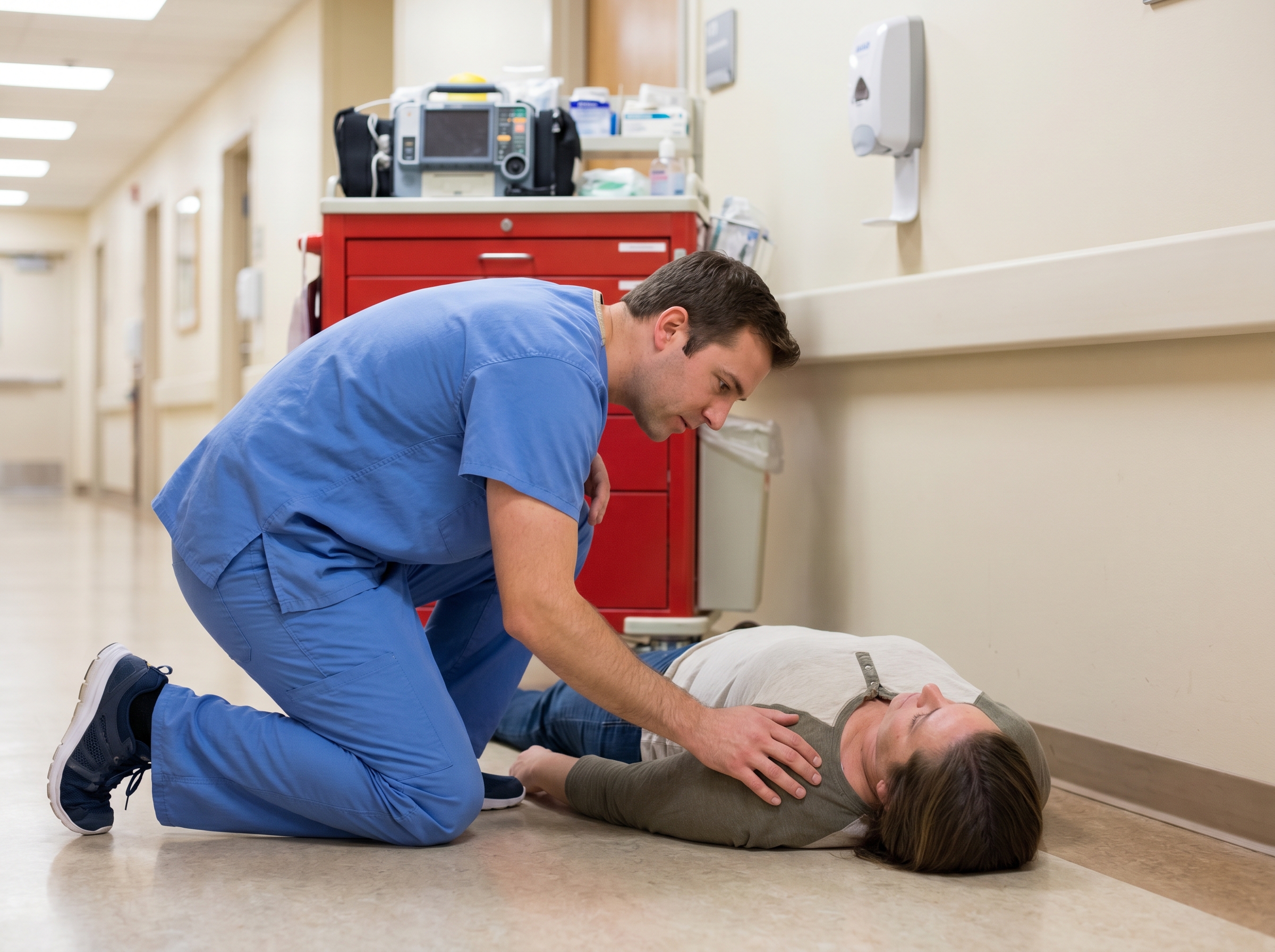
Healthcare provider assessing unresponsive patient for responsiveness and abnormal breathing before initiating CPR


What Is Agonal Breathing? A Clinical Definition

Agonal breathing, also called agonal respirations or gasping, refers to a pattern of slow, irregular, labored respiratory efforts that occur in the setting of severe hypoxia or circulatory failure — most commonly cardiac arrest. The word "agonal" derives from the Greek agon, meaning struggle or contest, and it accurately describes what's happening physiologically: the brainstem is making a last-ditch, reflexive attempt to sustain respiration even as cerebral perfusion fails.


These gasps are not effective ventilation. They do not oxygenate the blood. They do not represent intact airway reflexes or meaningful circulatory function. The lungs may move slightly, and a sound may be produced, but the gasps provide no physiological benefit to the patient in cardiac arrest. More importantly, their presence is a sign of cardiac arrest, not a reason to withhold CPR.


Clinically, agonal breaths are characterized by:


  • Slow rate: Typically fewer than 6 breaths per minute, often only 1-2 per minute
  • Irregular pattern: No consistent rhythm or spacing between efforts
  • Audible sounds: Often described as snoring, gurgling, moaning, gasping, or snorting
  • Apparent effort: Visible neck, jaw, or chest muscle movement despite ineffective ventilation
  • Time-limited: Typically present only in the first few minutes after cardiac arrest and diminish as the arrest progresses


Studies indicate agonal breathing occurs in approximately 40% to 60% of out-of-hospital cardiac arrests (OHCA) within the first few minutes of the event. This means that in nearly half of all cardiac arrests witnessed by bystanders, some form of gasping is present — creating a widespread, systematic opportunity for misidentification.


Why Agonal Breathing Is So Consistently Mistaken for Normal Breathing

Understanding why this error occurs requires stepping into the psychological and sensory experience of a bystander — trained or untrained — who witnesses a collapse. In an emergency, human cognition defaults to pattern-matching. The brain looks for familiar cues and interprets them through the lens of prior experience.


Most people — and many healthcare providers — have encountered someone snoring deeply, someone in a heavy sleep, or someone struggling to clear their throat. The sounds of agonal breathing map closely onto these familiar patterns. The key features that trigger misidentification include:


  • The sound of breathing: Gurgling or snoring sounds are strongly associated with live, breathing individuals in everyday experience
  • Visible chest or jaw movement: Even minimal movement is read as ventilatory effort by observers
  • Belief-driven interpretation: Rescuers who expect to find a breathing person will find evidence of it even in ambiguous signs
  • Lack of exposure: Most providers have never seen agonal breathing in a real cardiac arrest scenario outside of simulation training
  • Fear of doing harm: The possibility that a patient might be breathing creates hesitation to initiate chest compressions


A landmark study published in Resuscitation found that teaching CPR providers to specifically recognize agonal breathing as a sign of cardiac arrest significantly improved diagnostic accuracy. Before training, many providers mistakenly identified agonal gasps as signs of adequate circulation. After targeted education, sensitivity for recognizing cardiac arrest improved substantially.


The challenge is even more acute for 9-1-1 dispatchers, who must assess the situation entirely through verbal descriptions from panicked callers. Research published in PMC shows that agonal breathing represents a significant proportion of missed cardiac arrest diagnoses in the 9-1-1 dispatch setting — up to 50% in some studies — precisely because callers describe the sounds they hear and dispatchers may fail to identify them as gasping rather than breathing.


The Real Cost: How Misidentification Delays CPR and Costs Lives

Every second that passes after cardiac arrest without CPR is a second of irreversible neurological damage accumulating. The physiology is unforgiving: brain cells begin to die within 4-6 minutes of cardiac arrest, and survival rates decrease by approximately 10% for every minute that CPR and defibrillation are delayed.


The latest data from the Sudden Cardiac Arrest Foundation and CARES reporting show that bystander CPR was initiated in approximately 42.5% of out-of-hospital cardiac arrests in 2025 — the highest rate since tracking began. Survival to hospital discharge for patients who received bystander CPR was 13.0%, compared to 7.6% for those who did not — a stark reminder of how much intervention timing matters.


Agonal breathing sits squarely in the gap between witnessing a collapse and initiating CPR. When a bystander sees what appears to be breathing — however abnormal — they face an internal conflict: starting CPR on someone who is breathing would seem alarming and potentially harmful. This cognitive hesitation, even lasting 30 to 60 seconds, can mean the difference between neurologically intact survival and death or permanent disability.


Research has documented this pattern repeatedly. Studies have found that the presence of agonal breathing is consistently cited as a primary reason bystanders delay or withhold CPR, even when they are trained in basic life support. The gasping serves as a false reassurance signal — one that short-circuits the appropriate emergency response.


This is precisely why the Adult Basic Life Support Algorithm emphasizes a streamlined, two-step recognition process: Is the patient unresponsive? Is breathing absent or abnormal? If yes to both, begin CPR immediately. The algorithm deliberately does not ask rescuers to distinguish between types of abnormal breathing — because any abnormal breathing in an unresponsive patient should trigger the same response.


AHA Guidelines: What the 2025 Updates Say About Agonal Breathing

The 2025 American Heart Association Guidelines for CPR and Emergency Cardiovascular Care address agonal breathing directly and unambiguously. The guidelines state that CPR is indicated for any person who is unresponsive with absent or abnormal breathing — with agonal gasps explicitly classified as abnormal breathing that should prompt immediate CPR initiation.


The reasoning is straightforward: in the field, attempting to differentiate between agonal gasps and normal breathing with certainty takes time and introduces error. The risk of beginning CPR on a patient who turns out to be breathing normally is far outweighed by the catastrophic risk of withholding CPR from a cardiac arrest patient because their gasping was misidentified as normal breathing.


The AHA guidelines also reinforce telephone-assisted CPR dispatch protocols that specifically train 9-1-1 operators to ask callers whether the patient is breathing normally — and to treat any description of gasping, snoring, or unusual breathing as a potential cardiac arrest signal. This has been shown to reduce time to CPR instruction and improve rates of bystander intervention.


Importantly, the guidelines de-emphasize pulse checking for lay rescuers, acknowledging that even trained providers frequently cannot accurately detect a pulse in a timely manner. For healthcare professionals, a pulse check is still appropriate but should be limited to no more than 10 seconds — and if any doubt exists, CPR should begin. As the 2025 AHA Guidelines published in Circulation make clear, erring on the side of starting CPR is the preferred clinical decision in ambiguous cases.


Clinical Recognition: Training Your Brain to Identify Agonal Breathing

Recognition is a trainable skill. Just as providers learn to identify abnormal heart sounds or read an ECG, they can train themselves to quickly and confidently identify agonal breathing for what it is. The key is shifting the cognitive frame: rather than asking "is this person breathing?" the question should be "is this breathing normal and effective?"


A practical clinical framework for assessing breathing in a suspected cardiac arrest:


  • Step 1 — Check responsiveness: Tap shoulders firmly and shout. No response means proceed immediately to step 2.
  • Step 2 — Look, listen, feel for 5-10 seconds maximum: Look for chest rise; listen for breath sounds; feel for air movement. Any of the following qualifies as abnormal breathing: gasping, snoring, gurgling, infrequent isolated breaths, or no breathing at all.
  • Step 3 — If breathing is absent or abnormal: Activate emergency response, retrieve AED, begin CPR. Do not pause to reassess breathing once CPR has started unless a clear pulse or normal breathing returns.
  • Step 4 (healthcare providers): Check carotid pulse simultaneously with breathing assessment — but limit to 10 seconds. If uncertain, begin CPR.


The critical cognitive cue to internalize is this: abnormal breathing in an unresponsive patient equals cardiac arrest until proven otherwise. Agonal breathing does not need to be diagnosed as agonal breathing — it simply needs to be recognized as abnormal breathing in an unresponsive patient, which is sufficient to trigger the CPR response.


This is one area where simulation-based training has demonstrated particular value. Exposure to recordings or simulations of agonal breathing — including the characteristic sounds — dramatically improves provider recognition accuracy. Healthcare facilities that incorporate agonal breathing scenarios into their mock code programs and CPR training refreshers see measurably better recognition rates among staff.


It's also worth understanding the distinction between agonal breathing and true respiratory arrest, where a patient may have a pulse but has stopped breathing effectively. Managing respiratory arrest requires a different primary intervention — rescue breathing rather than immediate compressions — which is why accurate scene assessment remains essential even when the overall principle is to act quickly.


The 9-1-1 Dispatcher's Role: Bridging the Recognition Gap

Emergency dispatchers are often the first trained voice a bystander hears after a collapse. Their ability to guide callers through recognition and CPR initiation is a critical link in the chain of survival — and agonal breathing training for dispatchers is one of the highest-yield interventions in emergency medicine systems.


The challenge is that dispatchers receive verbal descriptions, not direct observation. A caller describing a patient as "making a sound" or "sort of breathing" may be witnessing classic agonal gasping — but without specific training to recognize this verbal pattern, dispatchers may not immediately identify it as cardiac arrest and prompt CPR instruction accordingly.


Effective dispatcher protocols for agonal breathing recognition include:


  • Asking specifically whether the patient is breathing normally, not simply whether they are breathing
  • Following up with: "Are the breaths regular and even, or is it more like occasional gasping or snoring sounds?"
  • Defaulting to CPR instruction whenever breathing is described as unusual, irregular, or infrequent
  • In cases of uncertainty, having the caller hold the phone near the patient's mouth and listening directly for breathing quality


Research on 9-1-1 call taker recognition factors has shown that dispatcher training programs specifically targeting agonal breathing identification can significantly reduce time from call receipt to CPR instruction — translating directly into improved patient survival rates. When dispatchers can correctly identify agonal breathing through a caller's description alone, they can prompt CPR initiation before EMS arrives and before any further time is lost.


Training Implications: What Your BLS and ACLS Courses Should Cover

If there's one clinical knowledge gap that consistently appears across healthcare settings — from community hospitals to academic medical centers — it's the reliable recognition of agonal breathing under pressure. This isn't purely a knowledge deficit; most providers know intellectually that agonal gasps occur in cardiac arrest. It's a recognition deficit: seeing or hearing it in the moment and making the correct rapid decision.


Comprehensive BLS training should explicitly address agonal breathing with the following components:


  • Audio examples: Exposure to recordings of actual agonal breathing from cardiac arrest patients helps providers build accurate mental prototypes
  • Scenario-based practice: Mock codes that include agonal breathing presentations, not just pulselessness and apnea
  • Algorithm reinforcement: Repeated practice of the "unresponsive plus abnormal breathing equals begin CPR" decision path
  • Post-scenario debriefing: Explicit discussion of what agonal breathing looks and sounds like, and why it triggers rather than prevents CPR


At the ACLS level, providers should be able to not only recognize agonal breathing but also communicate its significance quickly and accurately during a code — including directing less experienced team members who may hesitate based on visual or auditory cues. High-performance CPR teams train specifically to minimize delays from scene assessment to first compression — and agonal breathing recognition is a core component of that training.
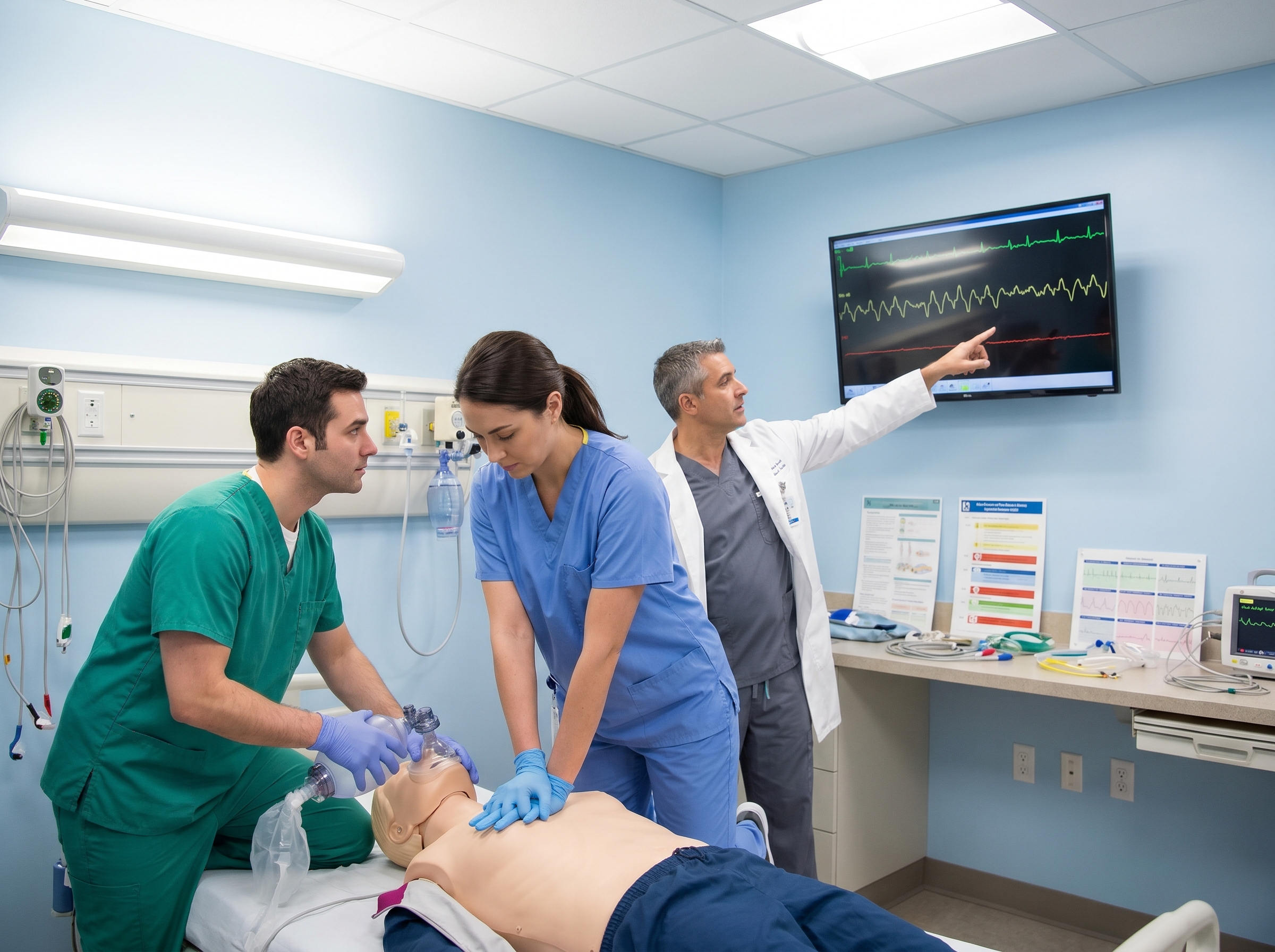
Healthcare team practicing CPR technique and cardiac arrest recognition in a clinical simulation training lab


For providers due for recertification, this is an area worth deliberately refreshing. BLS recertification should reinforce not just compression technique and AED use but the critical recognition skills — including agonal breathing — that determine whether CPR even begins on time.


The Physiology of Gasping: Why It Actually Has Survival Significance

There's an important nuance that every provider should understand: while agonal breathing is not effective ventilation, gasping during cardiac arrest is not entirely without physiological significance. Research published in Circulation has shown that gasping during cardiac arrest is associated with improved survival outcomes — not because the gasps oxygenate the patient, but because their presence indicates a more recent arrest and potentially better underlying cardiac function.


Patients with agonal breathing present at the time of cardiac arrest have, on average, experienced a shorter no-flow interval — meaning less time has passed since effective cardiac output ceased. This patient population, when CPR is initiated promptly, has measurably higher rates of return of spontaneous circulation (ROSC) and neurologically intact survival.


This finding has a critical practical implication: the presence of agonal breathing should actually increase urgency around initiating CPR, not reduce it. A patient who is gasping has likely arrested very recently — meaning the window for effective resuscitation is still open, but it's closing fast. Every second spent misidentifying that gasping as normal breathing is a second of wasted opportunity during the highest-yield period of the resuscitation.


Understanding the post-arrest trajectory also matters. Once ROSC is achieved, the clinical picture changes rapidly, and the focus shifts to post-resuscitation care. Post-ROSC care protocols — including targeted temperature management, hemodynamic optimization, and neurological assessment — are most effective when initiated early, which only happens when resuscitation begins without delay in the first place.


Bystander CPR: The Off-Duty Provider's Responsibility

Healthcare providers represent a uniquely valuable resource in the out-of-hospital cardiac arrest landscape. When a physician, nurse, or paramedic is present at a cardiac arrest before EMS arrives, outcomes improve significantly — but only if that provider acts. Studies have documented a troubling pattern: even trained healthcare professionals hesitate to initiate CPR in public settings, and agonal breathing is one of the most common reasons cited for that hesitation.


The hesitation often follows a specific cognitive pattern: the provider notices breathing-like sounds or movements, concludes the patient may not be in cardiac arrest, and delays intervention to assess further. By the time the absence of a pulse or the deterioration of the breathing pattern confirms cardiac arrest, critical minutes have passed and the window for optimal resuscitation has narrowed significantly.


Research on why healthcare workers hesitate to perform off-duty CPR shows that fear of making an error — including starting CPR on someone who doesn't need it — is a primary driver of the freeze response. Addressing this requires explicit training that reframes the decision: in a witnessed collapse with abnormal or absent breathing, starting CPR is the correct action, period. The risk of harm from unnecessary compressions in a non-arrest scenario is vastly smaller than the harm of delayed CPR in a real arrest.


The 2025 AHA guidelines support this framing explicitly, stating that lay rescuers and healthcare providers alike should begin CPR if they are unsure whether cardiac arrest has occurred. This "when in doubt, start CPR" principle is the clinical and ethical bedrock of the response to agonal breathing — and it needs to be internalized deeply enough that it overrides the instinctive hesitation that breathing-like sounds produce.


Putting It Together: A Complete Approach to Cardiac Arrest Recognition

Agonal breathing doesn't exist in isolation — it's one of several recognition challenges that healthcare providers must navigate in the first moments of a cardiac arrest response. A complete approach to cardiac arrest recognition integrates:


  • Scene awareness: Anticipating the possibility of cardiac arrest before approaching any collapsed, unresponsive patient
  • Rapid responsiveness check: Tap, shout, stimulate — no time for a prolonged assessment
  • Binary breathing assessment: Normal vs. abnormal — not a nuanced diagnosis of breathing quality
  • Simultaneous activation: Call for help and begin CPR at the same time
  • AED deployment: The chain of survival depends on rapid defibrillation for shockable rhythms — get the AED moving immediately


Understanding what causes cardiac arrest in the first place also improves recognition confidence. Familiarity with the reversible causes of cardiac arrest helps providers contextualize the clinical picture more rapidly. The Hs and Ts framework is a core component of ACLS training for exactly this reason: it keeps providers thinking systematically about what's happening, even under pressure, so that treatment can be directed at the underlying cause once CPR is underway.


The BLS Adult Cardiac Arrest Algorithm encodes all of these steps into a sequence that minimizes cognitive load under stress — which is precisely why mastering the algorithm matters. When providers have the algorithm internalized, recognition doesn't require active deliberation. The assessment becomes automatic, and the response follows immediately.


The Bottom Line: Hesitation Is the Enemy

Agonal breathing is common — present in nearly half of all out-of-hospital cardiac arrests. It sounds and looks like breathing. It is not breathing. It is a sign of cardiac arrest, and it should trigger an immediate, confident CPR response rather than hesitation or observation.


The research is unambiguous: misidentification of agonal breathing as normal breathing delays CPR, reduces survival rates, and increases the risk of permanent neurological damage. Training that explicitly addresses agonal breathing recognition — through audio exposure, simulation, and algorithm reinforcement — demonstrably improves provider accuracy and reduces time to first compression. The physiological significance of gasping as an indicator of recent arrest makes early intervention even more critical: these patients can be saved, but only if someone acts fast.


For every healthcare professional reading this: the next time you encounter a patient who is unresponsive and making sounds that could be mistaken for breathing, recall this framework. Ask not whether they're breathing, but whether they're breathing normally. If the answer is anything other than a clear yes, begin CPR without delay.


Keeping your life support certifications current means your training stays aligned with the latest AHA and ILCOR guidelines — including the most current evidence on agonal breathing recognition. Affordable ACLS courses are developed by Board Certified Emergency Medicine physicians who teach from real clinical experience. Whether you're due for BLS recertification or want to strengthen your cardiac arrest recognition skills at the ACLS level, our self-paced online courses let you train on your schedule — with a certificate available for immediate download when you're done. Because the skills that save lives need to be practiced, refreshed, and ready.


Recognizing Agonal Breathing: Why This Misunderstood Sign Delays Lifesaving CPR

The Breathing That Isn't Breathing

You're in the grocery store, at the gym, or standing in a hospital hallway when someone collapses. They appear unconscious — but then you notice something unsettling: they're making sounds. Labored, irregular, almost snoring-like gasps. Their chest seems to rise slightly. Your brain registers one thing: they're breathing. So you wait, you call for help, and precious seconds tick away.


What you just witnessed was agonal breathing — one of the most misunderstood and consistently misidentified signs in emergency medicine. It's not breathing in any functional sense. It's a brainstem reflex, a dying gasp that signals cardiac arrest rather than survival. And yet, research consistently shows it causes critical delays in CPR initiation, costing lives that could have been saved.


For healthcare providers at every level — nurses, paramedics, physicians, and first responders — developing a clear, confident ability to recognize agonal breathing is not optional. It's a foundational clinical skill that directly impacts patient outcomes. This article breaks down exactly what agonal breathing is, why it's so frequently mistaken for normal breathing, what the evidence says about its impact on CPR delays, and how training can close this dangerous recognition gap.

Healthcare provider assessing unresponsive patient for responsiveness and abnormal breathing before initiating CPR


What Is Agonal Breathing? A Clinical Definition

Agonal breathing, also called agonal respirations or gasping, refers to a pattern of slow, irregular, labored respiratory efforts that occur in the setting of severe hypoxia or circulatory failure — most commonly cardiac arrest. The word "agonal" derives from the Greek agon, meaning struggle or contest, and it accurately describes what's happening physiologically: the brainstem is making a last-ditch, reflexive attempt to sustain respiration even as cerebral perfusion fails.


These gasps are not effective ventilation. They do not oxygenate the blood. They do not represent intact airway reflexes or meaningful circulatory function. The lungs may move slightly, and a sound may be produced, but the gasps provide no physiological benefit to the patient in cardiac arrest. More importantly, their presence is a sign of cardiac arrest, not a reason to withhold CPR.


Clinically, agonal breaths are characterized by:


  • Slow rate: Typically fewer than 6 breaths per minute, often only 1-2 per minute
  • Irregular pattern: No consistent rhythm or spacing between efforts
  • Audible sounds: Often described as snoring, gurgling, moaning, gasping, or snorting
  • Apparent effort: Visible neck, jaw, or chest muscle movement despite ineffective ventilation
  • Time-limited: Typically present only in the first few minutes after cardiac arrest and diminish as the arrest progresses


Studies indicate agonal breathing occurs in approximately 40% to 60% of out-of-hospital cardiac arrests (OHCA) within the first few minutes of the event. This means that in nearly half of all cardiac arrests witnessed by bystanders, some form of gasping is present — creating a widespread, systematic opportunity for misidentification.


Why Agonal Breathing Is So Consistently Mistaken for Normal Breathing

Understanding why this error occurs requires stepping into the psychological and sensory experience of a bystander — trained or untrained — who witnesses a collapse. In an emergency, human cognition defaults to pattern-matching. The brain looks for familiar cues and interprets them through the lens of prior experience.


Most people — and many healthcare providers — have encountered someone snoring deeply, someone in a heavy sleep, or someone struggling to clear their throat. The sounds of agonal breathing map closely onto these familiar patterns. The key features that trigger misidentification include:


  • The sound of breathing: Gurgling or snoring sounds are strongly associated with live, breathing individuals in everyday experience
  • Visible chest or jaw movement: Even minimal movement is read as ventilatory effort by observers
  • Belief-driven interpretation: Rescuers who expect to find a breathing person will find evidence of it even in ambiguous signs
  • Lack of exposure: Most providers have never seen agonal breathing in a real cardiac arrest scenario outside of simulation training
  • Fear of doing harm: The possibility that a patient might be breathing creates hesitation to initiate chest compressions


A landmark study published in Resuscitation found that teaching CPR providers to specifically recognize agonal breathing as a sign of cardiac arrest significantly improved diagnostic accuracy. Before training, many providers mistakenly identified agonal gasps as signs of adequate circulation. After targeted education, sensitivity for recognizing cardiac arrest improved substantially.


The challenge is even more acute for 9-1-1 dispatchers, who must assess the situation entirely through verbal descriptions from panicked callers. Research published in PMC shows that agonal breathing represents a significant proportion of missed cardiac arrest diagnoses in the 9-1-1 dispatch setting — up to 50% in some studies — precisely because callers describe the sounds they hear and dispatchers may fail to identify them as gasping rather than breathing.


The Real Cost: How Misidentification Delays CPR and Costs Lives

Every second that passes after cardiac arrest without CPR is a second of irreversible neurological damage accumulating. The physiology is unforgiving: brain cells begin to die within 4-6 minutes of cardiac arrest, and survival rates decrease by approximately 10% for every minute that CPR and defibrillation are delayed.


The latest data from the Sudden Cardiac Arrest Foundation and CARES reporting show that bystander CPR was initiated in approximately 42.5% of out-of-hospital cardiac arrests in 2025 — the highest rate since tracking began. Survival to hospital discharge for patients who received bystander CPR was 13.0%, compared to 7.6% for those who did not — a stark reminder of how much intervention timing matters.


Agonal breathing sits squarely in the gap between witnessing a collapse and initiating CPR. When a bystander sees what appears to be breathing — however abnormal — they face an internal conflict: starting CPR on someone who is breathing would seem alarming and potentially harmful. This cognitive hesitation, even lasting 30 to 60 seconds, can mean the difference between neurologically intact survival and death or permanent disability.


Research has documented this pattern repeatedly. Studies have found that the presence of agonal breathing is consistently cited as a primary reason bystanders delay or withhold CPR, even when they are trained in basic life support. The gasping serves as a false reassurance signal — one that short-circuits the appropriate emergency response.


This is precisely why the Adult Basic Life Support Algorithm emphasizes a streamlined, two-step recognition process: Is the patient unresponsive? Is breathing absent or abnormal? If yes to both, begin CPR immediately. The algorithm deliberately does not ask rescuers to distinguish between types of abnormal breathing — because any abnormal breathing in an unresponsive patient should trigger the same response.


AHA Guidelines: What the 2025 Updates Say About Agonal Breathing

The 2025 American Heart Association Guidelines for CPR and Emergency Cardiovascular Care address agonal breathing directly and unambiguously. The guidelines state that CPR is indicated for any person who is unresponsive with absent or abnormal breathing — with agonal gasps explicitly classified as abnormal breathing that should prompt immediate CPR initiation.


The reasoning is straightforward: in the field, attempting to differentiate between agonal gasps and normal breathing with certainty takes time and introduces error. The risk of beginning CPR on a patient who turns out to be breathing normally is far outweighed by the catastrophic risk of withholding CPR from a cardiac arrest patient because their gasping was misidentified as normal breathing.


The AHA guidelines also reinforce telephone-assisted CPR dispatch protocols that specifically train 9-1-1 operators to ask callers whether the patient is breathing normally — and to treat any description of gasping, snoring, or unusual breathing as a potential cardiac arrest signal. This has been shown to reduce time to CPR instruction and improve rates of bystander intervention.


Importantly, the guidelines de-emphasize pulse checking for lay rescuers, acknowledging that even trained providers frequently cannot accurately detect a pulse in a timely manner. For healthcare professionals, a pulse check is still appropriate but should be limited to no more than 10 seconds — and if any doubt exists, CPR should begin. As the 2025 AHA Guidelines published in Circulation make clear, erring on the side of starting CPR is the preferred clinical decision in ambiguous cases.


Clinical Recognition: Training Your Brain to Identify Agonal Breathing

Recognition is a trainable skill. Just as providers learn to identify abnormal heart sounds or read an ECG, they can train themselves to quickly and confidently identify agonal breathing for what it is. The key is shifting the cognitive frame: rather than asking "is this person breathing?" the question should be "is this breathing normal and effective?"


A practical clinical framework for assessing breathing in a suspected cardiac arrest:


  • Step 1 — Check responsiveness: Tap shoulders firmly and shout. No response means proceed immediately to step 2.
  • Step 2 — Look, listen, feel for 5-10 seconds maximum: Look for chest rise; listen for breath sounds; feel for air movement. Any of the following qualifies as abnormal breathing: gasping, snoring, gurgling, infrequent isolated breaths, or no breathing at all.
  • Step 3 — If breathing is absent or abnormal: Activate emergency response, retrieve AED, begin CPR. Do not pause to reassess breathing once CPR has started unless a clear pulse or normal breathing returns.
  • Step 4 (healthcare providers): Check carotid pulse simultaneously with breathing assessment — but limit to 10 seconds. If uncertain, begin CPR.


The critical cognitive cue to internalize is this: abnormal breathing in an unresponsive patient equals cardiac arrest until proven otherwise. Agonal breathing does not need to be diagnosed as agonal breathing — it simply needs to be recognized as abnormal breathing in an unresponsive patient, which is sufficient to trigger the CPR response.


This is one area where simulation-based training has demonstrated particular value. Exposure to recordings or simulations of agonal breathing — including the characteristic sounds — dramatically improves provider recognition accuracy. Healthcare facilities that incorporate agonal breathing scenarios into their mock code programs and CPR training refreshers see measurably better recognition rates among staff.


It's also worth understanding the distinction between agonal breathing and true respiratory arrest, where a patient may have a pulse but has stopped breathing effectively. Managing respiratory arrest requires a different primary intervention — rescue breathing rather than immediate compressions — which is why accurate scene assessment remains essential even when the overall principle is to act quickly.


The 9-1-1 Dispatcher's Role: Bridging the Recognition Gap

Emergency dispatchers are often the first trained voice a bystander hears after a collapse. Their ability to guide callers through recognition and CPR initiation is a critical link in the chain of survival — and agonal breathing training for dispatchers is one of the highest-yield interventions in emergency medicine systems.


The challenge is that dispatchers receive verbal descriptions, not direct observation. A caller describing a patient as "making a sound" or "sort of breathing" may be witnessing classic agonal gasping — but without specific training to recognize this verbal pattern, dispatchers may not immediately identify it as cardiac arrest and prompt CPR instruction accordingly.


Effective dispatcher protocols for agonal breathing recognition include:


  • Asking specifically whether the patient is breathing normally, not simply whether they are breathing
  • Following up with: "Are the breaths regular and even, or is it more like occasional gasping or snoring sounds?"
  • Defaulting to CPR instruction whenever breathing is described as unusual, irregular, or infrequent
  • In cases of uncertainty, having the caller hold the phone near the patient's mouth and listening directly for breathing quality


Research on 9-1-1 call taker recognition factors has shown that dispatcher training programs specifically targeting agonal breathing identification can significantly reduce time from call receipt to CPR instruction — translating directly into improved patient survival rates. When dispatchers can correctly identify agonal breathing through a caller's description alone, they can prompt CPR initiation before EMS arrives and before any further time is lost.


Training Implications: What Your BLS and ACLS Courses Should Cover

If there's one clinical knowledge gap that consistently appears across healthcare settings — from community hospitals to academic medical centers — it's the reliable recognition of agonal breathing under pressure. This isn't purely a knowledge deficit; most providers know intellectually that agonal gasps occur in cardiac arrest. It's a recognition deficit: seeing or hearing it in the moment and making the correct rapid decision.


Comprehensive BLS training should explicitly address agonal breathing with the following components:


  • Audio examples: Exposure to recordings of actual agonal breathing from cardiac arrest patients helps providers build accurate mental prototypes
  • Scenario-based practice: Mock codes that include agonal breathing presentations, not just pulselessness and apnea
  • Algorithm reinforcement: Repeated practice of the "unresponsive plus abnormal breathing equals begin CPR" decision path
  • Post-scenario debriefing: Explicit discussion of what agonal breathing looks and sounds like, and why it triggers rather than prevents CPR


At the ACLS level, providers should be able to not only recognize agonal breathing but also communicate its significance quickly and accurately during a code — including directing less experienced team members who may hesitate based on visual or auditory cues. High-performance CPR teams train specifically to minimize delays from scene assessment to first compression — and agonal breathing recognition is a core component of that training.

Healthcare team practicing CPR technique and cardiac arrest recognition in a clinical simulation training lab


For providers due for recertification, this is an area worth deliberately refreshing. BLS recertification should reinforce not just compression technique and AED use but the critical recognition skills — including agonal breathing — that determine whether CPR even begins on time.


The Physiology of Gasping: Why It Actually Has Survival Significance

There's an important nuance that every provider should understand: while agonal breathing is not effective ventilation, gasping during cardiac arrest is not entirely without physiological significance. Research published in Circulation has shown that gasping during cardiac arrest is associated with improved survival outcomes — not because the gasps oxygenate the patient, but because their presence indicates a more recent arrest and potentially better underlying cardiac function.


Patients with agonal breathing present at the time of cardiac arrest have, on average, experienced a shorter no-flow interval — meaning less time has passed since effective cardiac output ceased. This patient population, when CPR is initiated promptly, has measurably higher rates of return of spontaneous circulation (ROSC) and neurologically intact survival.


This finding has a critical practical implication: the presence of agonal breathing should actually increase urgency around initiating CPR, not reduce it. A patient who is gasping has likely arrested very recently — meaning the window for effective resuscitation is still open, but it's closing fast. Every second spent misidentifying that gasping as normal breathing is a second of wasted opportunity during the highest-yield period of the resuscitation.


Understanding the post-arrest trajectory also matters. Once ROSC is achieved, the clinical picture changes rapidly, and the focus shifts to post-resuscitation care. Post-ROSC care protocols — including targeted temperature management, hemodynamic optimization, and neurological assessment — are most effective when initiated early, which only happens when resuscitation begins without delay in the first place.


Bystander CPR: The Off-Duty Provider's Responsibility

Healthcare providers represent a uniquely valuable resource in the out-of-hospital cardiac arrest landscape. When a physician, nurse, or paramedic is present at a cardiac arrest before EMS arrives, outcomes improve significantly — but only if that provider acts. Studies have documented a troubling pattern: even trained healthcare professionals hesitate to initiate CPR in public settings, and agonal breathing is one of the most common reasons cited for that hesitation.


The hesitation often follows a specific cognitive pattern: the provider notices breathing-like sounds or movements, concludes the patient may not be in cardiac arrest, and delays intervention to assess further. By the time the absence of a pulse or the deterioration of the breathing pattern confirms cardiac arrest, critical minutes have passed and the window for optimal resuscitation has narrowed significantly.


Research on why healthcare workers hesitate to perform off-duty CPR shows that fear of making an error — including starting CPR on someone who doesn't need it — is a primary driver of the freeze response. Addressing this requires explicit training that reframes the decision: in a witnessed collapse with abnormal or absent breathing, starting CPR is the correct action, period. The risk of harm from unnecessary compressions in a non-arrest scenario is vastly smaller than the harm of delayed CPR in a real arrest.


The 2025 AHA guidelines support this framing explicitly, stating that lay rescuers and healthcare providers alike should begin CPR if they are unsure whether cardiac arrest has occurred. This "when in doubt, start CPR" principle is the clinical and ethical bedrock of the response to agonal breathing — and it needs to be internalized deeply enough that it overrides the instinctive hesitation that breathing-like sounds produce.


Putting It Together: A Complete Approach to Cardiac Arrest Recognition

Agonal breathing doesn't exist in isolation — it's one of several recognition challenges that healthcare providers must navigate in the first moments of a cardiac arrest response. A complete approach to cardiac arrest recognition integrates:


  • Scene awareness: Anticipating the possibility of cardiac arrest before approaching any collapsed, unresponsive patient
  • Rapid responsiveness check: Tap, shout, stimulate — no time for a prolonged assessment
  • Binary breathing assessment: Normal vs. abnormal — not a nuanced diagnosis of breathing quality
  • Simultaneous activation: Call for help and begin CPR at the same time
  • AED deployment: The chain of survival depends on rapid defibrillation for shockable rhythms — get the AED moving immediately


Understanding what causes cardiac arrest in the first place also improves recognition confidence. Familiarity with the reversible causes of cardiac arrest helps providers contextualize the clinical picture more rapidly. The Hs and Ts framework is a core component of ACLS training for exactly this reason: it keeps providers thinking systematically about what's happening, even under pressure, so that treatment can be directed at the underlying cause once CPR is underway.


The BLS Adult Cardiac Arrest Algorithm encodes all of these steps into a sequence that minimizes cognitive load under stress — which is precisely why mastering the algorithm matters. When providers have the algorithm internalized, recognition doesn't require active deliberation. The assessment becomes automatic, and the response follows immediately.


The Bottom Line: Hesitation Is the Enemy

Agonal breathing is common — present in nearly half of all out-of-hospital cardiac arrests. It sounds and looks like breathing. It is not breathing. It is a sign of cardiac arrest, and it should trigger an immediate, confident CPR response rather than hesitation or observation.


The research is unambiguous: misidentification of agonal breathing as normal breathing delays CPR, reduces survival rates, and increases the risk of permanent neurological damage. Training that explicitly addresses agonal breathing recognition — through audio exposure, simulation, and algorithm reinforcement — demonstrably improves provider accuracy and reduces time to first compression. The physiological significance of gasping as an indicator of recent arrest makes early intervention even more critical: these patients can be saved, but only if someone acts fast.


For every healthcare professional reading this: the next time you encounter a patient who is unresponsive and making sounds that could be mistaken for breathing, recall this framework. Ask not whether they're breathing, but whether they're breathing normally. If the answer is anything other than a clear yes, begin CPR without delay.


Keeping your life support certifications current means your training stays aligned with the latest AHA and ILCOR guidelines — including the most current evidence on agonal breathing recognition. Affordable ACLS courses are developed by Board Certified Emergency Medicine physicians who teach from real clinical experience. Whether you're due for BLS recertification or want to strengthen your cardiac arrest recognition skills at the ACLS level, our self-paced online courses let you train on your schedule — with a certificate available for immediate download when you're done. Because the skills that save lives need to be practiced, refreshed, and ready.


blogs

More articles for you

all articles

Start Today!

Get certified at your own pace, on your schedule, from the comfort of your home.